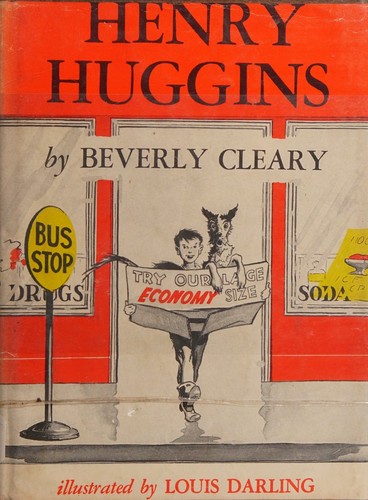
Henry Huggins (2008) Parents Guide: Is the book OK for kids?
Age Rating, Sex, Violence & Language
Henry Huggins is the first book in the Henry Huggins series of children's novels, written by Beverly Cleary. Henry is an ordinary boy who manages to get into funny scrapes with his dog, Ribsy. First published on September 6, 1950, it was originally illustrated by Louis Darling.
Middle Grade • 2008 • 155 pages • 4.7 / Grade 3-5
Henry Huggins is a classic middle-grade story focusing on the everyday adventures of a young boy growing up in the 1950s. The book earns its age rating through wholesome, relatable themes such as pet ownership, childhood responsibility, and minor neighborhood mischief. There is no violence, profanity, or sexual content, making it an ideal choice for elementary-aged readers and as a family read-aloud.
Is Henry Huggins appropriate for kids?
Henry Huggins is a classic middle-grade story focusing on the everyday adventures of a young boy growing up in the 1950s. The book earns its age rating through wholesome, relatable themes such as pet ownership, childhood responsibility, and minor neighborhood mischief. There is… Read more — free account
Content severity in Henry Huggins
What happens in Henry Huggins, moment by moment
- p. 10 🔥 Mature Themes 2/10
- p. 25 🔥 Mature Themes 2/10
- p. 45 ⚔ Violence & Gore 2/10
Sex and nudity in Henry Huggins
The book contains no romantic or sexual situations, as the focus remains entirely on Henry's childhood hobbies and his dog, Ribsy. The young characters, including Henry and Beezus Quimby, interact in a strictly platonic and innocent manner typical of 1950s children's literature. There are no scenes involving dating, crushing, or physical intimacy. The narrative is rooted in mid-century suburban childhood where the most complex social interaction is a schoolyard disagreement. Parents can feel confident that the…
Read more — free accountViolence and gore in Henry Huggins
Minimal and restricted to low-stakes childhood conflict. There are minor instances of schoolyard frustration, such as when Henry and Scooter bicker, and a brief concern about a dog fight that does not materialize into serious harm. In one scene, Henry accidentally gets pink paint on Ribsy, which causes stress but no physical injury to the animal. Another moment involves a minor physical tussle over a football that involves light pushing. These moments are portrayed as normal parts of growing up rather than genuine…
Read more — free accountLanguage in Henry Huggins
Very mild. Some 1950s-era slang and mild insults like 'dope', 'stupid', or 'dumb' are used by children during moments of frustration. Henry occasionally expresses annoyance toward his peers using these descriptors, but there is no use of profanity or crude language. The vocabulary is reflective of the setting and intended for a young audience, maintaining a polite and respectful tone overall. Even the antagonists in the story, like Scooter, use language that is considered tame by modern standards.
Drugs, alcohol, and smoking in Henry Huggins
There are no mentions of drugs, alcohol, or smoking within this story. The narrative focuses on wholesome, suburban activities like collecting nightcrawlers to sell and entering dog shows. Characters are never shown using substances, and the environment remains entirely clean and age-appropriate for young readers. Even in social settings or at the drugstore where Henry meets Ribsy, the focus is on ice cream and soda rather than adult beverages. The setting is a sanitized version of mid-century America where…
Read more — free accountMature themes in Henry Huggins
Themes include responsibility, the ethics of finding lost property, and the bond between a boy and his dog. Henry must learn to care for a pet, manage his own money through selling nightcrawlers, and navigate the social hierarchy of Klickitat Street. A significant moral dilemma arises when Ribsy's original owner appears, forcing Henry to grapple with his conscience and the fear of losing his best friend. The book emphasizes fairness, community, and the importance of perseverance when faced with small-scale…
Read more — free accountFrequently Asked Questions
Is Henry Huggins appropriate for kids?
Bontent's parent guide suggests Henry Huggins is best for ages 7+. Henry Huggins is a classic middle-grade story focusing on the everyday adventures of a young boy growing up in the 1950s. The book earns its age rating through wholesome, relatable themes such as pet ownership…
What age rating does Henry Huggins have?
Books don't carry official age ratings. Henry Huggins is published for a Middle Grade audience, and Bontent's independent parent guide recommends it for ages 7+.
What reading level is Henry Huggins?
Henry Huggins is 155 pages and its reading level is 4.7 / Grade 3-5. Bontent recommends it for ages 7+.
What is Henry Huggins about?
Henry Huggins is a classic middle-grade story focusing on the everyday adventures of a young boy growing up in the 1950s. The book earns its age rating through wholesome, relatable themes such as pet ownership, childhood responsibility, and minor neighborhood mischief. There is no violence, profanity, or sexual…
Is there sex or nudity in Henry Huggins?
The book contains no romantic or sexual situations, as the focus remains entirely on Henry's childhood hobbies and his dog, Ribsy. The young characters, including Henry and Beezus Quimby, interact in a strictly platonic and innocent manner typical of 1950s…
How violent is Henry Huggins?
Minimal and restricted to low-stakes childhood conflict. There are minor instances of schoolyard frustration, such as when Henry and Scooter bicker, and a brief concern about a dog fight that does not materialize into serious harm. In one scene, Henry…
Is the language in Henry Huggins appropriate for kids?
Very mild. Some 1950s-era slang and mild insults like 'dope', 'stupid', or 'dumb' are used by children during moments of frustration. Henry occasionally expresses annoyance toward his peers using these descriptors, but there is no use of profanity or crude…
Are drugs, alcohol, or smoking depicted in Henry Huggins?
There are no mentions of drugs, alcohol, or smoking within this story. The narrative focuses on wholesome, suburban activities like collecting nightcrawlers to sell and entering dog shows. Characters are never shown using substances, and the environment…
What mature themes appear in Henry Huggins?
Themes include responsibility, the ethics of finding lost property, and the bond between a boy and his dog. Henry must learn to care for a pet, manage his own money through selling nightcrawlers, and navigate the social hierarchy of Klickitat Street. A…
Where can I read the full Henry Huggins parent guide?
Create a free Bontent account to unlock page-level notes, filter by your kids' ages, and save titles to your watchlist.
Parents also checked these books for 7-year-olds
Sign up to filter





Books like Henry Huggins with similar intensity
Sign up to filter



Less intense books for families
Sign up to filter


More fiction books with parent guides
- The Dictionary of Lost Words parent guide
- Nine Lives parent guide
- Hana Khan Carries On parent guide
- Charlie the Choo-Choo parent guide
- The Return of the Young Prince parent guide
- The Name of the Wind / The Wise Man's Fear / The Slow Regard of Silent Things (The Kingkiller Chronicle #1-2.5) parent guide
- Clash of star-kings parent guide
- This House Will Feed parent guide
- The Bookshop on Rosemary Lane parent guide
- Told in letters parent guide
- Babel: Or the Necessity of Violence: An Arcane History of the Oxford Translators' Revolution parent guide
- The Titan’s Curse (Percy Jackson and the Olympians, #3) parent guide
Middle Grade books parents are checking
- Black Cake parent guide
- The Hobbit, or There and Back Again parent guide
- Leopardstar's Honor parent guide
- Sayaka Murata parent guide
- The complete works of the Gawain-poet parent guide
- The Bad Beginning (A Series of Unfortunate Events #1) parent guide
- Harry Potter and the Philosopher's Stone parent guide
- Harry Potter and the Sorcerer's Stone (Harry Potter, #1) parent guide
- The Chronicles of Narnia Set parent guide
- Hilo Book 8 parent guide
More books by Beverly Cleary
- Runaway Ralph parent guide
- The Mouse and the Motorcycle parent guide
- Ramona Quimby, Age 8 parent guide
- Beezus and Ramona parent guide
- Dear Mr. Henshaw parent guide
- Ramona the Pest parent guide
- Ramona and Her Father parent guide
- Ramona and Her Mother parent guide
- Ramona Forever parent guide
- Henry and Ribsy parent guide
More books with Bontent parent guides
- Just For The Cameras parent guide
- Crow parent guide
- Operation Bounce House parent guide
- ¡Hola Papi!: How to Come Out in a Walmart Parking Lot and Other Life Lessons parent guide
- You Did Nothing Wrong parent guide
- Last One To Die parent guide
- Moon Witch, Spider King parent guide
- Charlie the Choo-Choo parent guide
- Ghosted: An American Story parent guide
- Unrivaled parent guide
- The Martian Contingency parent guide
- This House Will Feed parent guide
- Deadly Scandal parent guide
- Blake Crouch's Dark Matter parent guide
- Eragon (The Inheritance Cycle, #1) parent guide
- Atomic Habits: An Easy & Proven Way to Build Good Habits & Break Bad Ones parent guide