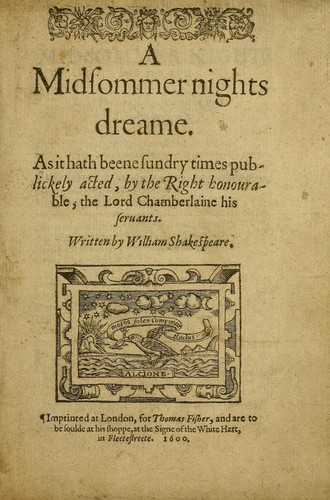
A Midsummer Night's Dream (1984) Parents Guide: Is the book OK for kids?
Age Rating, Sex, Violence & Language
One night two young couples run into an enchanted forest in an attempt to escape their problems. But these four humans do not realize that the forest is filled with fairies and hobgoblins who love making mischief. When Oberon, the Fairy King, and his loyal hobgoblin servant, Puck, intervene in human affairs, the fate of these young couples is magically and hilariously transformed. Like a classic fairy tale, this retelling of William Shakespeare's most beloved comedy is perfect for older readers who will find much to treasure and for… Sign up for the full guide
YA • 1984 • 217 pages • Grade 9-12
This classic Shakespearean comedy is appropriate for teens due to its focus on romantic entanglements, lighthearted mischief, and supernatural interference. Parents should note the frequent sexual innuendo typical of Elizabethan comedy and several threats of forced marriage or death. While the tone is whimsical, the central plot involves young lovers defying their parents' authority and a magical prank that involves a woman falling in… Sign up for the full guide
Is A Midsummer Night's Dream appropriate for kids?
This classic Shakespearean comedy is appropriate for teens due to its focus on romantic entanglements, lighthearted mischief, and supernatural interference. Parents should note the frequent sexual innuendo typical of Elizabethan comedy and several threats of forced marriage or… Read more — free account
Content severity in A Midsummer Night's Dream
What happens in A Midsummer Night's Dream, moment by moment
- p. 5 ⚔ Violence & Gore 4/10
- p. 12 ♥ Sex & Nudity 3/10
- p. 25 🔥 Mature Themes 2/10
Sex and nudity in A Midsummer Night's Dream
The play features frequent double entendres and Elizabethan puns regarding 'maidenheads' and physical intimacy that may require context for modern readers. In Act 1, Hermia faces the choice of marriage or a life of 'barren sisterhood' in a nunnery, which initiates discussions on virginity. Titania’s magically-induced infatuation with Bottom leads to aggressive romantic overtures, including her inviting him to her 'flowery bed.' During the mechanicals' play in Act 5, the characters make suggestive jokes about…
Read more — free accountViolence and gore in A Midsummer Night's Dream
Violence primarily consists of verbal threats and comedic slapstick rather than actual physical harm. The play opens with a chilling threat from Egeus, who cites Athenian law to demand his daughter be executed if she defies his marital choice. Puck’s magic causes disorientation and minor physical mishaps as he leads Lysander and Demetrius through the woods to prevent a duel. In the final act, the play-within-a-play depicts a double suicide that is performed with exaggerated, melodramatic physical comedy. Despite…
Read more — free accountLanguage in A Midsummer Night's Dream
Archaic insults serve as the primary source of 'strong' language, with characters using terms like 'canker-blossom,' 'minimus,' and 'vile thing.' During their intense argument in Act 3, Helena and Hermia exchange sharp verbal barbs regarding each other's physical appearance and character. There is no modern profanity, but Elizabethan oaths like 'Marry' and 'Od’s heartlings' appear throughout the text. The mechanicals often misuse words for comedic effect, though their bumbling speech is entirely clean. Parents…
Read more — free accountDrugs, alcohol, and smoking in A Midsummer Night's Dream
The 'love-in-idleness' flower serves as a metaphorical drug or love potion that is central to the plot's complications. This substance is administered by Oberon and Puck to sleeping characters, altering their perceptions and romantic attractions without their informed consent. Titania is subjected to this potion as a form of humiliation so Oberon can steal a changeling boy from her. The effects of the flower are described as a 'liquor' or 'juice' that cloud the mind and create an artificial state of obsession…
Read more — free accountMature themes in A Midsummer Night's Dream
Central to the plot is the conflict between parental control and individual choice, exemplified by Egeus's demand for his daughter's obedience. The fickle nature of romantic love is explored through the interference of Oberon and Puck, who use magic to sway human hearts. The narrative blurs the line between reality and dreams, suggesting that the characters' experiences may just be 'visions.' Supernatural interference is a constant force, as the fairy monarchs use their powers to resolve their own marital…
Read more — free accountFrequently Asked Questions
Is A Midsummer Night's Dream appropriate for kids?
Bontent's parent guide suggests A Midsummer Night's Dream is best for ages 13+. This classic Shakespearean comedy is appropriate for teens due to its focus on romantic entanglements, lighthearted mischief, and supernatural interference. Parents should note the frequent sexual innuendo typical of…
What age rating does A Midsummer Night's Dream have?
Books don't carry official age ratings. A Midsummer Night's Dream is published for a YA audience, and Bontent's independent parent guide recommends it for ages 13+.
What reading level is A Midsummer Night's Dream?
A Midsummer Night's Dream is 217 pages and its reading level is Grade 9-12. Bontent recommends it for ages 13+.
What is A Midsummer Night's Dream about?
This classic Shakespearean comedy is appropriate for teens due to its focus on romantic entanglements, lighthearted mischief, and supernatural interference. Parents should note the frequent sexual innuendo typical of Elizabethan comedy and several threats of forced marriage or death. While the tone is whimsical, the…
Is there sex or nudity in A Midsummer Night's Dream?
The play features frequent double entendres and Elizabethan puns regarding 'maidenheads' and physical intimacy that may require context for modern readers. In Act 1, Hermia faces the choice of marriage or a life of 'barren sisterhood' in a nunnery, which…
How violent is A Midsummer Night's Dream?
Violence primarily consists of verbal threats and comedic slapstick rather than actual physical harm. The play opens with a chilling threat from Egeus, who cites Athenian law to demand his daughter be executed if she defies his marital choice. Puck’s magic…
Is the language in A Midsummer Night's Dream appropriate for kids?
Archaic insults serve as the primary source of 'strong' language, with characters using terms like 'canker-blossom,' 'minimus,' and 'vile thing.' During their intense argument in Act 3, Helena and Hermia exchange sharp verbal barbs regarding each other's…
Are drugs, alcohol, or smoking depicted in A Midsummer Night's Dream?
The 'love-in-idleness' flower serves as a metaphorical drug or love potion that is central to the plot's complications. This substance is administered by Oberon and Puck to sleeping characters, altering their perceptions and romantic attractions without their…
What mature themes appear in A Midsummer Night's Dream?
Central to the plot is the conflict between parental control and individual choice, exemplified by Egeus's demand for his daughter's obedience. The fickle nature of romantic love is explored through the interference of Oberon and Puck, who use magic to sway…
Where can I read the full A Midsummer Night's Dream parent guide?
Create a free Bontent account to unlock page-level notes, filter by your kids' ages, and save titles to your watchlist.
Books like A Midsummer Night's Dream with similar intensity
Sign up to filter





Less intense books for families
Sign up to filter








More fantasy books with parent guides
- Sunrise on the Reaping parent guide
- Kingdom of Shadow and Light parent guide
- You Did Nothing Wrong parent guide
- The Midnight Girls parent guide
- THE ESCAPE GAME parent guide
- Moon Witch, Spider King parent guide
- Eragon (The Inheritance Cycle, #1) parent guide
- Leopardstar's Honor parent guide
- The House in the Cerulean Sea (Cerulean Chronicles, #1) parent guide
- Told in letters parent guide
- City of Bones (The Mortal Instruments, #1) parent guide
- A Court of Frost and Starlight (A Court of Thorns and Roses, #4) parent guide
Play/Drama books parents are checking
- Just For The Cameras parent guide
- Hana Khan Carries On parent guide
- The Total Package parent guide
- Babel: Or the Necessity of Violence: An Arcane History of the Oxford Translators' Revolution parent guide
- A century of the English novel parent guide
- Jonathan Strange & Mr Norrell parent guide
- Emily Wilde's Encyclopaedia of Faeries (Emily Wilde, #1) parent guide
- "Everyman," with other interludes parent guide
- No Man’s Land parent guide
- The City of Brass Deluxe Collector's Edition parent guide
- The City of Brass (The Daevabad Trilogy, #1) parent guide
- Rich People Problems (Crazy Rich Asians, #3) parent guide
More books by William Shakespeare
More books with Bontent parent guides
- Black Cake parent guide
- Nine Lives parent guide
- Crow parent guide
- Hana Khan Carries On parent guide
- Tall Oaks parent guide
- Kingdom of Shadow and Light parent guide
- The Total Package parent guide
- The Midnight Girls parent guide
- The Hobbit, or There and Back Again parent guide
- Moon Witch, Spider King parent guide
- Charlie the Choo-Choo parent guide
- Ghosted: An American Story parent guide
- Unrivaled parent guide
- The Return of the Young Prince parent guide
- The Name of the Wind / The Wise Man's Fear / The Slow Regard of Silent Things (The Kingkiller Chronicle #1-2.5) parent guide
- American Gods: Tenth Anniversary (American Gods, #1) parent guide