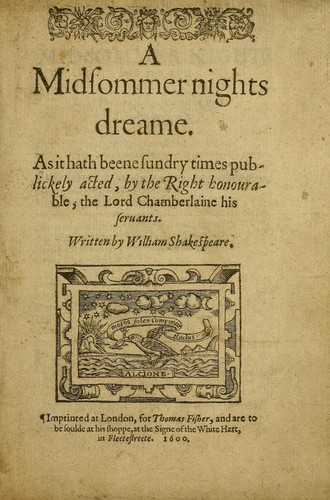
A Midsummer Night's Dream (1600) Parents Guide: Is the book OK for kids?
Age Rating, Sex, Violence & Language
One night two young couples run into an enchanted forest in an attempt to escape their problems. But these four humans do not realize that the forest is filled with fairies and hobgoblins who love making mischief. When Oberon, the Fairy King, and his loyal hobgoblin servant, Puck, intervene in human affairs, the fate of these young couples is magically and hilariously transformed. Like a classic fairy tale, this retelling of William Shakespeare's most beloved comedy is perfect for older readers who will find much to treasure and for… Sign up for the full guide
Young Adult • 1600 • 96 pages • Lexile 1150L (roughly grades 8–9 reading difficulty)
Shakespeare's comedy in which four young Athenian lovers, a troupe of amateur actors, and mischievous fairies collide in an enchanted forest, where a love potion causes chaos and confusion before order and romance are restored.
Is A Midsummer Night's Dream appropriate for kids?
Shakespeare's comedy in which four young Athenian lovers, a troupe of amateur actors, and mischievous fairies collide in an enchanted forest, where a love potion causes chaos and confusion before order and romance are restored. Read more — free account
Content severity in A Midsummer Night's Dream
What happens in A Midsummer Night's Dream, moment by moment
- p. 5 🔥 Mature Themes 3/10
- p. 15 🔥 Mature Themes 2/10
- p. 22 💬 Language 1/10
Sex and nudity in A Midsummer Night's Dream
The play features moderate romantic entanglements and light sexual innuendo typical of Elizabethan comedy, focusing primarily on the absurdity of infatuation. Most interactions involve characters like Helena and Demetrius chasing one another through the woods under the influence of a love potion, leading to humorous but chaste displays of affection. There is no explicit nudity, though there are subtle verbal references to the consummation of marriage, particularly in the closing act as Theseus and Hippolyta…
Read more — free accountViolence and gore in A Midsummer Night's Dream
Violence is minimal and limited to brief comic squabbles and verbal threats of physical altercations between the four young lovers. Characters like Hermia and Helena express frustration through dramatic declarations of rivalry, including Hermia threatening to pluck out Helena's eyes during a heated argument in Act 3. Egeus presents a more serious tone initially by demanding his daughter Hermia be executed if she disobeys him, but this threat is never carried out. No actual blood is shed, and no serious injury is…
Read more — free accountLanguage in A Midsummer Night's Dream
The language is mild and consists primarily of archaic Elizabethan English, which may require contextual reading for younger audiences. While some insults like 'canker-blossom,' 'minimus,' and 'painted maypole' are exchanged between the lovers, there is no use of modern profanity. Readers may encounter dated slang that was considered humorous or mildly impolite in the 16th century, such as 'beshrew.' The word 'ass' is used frequently, though exclusively to refer to the animal or Bottom's literal transformation…
Read more — free accountDrugs, alcohol, and smoking in A Midsummer Night's Dream
The use of substances is limited to the magical 'love-in-idleness' flower nectar, which acts as a supernatural potion to alter character perceptions. This juice is applied to the eyelids of sleeping characters, such as Lysander and Titania, causing them to fall in love with the first living creature they see. There is no depiction of recreational drug use or significant alcohol consumption within the story, even during the wedding festivities at the end. The focus remains on the mystical properties of the forest…
Read more — free accountMature themes in A Midsummer Night's Dream
Mature themes explore the fickle nature of love, the blur between reality and illusion, and the eventual necessity of reconciliation. The plot follows four lovers as they flee societal constraints and the strict law of Athens into a chaotic forest, highlighting the emotional distress of unrequited affection. Additionally, the bewitched Titania's infatuation with the donkey-headed Bottom explores themes of humiliation and the transformative power of magic. The play also touches on the concept of parental control…
Read more — free accountFrequently Asked Questions
Is A Midsummer Night's Dream appropriate for kids?
Bontent's parent guide suggests A Midsummer Night's Dream is best for ages 12+. Shakespeare's comedy in which four young Athenian lovers, a troupe of amateur actors, and mischievous fairies collide in an enchanted forest, where a love potion causes chaos and confusion before order and romance are…
What age rating does A Midsummer Night's Dream have?
Books don't carry official age ratings. A Midsummer Night's Dream is shelved by its publisher as Young Adult, but that's a marketing category, not a content rating — Bontent's own review of what's actually on the page puts it at ages 12+.
What reading level is A Midsummer Night's Dream?
A Midsummer Night's Dream is 96 pages and its reading level is Lexile 1150L (roughly grades 8–9 reading difficulty). Bontent recommends it for ages 12+.
What is A Midsummer Night's Dream about?
Shakespeare's comedy in which four young Athenian lovers, a troupe of amateur actors, and mischievous fairies collide in an enchanted forest, where a love potion causes chaos and confusion before order and romance are restored.
Is there sex or nudity in A Midsummer Night's Dream?
The play features moderate romantic entanglements and light sexual innuendo typical of Elizabethan comedy, focusing primarily on the absurdity of infatuation. Most interactions involve characters like Helena and Demetrius chasing one another through the woods…
How violent is A Midsummer Night's Dream?
Violence is minimal and limited to brief comic squabbles and verbal threats of physical altercations between the four young lovers. Characters like Hermia and Helena express frustration through dramatic declarations of rivalry, including Hermia threatening to…
Is the language in A Midsummer Night's Dream appropriate for kids?
The language is mild and consists primarily of archaic Elizabethan English, which may require contextual reading for younger audiences. While some insults like 'canker-blossom,' 'minimus,' and 'painted maypole' are exchanged between the lovers, there is no…
Are drugs, alcohol, or smoking depicted in A Midsummer Night's Dream?
The use of substances is limited to the magical 'love-in-idleness' flower nectar, which acts as a supernatural potion to alter character perceptions. This juice is applied to the eyelids of sleeping characters, such as Lysander and Titania, causing them to…
What mature themes appear in A Midsummer Night's Dream?
Mature themes explore the fickle nature of love, the blur between reality and illusion, and the eventual necessity of reconciliation. The plot follows four lovers as they flee societal constraints and the strict law of Athens into a chaotic forest…
Where can I read the full A Midsummer Night's Dream parent guide?
Create a free Bontent account to unlock page-level notes, filter by your kids' ages, and save titles to your watchlist.
Less intense books for families
Sign up to filter




More fantasy books with parent guides
- Sunrise on the Reaping parent guide
- Kingdom of Shadow and Light parent guide
- You Did Nothing Wrong parent guide
- The Midnight Girls parent guide
- THE ESCAPE GAME parent guide
- Moon Witch, Spider King parent guide
- Eragon (The Inheritance Cycle, #1) parent guide
- Leopardstar's Honor parent guide
- The House in the Cerulean Sea (Cerulean Chronicles, #1) parent guide
- Told in letters parent guide
- City of Bones (The Mortal Instruments, #1) parent guide
- A Court of Frost and Starlight (A Court of Thorns and Roses, #4) parent guide
Play/Drama books parents are checking
- American Gods: Tenth Anniversary (American Gods, #1) parent guide
- Clash of star-kings parent guide
- The Titan’s Curse (Percy Jackson and the Olympians, #3) parent guide
- The Battle of the Labyrinth (Percy Jackson and the Olympians, #4) parent guide
- Scottish lliterature parent guide
- The Princess Bride Deluxe Limited Edition: S. Morgenstern's Classic Tale of True Love and High Adventure parent guide
- A century of the English novel parent guide
- The complete works of the Gawain-poet parent guide
- The Bad Beginning (A Series of Unfortunate Events #1) parent guide
- They Both Die at the End (They Both Die at the End Series, #1) parent guide
- "Everyman," with other interludes parent guide
More books by William Shakespeare
More books with Bontent parent guides
- The Dictionary of Lost Words parent guide
- Tall Oaks parent guide
- Charged parent guide
- The Name of the Wind / The Wise Man's Fear / The Slow Regard of Silent Things (The Kingkiller Chronicle #1-2.5) parent guide
- Blake Crouch's Dark Matter parent guide
- The Bookshop on Rosemary Lane parent guide
- Atomic Habits: An Easy & Proven Way to Build Good Habits & Break Bad Ones parent guide
- Babel: Or the Necessity of Violence: An Arcane History of the Oxford Translators' Revolution parent guide
- The ballad of the hundred days parent guide
- The motion picture chums' outdoor exhibition, or, The film that solved a mystery parent guide
- 2001: A Space Odyssey parent guide
- The contemporary Negro novel parent guide
- Blood of Elves (The Witcher, #1) parent guide
- The Dark Tower II: The Drawing of the Three (The Dark Tower, #2) parent guide
- A century of the English novel parent guide
- Harry Potter parent guide