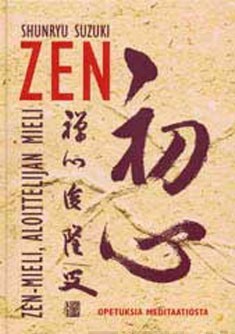
Zen mind, beginner's mind (2006) Parents Guide: Is the book OK for kids?
Age Rating, Sex, Violence & Language
This is a duplicate. Please update your lists. See https://openlibrary.org/works/OL464662W.
Adult • 2006 • 146 pages • Grade 9+
Zen Mind, Beginner's Mind is a non-fiction collection of talks given by Zen Master Shunryū Suzuki concerning the practice of Zazen (meditation) and Zen philosophy. Because it is a spiritual/philosophical text rather than fiction, it contains no violence, sexual content, profanity, or substance use. It is recommended for curious adolescents and adults due to the abstract nature of its metaphysical concepts and the focus required for its… Sign up for the full guide
Is Zen mind, beginner's mind appropriate for kids?
Zen Mind, Beginner's Mind is a non-fiction collection of talks given by Zen Master Shunryū Suzuki concerning the practice of Zazen (meditation) and Zen philosophy. Because it is a spiritual/philosophical text rather than fiction, it contains no violence, sexual content… Read more — free account
Content severity in Zen mind, beginner's mind
What happens in Zen mind, beginner's mind, moment by moment
- p. 21 🔥 Mature Themes 1/10
- p. 25 🔥 Mature Themes 1/10
- p. 32 🔥 Mature Themes 1/10
Sex and nudity in Zen mind, beginner's mind
This book contains absolutely no sexual content, nudity, or romantic themes. As a collection of transcribed talks on Zen Buddhism given by Shunryū Suzuki to his students, the focus remains entirely on spiritual discipline and philosophical inquiry. The text does not even use sexual metaphors to describe spiritual union, which is common in some other religious traditions. Readers will find the prose to be clinical and instructional regarding the human body, focusing solely on posture and breathing. The lack of any…
Read more — free accountViolence and gore in Zen mind, beginner's mind
There are no depictions of physical violence, threats, or aggressive behavior in this text. Suzuki Roshi advocates for a life of peace and non-attachment, focusing on the stillness of Zazen meditation rather than conflict. While the book mentions the challenges of the 'small self' or ego, these are internal philosophical struggles rather than physical confrontations. The text is entirely non-violent in both its instructions and its metaphors, aiming to cultivate a mind of compassion. Younger readers will not…
Read more — free accountLanguage in Zen mind, beginner's mind
The book is entirely free of profanity, vulgarity, or offensive slurs. The language used is formal yet accessible, reflecting the respectful atmosphere of a Zen monastery or practice center. Suzuki uses simple, direct English to explain complex metaphysical ideas, maintaining a tone of gentle authority throughout. There are no instances of even mild expletives or derogatory remarks directed at individuals or groups. The focus remains on clear communication of Soto Zen principles, making it appropriate for any age…
Read more — free accountDrugs, alcohol, and smoking in Zen mind, beginner's mind
Substance use, including alcohol and drugs, is not mentioned or encouraged within these lectures. The philosophy presented emphasizes 'clear mind' and awareness, which is generally considered antithetical to intoxication in the Zen tradition. Suzuki Roshi discusses the importance of not being 'drunk' on one's own ego or intellectual achievements, but this is strictly a metaphorical usage. There are no references to tobacco, caffeine, or any medicinal substances. The text encourages a natural state of being that…
Read more — free accountMature themes in Zen mind, beginner's mind
The text explores deep existential and metaphysical themes such as non-duality, the impermanence of the self, and the concept of 'nothingness.' Suzuki Roshi challenges the reader to move beyond the duality of good and bad, which may be intellectually taxing for younger students. Themes of discipline, the necessity of physical discomfort during long periods of sitting, and the rejection of goal-oriented thinking are central. The book also touches on the inevitability of death and the transience of life as part of…
Read more — free accountFrequently Asked Questions
Is Zen mind, beginner's mind appropriate for kids?
Bontent's parent guide suggests Zen mind, beginner's mind is best for ages 12+. Zen Mind, Beginner's Mind is a non-fiction collection of talks given by Zen Master Shunryū Suzuki concerning the practice of Zazen (meditation) and Zen philosophy. Because it is a spiritual/philosophical text rather…
What age rating does Zen mind, beginner's mind have?
Books don't carry official age ratings. Zen mind, beginner's mind is shelved by its publisher as Adult, but that's a marketing category, not a content rating — Bontent's own review of what's actually on the page puts it at ages 12+.
What reading level is Zen mind, beginner's mind?
Zen mind, beginner's mind is 146 pages and its reading level is Grade 9+. Bontent recommends it for ages 12+.
What is Zen mind, beginner's mind about?
Zen Mind, Beginner's Mind is a non-fiction collection of talks given by Zen Master Shunryū Suzuki concerning the practice of Zazen (meditation) and Zen philosophy. Because it is a spiritual/philosophical text rather than fiction, it contains no violence, sexual content, profanity, or substance use. It is recommended…
Is there sex or nudity in Zen mind, beginner's mind?
This book contains absolutely no sexual content, nudity, or romantic themes. As a collection of transcribed talks on Zen Buddhism given by Shunryū Suzuki to his students, the focus remains entirely on spiritual discipline and philosophical inquiry. The text…
How violent is Zen mind, beginner's mind?
There are no depictions of physical violence, threats, or aggressive behavior in this text. Suzuki Roshi advocates for a life of peace and non-attachment, focusing on the stillness of Zazen meditation rather than conflict. While the book mentions the…
Is the language in Zen mind, beginner's mind appropriate for kids?
The book is entirely free of profanity, vulgarity, or offensive slurs. The language used is formal yet accessible, reflecting the respectful atmosphere of a Zen monastery or practice center. Suzuki uses simple, direct English to explain complex metaphysical…
Are drugs, alcohol, or smoking depicted in Zen mind, beginner's mind?
Substance use, including alcohol and drugs, is not mentioned or encouraged within these lectures. The philosophy presented emphasizes 'clear mind' and awareness, which is generally considered antithetical to intoxication in the Zen tradition. Suzuki Roshi…
What mature themes appear in Zen mind, beginner's mind?
The text explores deep existential and metaphysical themes such as non-duality, the impermanence of the self, and the concept of 'nothingness.' Suzuki Roshi challenges the reader to move beyond the duality of good and bad, which may be intellectually taxing…
Where can I read the full Zen mind, beginner's mind parent guide?
Create a free Bontent account to unlock page-level notes, filter by your kids' ages, and save titles to your watchlist.
More doctrines books with parent guides
Religion books parents are checking
- The 48 Laws of Power parent guide
- Homo Deus: A Brief History of Tomorrow parent guide
- Biggest Ideas in the Universe 2 parent guide
- Four Thousand Weeks: Time Management for Mortals parent guide
- Under the Banner of Heaven: A Story of Violent Faith parent guide
- The Obstacle Is the Way: The Timeless Art of Turning Adversity to Advantage parent guide
- Being Mortal: Medicine and What Matters in the End parent guide
- Books Do Not Have Wings parent guide
- How to do nothing: Resisting the Attention Economy parent guide
- THE CREATIVE ACT parent guide
- Humankind: A Hopeful History parent guide
- The God Delusion parent guide
More books with Bontent parent guides
- Sunrise on the Reaping parent guide
- Tall Oaks parent guide
- Charged parent guide
- The Midnight Girls parent guide
- Clash of star-kings parent guide
- Blake Crouch's Dark Matter parent guide
- The ballad of the hundred days parent guide
- The motion picture chums' outdoor exhibition, or, The film that solved a mystery parent guide
- Before They Are Hanged (The First Law, #2) parent guide
- The man from up there parent guide
- Blood of Elves (The Witcher, #1) parent guide
- The Christmas Stories [8 stories] parent guide
- Harry Potter and the Sorcerer's Stone (Harry Potter, #1) parent guide
- 6 great short novels of science fiction parent guide
- Arena 13 parent guide
- The Subtle Art of Not Giving a F*ck parent guide