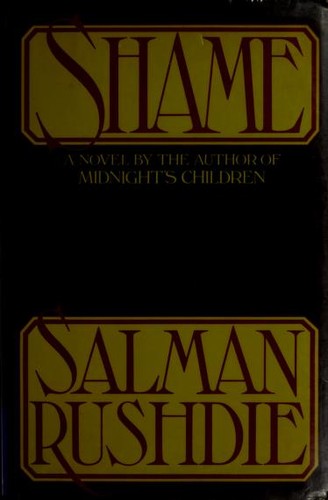
Shame (2000) Parents Guide: Is the book OK for kids?
Age Rating, Sex, Violence & Language
In het hedendaagse Pakistan, met zijn grote tegenstelling tussen rijk en arm, zijn machtsstrijd, politiek gekonkel en corruptie dagelijks voorkomende verschijnselen.
Adult • 2000 • 343 pages • High School/College
Salman Rushdie's Shame is a complex, allegorical novel set in a fictionalized Pakistan that explores themes of honor, political corruption, and psychological repression. Parents should note it is intended for mature readers due to its depictions of political violence, sexual dysfunction, and disturbing imagery surrounding gender and societal expectations. The book earns its adult rating through its sophisticated prose, dark humor, and… Sign up for the full guide
Is Shame appropriate for kids?
Salman Rushdie's Shame is a complex, allegorical novel set in a fictionalized Pakistan that explores themes of honor, political corruption, and psychological repression. Parents should note it is intended for mature readers due to its depictions of political violence, sexual… Read more — free account
Content severity in Shame
What happens in Shame, moment by moment
- p. 12 🔥 Mature Themes 3/10
- p. 24 💬 Language 2/10
- p. 45 ♥ Sex & Nudity 4/10
Sex and nudity in Shame
The book contains non-graphic but mature sexual situations, including references to impotence, adultery, and the psychological impact of sexual repression. There are depictions of arranged marriages and the objectification of women within a patriarchal society. Salman Rushdie explores these elements allegorically, such as in Chapter 3 where Iskander’s womanizing lifestyle is detailed through the perspective of his neglected wife, Rani. There are also discussions regarding the lack of consummation in Omar Khayyam…
Read more — free accountViolence and gore in Shame
Moderate to strong political violence is present, including executions, riots, and off-page assassinations. Some scenes include disturbing imagery, such as a character who 'absorbs' the shame of others and manifests it physically through violent outbursts. Sufiya Zinobia’s character arc includes moments of animal cruelty and surreal human decapitations that represent the breaking point of social repression. In Chapter 7, the text describes the cold efficiency of military crackdowns and the hangings of political…
Read more — free accountLanguage in Shame
Frequent moderate profanity and heavy use of sophisticated, pointed satire are utilized throughout the text. Language is used primarily to underscore the absurdity and cruelty of the political landscape, with occasional use of terms like 'bastard,' 'hell,' and 'damn' to punctuate emotional distress. The prose is dense and intellectual, requiring a high reading level to parse the nuances of the characters' insults and the narrator's biting commentary. While not vulgar for the sake of shock, the dialogue reflects…
Read more — free accountDrugs, alcohol, and smoking in Shame
Social drinking and the use of tobacco are depicted in the context of high-society parties and political gatherings, reflecting the period and setting's upper-class norms. Characters like Iskander Harappa are frequently seen with glasses of scotch or imported alcohol, signifying their westernized tastes and perceived decadence. In contrast, other characters use abstinence from alcohol as a political or religious tool to exert moral superiority. Tobacco use is ubiquitous among the male characters during strategy…
Read more — free accountMature themes in Shame
Central themes explore the corrosive nature of shame and honor (izzat), the cyclical violence of transition in power, and the marginalization of women in patriarchal political systems. The novel functions as a thinly veiled history of Pakistan, focusing on the binary opposition between military rule and civilian populism. Concepts of 'purdah' and the domestic imprisonment of women are central to the early chapters involving the Shakil sisters. The psychological weight of heritage and the impossibility of escaping…
Read more — free accountFrequently Asked Questions
Is Shame appropriate for kids?
Bontent's parent guide suggests Shame is best for ages 17+. Salman Rushdie's Shame is a complex, allegorical novel set in a fictionalized Pakistan that explores themes of honor, political corruption, and psychological repression. Parents should note it is intended for mature…
What age rating does Shame have?
Books don't carry official age ratings. Shame is shelved by its publisher as Adult, but that's a marketing category, not a content rating — Bontent's own review of what's actually on the page puts it at ages 17+.
What reading level is Shame?
Shame is 343 pages and its reading level is High School/College. Bontent recommends it for ages 17+.
What is Shame about?
Salman Rushdie's Shame is a complex, allegorical novel set in a fictionalized Pakistan that explores themes of honor, political corruption, and psychological repression. Parents should note it is intended for mature readers due to its depictions of political violence, sexual dysfunction, and disturbing imagery…
Is there sex or nudity in Shame?
The book contains non-graphic but mature sexual situations, including references to impotence, adultery, and the psychological impact of sexual repression. There are depictions of arranged marriages and the objectification of women within a patriarchal…
How violent is Shame?
Moderate to strong political violence is present, including executions, riots, and off-page assassinations. Some scenes include disturbing imagery, such as a character who 'absorbs' the shame of others and manifests it physically through violent outbursts…
Is the language in Shame appropriate for kids?
Frequent moderate profanity and heavy use of sophisticated, pointed satire are utilized throughout the text. Language is used primarily to underscore the absurdity and cruelty of the political landscape, with occasional use of terms like 'bastard,' 'hell,'…
Are drugs, alcohol, or smoking depicted in Shame?
Social drinking and the use of tobacco are depicted in the context of high-society parties and political gatherings, reflecting the period and setting's upper-class norms. Characters like Iskander Harappa are frequently seen with glasses of scotch or imported…
What mature themes appear in Shame?
Central themes explore the corrosive nature of shame and honor (izzat), the cyclical violence of transition in power, and the marginalization of women in patriarchal political systems. The novel functions as a thinly veiled history of Pakistan, focusing on…
Where can I read the full Shame parent guide?
Create a free Bontent account to unlock page-level notes, filter by your kids' ages, and save titles to your watchlist.
Books like Shame with similar intensity
Sign up to filter






Less intense books for families
Sign up to filter





More fiction books with parent guides
- The Dictionary of Lost Words parent guide
- Nine Lives parent guide
- Hana Khan Carries On parent guide
- Charlie the Choo-Choo parent guide
- The Return of the Young Prince parent guide
- The Name of the Wind / The Wise Man's Fear / The Slow Regard of Silent Things (The Kingkiller Chronicle #1-2.5) parent guide
- Clash of star-kings parent guide
- This House Will Feed parent guide
- The Bookshop on Rosemary Lane parent guide
- Told in letters parent guide
- Babel: Or the Necessity of Violence: An Arcane History of the Oxford Translators' Revolution parent guide
- The Titan’s Curse (Percy Jackson and the Olympians, #3) parent guide
Magical Realism books parents are checking
- Black Cake parent guide
- Moon Witch, Spider King parent guide
- American Gods: Tenth Anniversary (American Gods, #1) parent guide
- The House in the Cerulean Sea (Cerulean Chronicles, #1) parent guide
- Wuthering Heights, Agnes Grey, and Poems parent guide
- Works (Poems / Wuthering Heights) parent guide
- The Count of Monte Cristo parent guide
- The Princess Bride Deluxe Limited Edition: S. Morgenstern's Classic Tale of True Love and High Adventure parent guide
More books by Salman Rushdie
More books with Bontent parent guides
- The Dictionary of Lost Words parent guide
- Charlie the Choo-Choo parent guide
- Blake Crouch's Dark Matter parent guide
- Atomic Habits: An Easy & Proven Way to Build Good Habits & Break Bad Ones parent guide
- Babel: Or the Necessity of Violence: An Arcane History of the Oxford Translators' Revolution parent guide
- The Battle of the Labyrinth (Percy Jackson and the Olympians, #4) parent guide
- The motion picture chums' outdoor exhibition, or, The film that solved a mystery parent guide
- The man from up there parent guide
- The contemporary Negro novel parent guide
- The Dark Tower II: The Drawing of the Three (The Dark Tower, #2) parent guide
- Onyx Storm (The Empyrean, #3) parent guide
- A century of the English novel parent guide
- The complete works of the Gawain-poet parent guide
- Harry Potter and the Sorcerer's Stone (Harry Potter, #1) parent guide
- 6 great short novels of science fiction parent guide
- With This Ring? parent guide