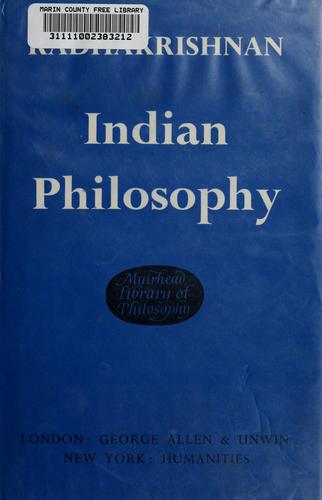
Indian philosophy (1989) Parents Guide: Is the book OK for kids?
Age Rating, Sex, Violence & Language
On the philosophy of Upanishads; being translation of 4th chapter of vol. 1 of Indian philosophy.
Adult • 1989 • 738 pages • College/Post-Graduate
This two-volume foundational text explores the history, metaphysical developments, and ethical frameworks of ancient Indian philosophy. It is an academic, philosophical treatise intended for adult readers, students of religion, and historians rather than casual readers. Because it is a dense scholarly work, parents should note that it contains no narrative fiction, sexual content, or graphic violence, but discusses complex religious… Sign up for the full guide
Is Indian philosophy appropriate for kids?
This two-volume foundational text explores the history, metaphysical developments, and ethical frameworks of ancient Indian philosophy. It is an academic, philosophical treatise intended for adult readers, students of religion, and historians rather than casual readers. Because… Read more — free account
Content severity in Indian philosophy
What happens in Indian philosophy, moment by moment
- p. 20 🔥 Mature Themes 1/10
- p. 45 🔥 Mature Themes 1/10
- p. 78 🔥 Mature Themes 1/10
Sex and nudity in Indian philosophy
There is no sexual content in this book. It is a strictly academic exploration of historical and religious philosophy. The text remains entirely focused on metaphysical, ethical, and epistemological discourse without any references to sexuality or romantic themes. Radhakrishnan maintains a formal tone that avoids any discussion of human anatomy or eroticism even when discussing social structures. The focus remains on the intellectual development of the soul rather than the physical body. Parents should be aware…
Read more — free accountViolence and gore in Indian philosophy
There is no violence in this book. It serves as a scholarly analysis of Indian intellectual traditions and historical thought processes. No physical confrontations or aggressive acts are described, as the content is exclusively intellectual and expository in nature. While historical conflicts are sometimes the backdrop of philosophical shifts, the author does not detail battles or physical harm. The text focuses on the peaceful evolution of logic, grammar, and metaphysical debate. Even when discussing the concept…
Read more — free accountLanguage in Indian philosophy
The language is formal, academic, and dense, reflecting the scholarly standard of early 20th-century religious studies. There is no profanity or colloquial slang. The text uses technical terminology related to Sanskrit, Vedic philosophy, and historical linguistic structures. Readers will encounter complex sentence structures and obscure philosophical jargon that requires deep concentration. The vocabulary is elevated, utilizing terms like 'transcendental,' 'epistemological,' and 'ontological' throughout. There are…
Read more — free accountDrugs, alcohol, and smoking in Indian philosophy
There is no substance use depicted or discussed in the text. The narrative is purely philosophical and analytical. The author focuses on the internal life, moral duty, and the search for ultimate reality as defined by Upanishadic thought. There are no mentions of alcohol, drugs, or the recreational use of intoxicants. Even in historical contexts where ritualistic substances might have existed, Radhakrishnan focuses on the symbolic and theological implications rather than the physical act of consumption. The work…
Read more — free accountMature themes in Indian philosophy
The central themes revolve around the pursuit of absolute truth, the nature of the self (Atman), and the relationship between the individual and the cosmic reality (Brahman). It engages with profound existential questions regarding morality, the structure of consciousness, and the historical development of religious ethics. These subjects are presented through a rigorous, academic lens that demands a high level of patience and reading comprehension. The book explores the tension between empirical reality and…
Read more — free accountFrequently Asked Questions
Is Indian philosophy appropriate for kids?
Bontent's parent guide suggests Indian philosophy is best for ages 16+. This two-volume foundational text explores the history, metaphysical developments, and ethical frameworks of ancient Indian philosophy. It is an academic, philosophical treatise intended for adult readers, students of…
What age rating does Indian philosophy have?
Books don't carry official age ratings. Indian philosophy is shelved by its publisher as Adult, but that's a marketing category, not a content rating — Bontent's own review of what's actually on the page puts it at ages 16+.
What reading level is Indian philosophy?
Indian philosophy is 738 pages and its reading level is College/Post-Graduate. Bontent recommends it for ages 16+.
What is Indian philosophy about?
This two-volume foundational text explores the history, metaphysical developments, and ethical frameworks of ancient Indian philosophy. It is an academic, philosophical treatise intended for adult readers, students of religion, and historians rather than casual readers. Because it is a dense scholarly work, parents…
Is there sex or nudity in Indian philosophy?
There is no sexual content in this book. It is a strictly academic exploration of historical and religious philosophy. The text remains entirely focused on metaphysical, ethical, and epistemological discourse without any references to sexuality or romantic…
How violent is Indian philosophy?
There is no violence in this book. It serves as a scholarly analysis of Indian intellectual traditions and historical thought processes. No physical confrontations or aggressive acts are described, as the content is exclusively intellectual and expository in…
Is the language in Indian philosophy appropriate for kids?
The language is formal, academic, and dense, reflecting the scholarly standard of early 20th-century religious studies. There is no profanity or colloquial slang. The text uses technical terminology related to Sanskrit, Vedic philosophy, and historical…
Are drugs, alcohol, or smoking depicted in Indian philosophy?
There is no substance use depicted or discussed in the text. The narrative is purely philosophical and analytical. The author focuses on the internal life, moral duty, and the search for ultimate reality as defined by Upanishadic thought. There are no…
What mature themes appear in Indian philosophy?
The central themes revolve around the pursuit of absolute truth, the nature of the self (Atman), and the relationship between the individual and the cosmic reality (Brahman). It engages with profound existential questions regarding morality, the structure of…
Where can I read the full Indian philosophy parent guide?
Create a free Bontent account to unlock page-level notes, filter by your kids' ages, and save titles to your watchlist.
More philosophy books with parent guides
- The 48 Laws of Power parent guide
- Homo Deus: A Brief History of Tomorrow parent guide
- The Obstacle Is the Way: The Timeless Art of Turning Adversity to Advantage parent guide
- Being Mortal: Medicine and What Matters in the End parent guide
- David and Goliath: Underdogs, Misfits, and the Art of Battling Giants parent guide
- How to do nothing: Resisting the Attention Economy parent guide
- Divergent parent guide
- Divergent (Divergent, #1) parent guide
- The God Delusion parent guide
- The Art of War parent guide
- The Art of War parent guide
- Thinking in Systems: A Primer parent guide
Philosophy books parents are checking
- American Gods: Tenth Anniversary (American Gods, #1) parent guide
- The Bands of Mourning (Mistborn, #6) parent guide
- Love Bears All Things parent guide
- The Chronicles of Narnia Set parent guide
- Moby-Dick or, The Whale parent guide
- The Name of the Rose parent guide
- Biggest Ideas in the Universe 2 parent guide
- "Everyman," with other interludes parent guide
- Four Thousand Weeks: Time Management for Mortals parent guide
- The Book of Dust: La Belle Sauvage (Book of Dust, #1) parent guide
More books with Bontent parent guides
- The Dictionary of Lost Words parent guide
- Tall Oaks parent guide
- The Midnight Girls parent guide
- Clash of star-kings parent guide
- The Bookshop on Rosemary Lane parent guide
- The ballad of the hundred days parent guide
- The man from up there parent guide
- Blood of Elves (The Witcher, #1) parent guide
- The complete works of the Gawain-poet parent guide
- Arena 13 parent guide
- The Maid: A Novel (Molly the Maid, #1) parent guide
- Biggest Ideas in the Universe 2 parent guide
- The Ashes & the Star-Cursed King (Crowns of Nyaxia, #2) parent guide
- The Collapsing Empire (The Interdependency, #1) parent guide
- The Golden Enclaves (The Scholomance, #3) parent guide
- DIARY OF A WIMPY KID parent guide