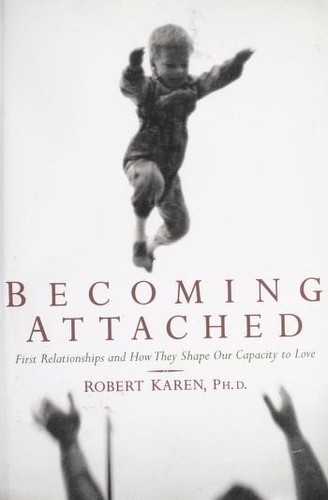
Becoming attached (1999) Parents Guide: Is the book OK for kids?
Age Rating, Sex, Violence & Language
The struggle to understand the infant-parent bond ranks as one of the great quests of modern psychology, one that touches us deeply because it holds so many clues to how we become who we are. How are our personalities formed? How do our early struggles with our parents reappear in the way we relate to others as adults? Why do we repeat with our own children--seemingly against our will--the very behaviors we most disliked about our parents? In Becoming Attached, psychologist and noted journalist Robert Karen offers fresh insight into… Sign up for the full guide
Adult • 1999 • 499 pages • College Level / Academic
Becoming Attached is a comprehensive psychological history of attachment theory, tracing the work of John Bowlby and Mary Ainsworth to explain how infant-parent bonds shape adult personalities. Because it is a non-fiction academic and historical text, it contains no traditional plot-based violence, profanity, or sexual scenes, though it discusses sensitive topics like childhood neglect, maternal deprivation, and the emotional impact of… Sign up for the full guide
Is Becoming attached appropriate for kids?
Becoming Attached is a comprehensive psychological history of attachment theory, tracing the work of John Bowlby and Mary Ainsworth to explain how infant-parent bonds shape adult personalities. Because it is a non-fiction academic and historical text, it contains no traditional… Read more — free account
Content severity in Becoming attached
What happens in Becoming attached, moment by moment
- p. 15 🔥 Mature Themes 2/10
- p. 32 🔥 Mature Themes 1/10
- p. 48 🔥 Mature Themes 3/10
Sex and nudity in Becoming attached
This book contains no sexual scenes, graphic descriptions, or erotic content. As an academic text focusing on developmental psychology, the discussion of intimacy is strictly limited to the emotional bond between infants and caregivers. Robert Karen analyzes how these early bonds influence future romantic selection, but he does so through a clinical and historical lens. There is no mention of sexual anatomy or behavior throughout the 499 pages. The tone remains entirely professional and scholarly, suitable for…
Read more — free accountViolence and gore in Becoming attached
Physical violence is virtually non-existent in this text, though it documents the emotional toll of neglect and abandonment. Historical accounts discuss the plight of infants in sterile hospital wards and orphanages where lack of touch led to physical wasting. Mention is made of John Bowlby’s work with juvenile thieves, exploring the link between early separation and later delinquency. The 'violence' described is systemic and psychological rather than physical altercations. There are no descriptions of assault…
Read more — free accountLanguage in Becoming attached
There is a complete absence of profanity, racial slurs, or offensive language in this work. The text maintains a formal, scholarly tone appropriate for an academic history of psychological theory. It focuses strictly on clinical terminology and professional discourse regarding child development. Terms like 'maternal deprivation' and 'monotropy' are used frequently to define scientific concepts. Readers will not encounter 'f-words,' 's-words,' or any other vulgarity. The prose is dense and intellectually rigorous…
Read more — free accountDrugs, alcohol, and smoking in Becoming attached
This book contains no references to the use of alcohol, tobacco, or illegal drugs. As a non-fiction study of developmental psychology and parent-child bonding, it does not depict or discuss recreational substance use. There are no scenes of social drinking or characters struggling with addiction in a narrative sense. The content remains focused on clinical observations and historical research data regarding infant behavior. Clinical mentions of medication or sedation in a hospital context are rare and strictly…
Read more — free accountMature themes in Becoming attached
Strong focus on emotional health, maternal deprivation, and the impact of the 'Strange Situation' experiment on child-rearing philosophy. The text explores how childhood trauma manifests as adult anxiety or avoidance, specifically detailing Mary Ainsworth's research and Bowlby's theories. Themes of grief and loss are prevalent, especially in descriptions of toddlers separated from their primary caregivers. The book also examines the intergenerational cycle of parenting and the potential for psychological healing…
Read more — free accountFrequently Asked Questions
Is Becoming attached appropriate for kids?
Bontent's parent guide suggests Becoming attached is best for ages 17+. Becoming Attached is a comprehensive psychological history of attachment theory, tracing the work of John Bowlby and Mary Ainsworth to explain how infant-parent bonds shape adult personalities. Because it is a…
What age rating does Becoming attached have?
Books don't carry official age ratings. Becoming attached is shelved by its publisher as Adult, but that's a marketing category, not a content rating — Bontent's own review of what's actually on the page puts it at ages 17+.
What reading level is Becoming attached?
Becoming attached is 499 pages and its reading level is College Level / Academic. Bontent recommends it for ages 17+.
What is Becoming attached about?
Becoming Attached is a comprehensive psychological history of attachment theory, tracing the work of John Bowlby and Mary Ainsworth to explain how infant-parent bonds shape adult personalities. Because it is a non-fiction academic and historical text, it contains no traditional plot-based violence, profanity, or…
Is there sex or nudity in Becoming attached?
This book contains no sexual scenes, graphic descriptions, or erotic content. As an academic text focusing on developmental psychology, the discussion of intimacy is strictly limited to the emotional bond between infants and caregivers. Robert Karen analyzes…
How violent is Becoming attached?
Physical violence is virtually non-existent in this text, though it documents the emotional toll of neglect and abandonment. Historical accounts discuss the plight of infants in sterile hospital wards and orphanages where lack of touch led to physical…
Is the language in Becoming attached appropriate for kids?
There is a complete absence of profanity, racial slurs, or offensive language in this work. The text maintains a formal, scholarly tone appropriate for an academic history of psychological theory. It focuses strictly on clinical terminology and professional…
Are drugs, alcohol, or smoking depicted in Becoming attached?
This book contains no references to the use of alcohol, tobacco, or illegal drugs. As a non-fiction study of developmental psychology and parent-child bonding, it does not depict or discuss recreational substance use. There are no scenes of social drinking or…
What mature themes appear in Becoming attached?
Strong focus on emotional health, maternal deprivation, and the impact of the 'Strange Situation' experiment on child-rearing philosophy. The text explores how childhood trauma manifests as adult anxiety or avoidance, specifically detailing Mary Ainsworth's…
Where can I read the full Becoming attached parent guide?
Create a free Bontent account to unlock page-level notes, filter by your kids' ages, and save titles to your watchlist.
Books like Becoming attached with similar intensity
Sign up to filter







Psychology books parents are checking
- Black Cake parent guide
- Hana Khan Carries On parent guide
- You Did Nothing Wrong parent guide
- Atomic Habits: An Easy & Proven Way to Build Good Habits & Break Bad Ones parent guide
- An imperfect mother parent guide
- The 48 Laws of Power parent guide
- The contemporary Negro novel parent guide
- The Christmas Stories [8 stories] parent guide
- The Bad Beginning (A Series of Unfortunate Events #1) parent guide
- Saga, Vol. 1 parent guide
- Jade City (The Green Bone Saga, #1) parent guide
- Jade City: Family is duty. Magic is power. Honour is everything. parent guide
More books with Bontent parent guides
- The Dictionary of Lost Words parent guide
- Tall Oaks parent guide
- The Midnight Girls parent guide
- Charlie the Choo-Choo parent guide
- The Name of the Wind / The Wise Man's Fear / The Slow Regard of Silent Things (The Kingkiller Chronicle #1-2.5) parent guide
- The Martian Contingency parent guide
- Blake Crouch's Dark Matter parent guide
- Atomic Habits: An Easy & Proven Way to Build Good Habits & Break Bad Ones parent guide
- The ballad of the hundred days parent guide
- The motion picture chums' outdoor exhibition, or, The film that solved a mystery parent guide
- Before They Are Hanged (The First Law, #2) parent guide
- 2001: A Space Odyssey parent guide
- The man from up there parent guide
- The contemporary Negro novel parent guide
- The Christmas Stories [8 stories] parent guide
- Onyx Storm (The Empyrean, #3) parent guide