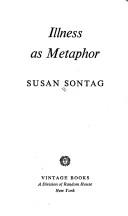
Illness as metaphor (1979) Parents Guide: Is the book OK for kids?
Age Rating, Sex, Violence & Language
In 1978, while recovering from cancer, Susan Sontag wrote Illness as metaphor, the celebrated essay on the invented and often punitive uses of illness in our culture. It was not surprising that a decade later, after the advent of AIDS, Sontag felt compelled to write a sequel that would counter the almost universal labeling of AIDS as a "plague". Published together in one volume these works are brimming with humane and original ideas about disease and the modern condition.
Adult • 1979 • 88 pages • College/Advanced
Susan Sontag’s 'Illness as Metaphor' is a scholarly, philosophical essay that examines how society attaches punitive and moral meanings to diseases like cancer and AIDS. It is an intellectual critique intended for mature readers capable of analyzing medical history and cultural sociology. The text contains no depictions of sex or substance use, but it discusses themes of terminal illness, death, and psychological suffering at a high… Sign up for the full guide
Is Illness as metaphor appropriate for kids?
Susan Sontag’s 'Illness as Metaphor' is a scholarly, philosophical essay that examines how society attaches punitive and moral meanings to diseases like cancer and AIDS. It is an intellectual critique intended for mature readers capable of analyzing medical history and cultural… Read more — free account
Content severity in Illness as metaphor
What happens in Illness as metaphor, moment by moment
- p. 5 🔥 Mature Themes 3/10
- p. 9 🔥 Mature Themes 2/10
- p. 14 🔥 Mature Themes 2/10
Sex and nudity in Illness as metaphor
Sexual content is entirely absent from this academic text. Sontag focuses exclusively on the historical and cultural framing of diseases, maintaining a strictly clinical and philosophical perspective. There are no discussions of sexual activity, intimacy, or bodily anatomy in a sexual context. The prose remains objective and high-minded throughout the entire 88-page volume. Even when discussing AIDS, the focus is on epidemiology and metaphors rather than sexual mechanics or behavior.
Violence and gore in Illness as metaphor
The book does not feature physical violence or action sequences. Instead, the 'violence' discussed is the metaphorical violence of labeling a patient as responsible for their own illness or the 'invasion' of a body by cells. The author describes the harsh reality of medical treatment and the clinical decline of patients with gravity and intellectual distance. There are references to the historical treatment of lepers and the social exclusion of the sick, which carry a heavy emotional weight. The text remains an…
Read more — free accountLanguage in Illness as metaphor
The language is formal, dense, and academic throughout the essay. There is no profanity or colloquial vulgarity found in any chapter. Readers should expect high-level vocabulary related to medicine, philosophy, and linguistics, such as 'apocalyptic,' 'metastasize,' and 'phenomenology.' This elevated register may be challenging for younger or less experienced readers. Sontag uses precise, cold terminology to dismantle common cultural cliches and tropes.
Drugs, alcohol, and smoking in Illness as metaphor
There is no mention of recreational drug use or substance abuse. The text discusses medical treatments, chemotherapy, and the history of disease management in an analytical fashion. It does not endorse or depict substance consumption for pleasure or as a coping mechanism in any form. References to medicine are strictly limited to their efficacy as clinical tools or their roles in social metaphors. The absence of substance use aligns with the scholarly, non-narrative nature of the work.
Mature themes in Illness as metaphor
The central themes revolve around death, chronic illness, and the stigma of disease. Sontag explores how cultural metaphors for cancer and AIDS dehumanize the sick by implying they are 'at fault' for their condition through their personality or lifestyle. The work is a deeply serious meditation on human suffering and the way society constructs narratives around the dying. Readers will encounter heavy concepts regarding mortality, the fragility of the body, and the history of terminal suffering. The book concludes…
Read more — free accountFrequently Asked Questions
Is Illness as metaphor appropriate for kids?
Bontent's parent guide suggests Illness as metaphor is best for ages 16+. Susan Sontag’s 'Illness as Metaphor' is a scholarly, philosophical essay that examines how society attaches punitive and moral meanings to diseases like cancer and AIDS. It is an intellectual critique intended for…
What age rating does Illness as metaphor have?
Books don't carry official age ratings. Illness as metaphor is shelved by its publisher as Adult, but that's a marketing category, not a content rating — Bontent's own review of what's actually on the page puts it at ages 16+.
What reading level is Illness as metaphor?
Illness as metaphor is 88 pages and its reading level is College/Advanced. Bontent recommends it for ages 16+.
What is Illness as metaphor about?
Susan Sontag’s 'Illness as Metaphor' is a scholarly, philosophical essay that examines how society attaches punitive and moral meanings to diseases like cancer and AIDS. It is an intellectual critique intended for mature readers capable of analyzing medical history and cultural sociology. The text contains no…
Is there sex or nudity in Illness as metaphor?
Sexual content is entirely absent from this academic text. Sontag focuses exclusively on the historical and cultural framing of diseases, maintaining a strictly clinical and philosophical perspective. There are no discussions of sexual activity, intimacy, or…
How violent is Illness as metaphor?
The book does not feature physical violence or action sequences. Instead, the 'violence' discussed is the metaphorical violence of labeling a patient as responsible for their own illness or the 'invasion' of a body by cells. The author describes the harsh…
Is the language in Illness as metaphor appropriate for kids?
The language is formal, dense, and academic throughout the essay. There is no profanity or colloquial vulgarity found in any chapter. Readers should expect high-level vocabulary related to medicine, philosophy, and linguistics, such as 'apocalyptic,'…
Are drugs, alcohol, or smoking depicted in Illness as metaphor?
There is no mention of recreational drug use or substance abuse. The text discusses medical treatments, chemotherapy, and the history of disease management in an analytical fashion. It does not endorse or depict substance consumption for pleasure or as a…
What mature themes appear in Illness as metaphor?
The central themes revolve around death, chronic illness, and the stigma of disease. Sontag explores how cultural metaphors for cancer and AIDS dehumanize the sick by implying they are 'at fault' for their condition through their personality or lifestyle. The…
Where can I read the full Illness as metaphor parent guide?
Create a free Bontent account to unlock page-level notes, filter by your kids' ages, and save titles to your watchlist.
More fiction books with parent guides
- The Dictionary of Lost Words parent guide
- Nine Lives parent guide
- Hana Khan Carries On parent guide
- Charlie the Choo-Choo parent guide
- The Return of the Young Prince parent guide
- The Name of the Wind / The Wise Man's Fear / The Slow Regard of Silent Things (The Kingkiller Chronicle #1-2.5) parent guide
- Clash of star-kings parent guide
- This House Will Feed parent guide
- The Bookshop on Rosemary Lane parent guide
- Told in letters parent guide
- Babel: Or the Necessity of Violence: An Arcane History of the Oxford Translators' Revolution parent guide
- The Titan’s Curse (Percy Jackson and the Olympians, #3) parent guide
Essays books parents are checking
- ¡Hola Papi!: How to Come Out in a Walmart Parking Lot and Other Life Lessons parent guide
- Atomic Habits: An Easy & Proven Way to Build Good Habits & Break Bad Ones parent guide
- A century of the English novel parent guide
- Four Thousand Weeks: Time Management for Mortals parent guide
- Everything Is Tuberculosis: The History and Persistence of Our Deadliest Infection parent guide
- Cultish: The Language of Fanaticism parent guide
- This is Going to Hurt: Secret Diaries of a Junior Doctor parent guide
- Range: Why Generalists Triumph in a Specialized World parent guide
- Empire of Pain: The Secret History of the Sackler Dynasty parent guide
- How to Change Your Mind: The New Science of Psychedelics parent guide
- The Body: A Guide for Occupants parent guide
- Being Mortal: Medicine and What Matters in the End parent guide
More books with Bontent parent guides
- Sunrise on the Reaping parent guide
- Tall Oaks parent guide
- Charged parent guide
- Clash of star-kings parent guide
- Blake Crouch's Dark Matter parent guide
- The Bookshop on Rosemary Lane parent guide
- The ballad of the hundred days parent guide
- The motion picture chums' outdoor exhibition, or, The film that solved a mystery parent guide
- Atomic Habits parent guide
- The man from up there parent guide
- The 48 Laws of Power parent guide
- A century of the English novel parent guide
- Harry Potter and the Sorcerer's Stone (Harry Potter, #1) parent guide
- 6 great short novels of science fiction parent guide
- Arena 13 parent guide
- The Subtle Art of Not Giving a F*ck parent guide