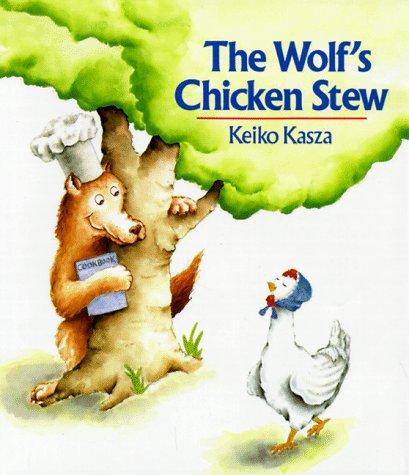
The wolf's chicken stew (1990) Parents Guide: Is the book OK for kids?
Age Rating, Sex, Violence & Language
A hungry wolf's attempts to fatten a chicken for his stewpot have unexpected results.
Picture Book • 1990 • 32 pages • Grade 1-2 / Lexile 470L (roughly grades 2–3 reading difficulty)
The Wolf's Chicken Stew is a gentle, humorous picture book about a wolf who attempts to fatten up a chicken for his stew but ends up being charmed by her many chicks. It earns its young age recommendation through its focus on kindness over predatory instincts, transitioning from a classic 'predator-prey' setup to a story of friendship. Parents should note the very mild, cartoonish premise of a wolf wanting to eat a chicken, which is… Sign up for the full guide
Is The wolf's chicken stew appropriate for kids?
The Wolf's Chicken Stew is a gentle, humorous picture book about a wolf who attempts to fatten up a chicken for his stew but ends up being charmed by her many chicks. It earns its young age recommendation through its focus on kindness over predatory instincts, transitioning from… Read more — free account
Content severity in The wolf's chicken stew
What happens in The wolf's chicken stew, moment by moment
- p. 4 ⚔ Violence & Gore 2/10
- p. 6 ⚔ Violence & Gore 1/10
- p. 8 🔥 Mature Themes 1/10
Sex and nudity in The wolf's chicken stew
There is no romantic or sexual content present in this children's picture book. The story focuses entirely on the wolf's culinary plans and his eventual friendship with the animals. The animal characters are depicted in a simple, non-suggestive illustrative style appropriate for toddlers. No characters are depicted in any state of undress, and there is no suggestive dialogue or mature themes. The tone remains strictly wholesome and centered on the whimsical nature of a picture book animal fable.
Violence and gore in The wolf's chicken stew
Very mild cartoonish peril is the central conflict, though it is never realized. A wolf initially plans to catch and eat a chicken, which is a common trope in children's literature, but no harm ever comes to any character. The wolf's predatory behavior is limited to lurking behind trees and peering through windows with a hungry expression. There are no scenes of fighting, biting, or physical aggression. Ultimately, the 'threat' is replaced by baking and caring for others, making the overall tone safe for sensitive…
Read more — free accountLanguage in The wolf's chicken stew
The language is clean and entirely appropriate for the youngest readers. There are no instances of profanity, name-calling, or even mild insults throughout the text. The vocabulary is simple and revolves around baking and friendly interactions. The most 'aggressive' phrases involve the wolf talking to himself about his appetite. This book is suitable for early literacy development without any concerns regarding linguistic appropriateness. The text is gentle and uses repetitive phrasing that is soothing for…
Read more — free accountDrugs, alcohol, and smoking in The wolf's chicken stew
None. No drugs or alcohol are featured; the focus is entirely on food like pancakes, doughnuts, and cake. The wolf is shown as a master baker rather than a consumer of anything inappropriate. There are no references to medicine, smoking, or any adult beverages. The 'stew' mentioned in the title is never actually made, as the wolf shifts his focus to desserts. The imagery of sweets and home-cooked treats dominates the culinary aspects of the book.
Mature themes in The wolf's chicken stew
Themes include kindness, the power of generosity, and the subversion of expectations. The wolf learns that being a 'sugar-uncle' to the chicks is more rewarding than his initial goal. The story explores the idea of changing one's mind and the joy that comes from making others happy. It touches on family dynamics as the chicken treats her chicks with care and the wolf is accepted into their circle. The book encourages children to look past stereotypes about 'big bad' characters.
Frequently Asked Questions
Is The wolf's chicken stew appropriate for kids?
Bontent's parent guide suggests The wolf's chicken stew is best for ages 4+. The Wolf's Chicken Stew is a gentle, humorous picture book about a wolf who attempts to fatten up a chicken for his stew but ends up being charmed by her many chicks. It earns its young age recommendation through its…
What age rating does The wolf's chicken stew have?
Books don't carry official age ratings. The wolf's chicken stew is published for a Picture Book audience, and Bontent's independent parent guide recommends it for ages 4+.
What reading level is The wolf's chicken stew?
The wolf's chicken stew is 32 pages and its reading level is Grade 1-2 / Lexile 470L (roughly grades 2–3 reading difficulty). Bontent recommends it for ages 4+.
What is The wolf's chicken stew about?
The Wolf's Chicken Stew is a gentle, humorous picture book about a wolf who attempts to fatten up a chicken for his stew but ends up being charmed by her many chicks. It earns its young age recommendation through its focus on kindness over predatory instincts, transitioning from a classic 'predator-prey' setup to a…
Is there sex or nudity in The wolf's chicken stew?
There is no romantic or sexual content present in this children's picture book. The story focuses entirely on the wolf's culinary plans and his eventual friendship with the animals. The animal characters are depicted in a simple, non-suggestive illustrative…
How violent is The wolf's chicken stew?
Very mild cartoonish peril is the central conflict, though it is never realized. A wolf initially plans to catch and eat a chicken, which is a common trope in children's literature, but no harm ever comes to any character. The wolf's predatory behavior is…
Is the language in The wolf's chicken stew appropriate for kids?
The language is clean and entirely appropriate for the youngest readers. There are no instances of profanity, name-calling, or even mild insults throughout the text. The vocabulary is simple and revolves around baking and friendly interactions. The most…
Are drugs, alcohol, or smoking depicted in The wolf's chicken stew?
None. No drugs or alcohol are featured; the focus is entirely on food like pancakes, doughnuts, and cake. The wolf is shown as a master baker rather than a consumer of anything inappropriate. There are no references to medicine, smoking, or any adult…
What mature themes appear in The wolf's chicken stew?
Themes include kindness, the power of generosity, and the subversion of expectations. The wolf learns that being a 'sugar-uncle' to the chicks is more rewarding than his initial goal. The story explores the idea of changing one's mind and the joy that comes…
Where can I read the full The wolf's chicken stew parent guide?
Create a free Bontent account to unlock page-level notes, filter by your kids' ages, and save titles to your watchlist.
Parents also checked these books for 4-year-olds
Sign up to filter






Books like The wolf's chicken stew with similar intensity
Sign up to filter






More fiction books with parent guides
- The Dictionary of Lost Words parent guide
- Nine Lives parent guide
- Hana Khan Carries On parent guide
- Charlie the Choo-Choo parent guide
- The Return of the Young Prince parent guide
- The Name of the Wind / The Wise Man's Fear / The Slow Regard of Silent Things (The Kingkiller Chronicle #1-2.5) parent guide
- Fourth Wing (The Empyrean, #1) parent guide
- Clash of star-kings parent guide
- This House Will Feed parent guide
- The Bookshop on Rosemary Lane parent guide
- Told in letters parent guide
- Babel: Or the Necessity of Violence: An Arcane History of the Oxford Translators' Revolution parent guide
Picture Book books parents are checking
- Tall Oaks parent guide
- You Did Nothing Wrong parent guide
- Unrivaled parent guide
- Recursion (TV series) parent guide
- The Bands of Mourning (Mistborn, #6) parent guide
- Scottish lliterature parent guide
- The Princess Bride Deluxe Limited Edition: S. Morgenstern's Classic Tale of True Love and High Adventure parent guide
- The Bad Beginning (A Series of Unfortunate Events #1) parent guide
- They Both Die at the End (They Both Die at the End Series, #1) parent guide
- The Thursday Murder Club #2 parent guide
More books with Bontent parent guides
- Black Cake parent guide
- The Dictionary of Lost Words parent guide
- Just For The Cameras parent guide
- Nine Lives parent guide
- Crow parent guide
- Hana Khan Carries On parent guide
- Kingdom of Shadow and Light parent guide
- Charged parent guide
- The Midnight Girls parent guide
- The Hobbit, or There and Back Again parent guide
- Last One To Die parent guide
- Moon Witch, Spider King parent guide
- Charlie the Choo-Choo parent guide
- The Lightning Thief (Percy Jackson and the Olympians #1) parent guide
- The Name of the Wind / The Wise Man's Fear / The Slow Regard of Silent Things (The Kingkiller Chronicle #1-2.5) parent guide
- American Gods: Tenth Anniversary (American Gods, #1) parent guide