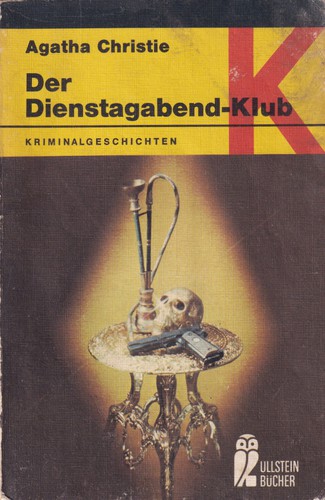
The Thirteen Problems (1975) Parents Guide: Is the book OK for kids?
Age Rating, Sex, Violence & Language
This book consists of several mini stories of unsolved murders and crimes. A group of people each try to solve the mysteries and the person who told the story reveals the true solution.
Middle Grade • 1975 • 221 pages • Grade 8-10
This collection of short detective stories features Miss Jane Marple solving various local mysteries in a conversational, intellectual setting. The book is suitable for a broad audience due to its classic, 'cozy' mystery structure where death is discussed analytically rather than graphically. Parents should note that while the subject matter involves murder, the tone is formal, restrained, and typical of Golden Age detective fiction.
Is The Thirteen Problems appropriate for kids?
This collection of short detective stories features Miss Jane Marple solving various local mysteries in a conversational, intellectual setting. The book is suitable for a broad audience due to its classic, 'cozy' mystery structure where death is discussed analytically rather… Read more — free account
Content severity in The Thirteen Problems
What happens in The Thirteen Problems, moment by moment
- p. 10 🔥 Mature Themes 1/10
- p. 25 ⚔ Violence & Gore 4/10
- p. 32 💬 Language 1/10
Sex and nudity in The Thirteen Problems
Sexual content is virtually absent from these stories, reflecting the social norms of the era in which Agatha Christie wrote. Occasional mild romantic interest or brief mentions of past marriages occur, such as the backstory involving Colonel Bantry and his wife or the jealousy-driven motives of suspects like Gladys Linch, but these are purely functional to the plot and involve no physical intimacy. There are no scenes of a sexual nature, innuendo, or romantic tension, making the book entirely appropriate for…
Read more — free accountViolence and gore in The Thirteen Problems
Violence in the book is depicted through the 'whodunit' lens, focusing on the investigation of crimes rather than the act of violence itself. While the stories revolve around murder, poisonings, and accidents, such as the case of the blue geranium or the blood-stained pavement, the descriptions are clinical, detached, and never lean into gore or anatomical detail. Characters discuss the deceased and the mechanics of the crime in a parlor setting, keeping the reader at a significant emotional remove from the…
Read more — free accountLanguage in The Thirteen Problems
The language utilized is formal, sophisticated, and reflective of 1930s British English. There is no profanity, vulgarity, or modern slang found throughout the collection, consistent with the polite social circles depicted in the stories. Characters like Sir Henry Clithering and Raymond West speak with a refined, educated vocabulary that emphasizes precision and decorum. Readers will encounter vocabulary that is slightly more advanced than contemporary young adult literature, but it remains accessible and clean…
Read more — free accountDrugs, alcohol, and smoking in The Thirteen Problems
Substances such as alcohol are occasionally mentioned, typically in the form of a social drink, a glass of sherry, or tea during a conversation at the Tuesday Night Club. These references are fleeting and reflect the lifestyle of the characters rather than any focus on substance abuse or intoxication. In cases like "The Blood-Stained Pavement," the presence of a drink serves only to set the scene for the mystery's retelling. There are no depictions of illegal drugs or concerning behaviors related to substance use…
Read more — free accountMature themes in The Thirteen Problems
The primary themes involve logic, deduction, human nature, and the moral consequences of one's actions. The stories often highlight the 'unseen' nature of evil lurking in quiet, respectable villages, which serves as a cautionary tale about judging by appearances. Miss Marple repeatedly demonstrates that human behavior is consistent across social classes, comparing murderers to local grocers or maids. These intellectual puzzles encourage critical thinking and observation, promoting the idea that justice can be…
Read more — free accountFrequently Asked Questions
Is The Thirteen Problems appropriate for kids?
Bontent's parent guide suggests The Thirteen Problems is best for ages 12+. This collection of short detective stories features Miss Jane Marple solving various local mysteries in a conversational, intellectual setting. The book is suitable for a broad audience due to its classic, 'cozy'…
What age rating does The Thirteen Problems have?
Books don't carry official age ratings. The Thirteen Problems is published for a Middle Grade audience, and Bontent's independent parent guide recommends it for ages 12+.
What reading level is The Thirteen Problems?
The Thirteen Problems is 221 pages and its reading level is Grade 8-10. Bontent recommends it for ages 12+.
What is The Thirteen Problems about?
This collection of short detective stories features Miss Jane Marple solving various local mysteries in a conversational, intellectual setting. The book is suitable for a broad audience due to its classic, 'cozy' mystery structure where death is discussed analytically rather than graphically. Parents should note that…
Is there sex or nudity in The Thirteen Problems?
Sexual content is virtually absent from these stories, reflecting the social norms of the era in which Agatha Christie wrote. Occasional mild romantic interest or brief mentions of past marriages occur, such as the backstory involving Colonel Bantry and his…
How violent is The Thirteen Problems?
Violence in the book is depicted through the 'whodunit' lens, focusing on the investigation of crimes rather than the act of violence itself. While the stories revolve around murder, poisonings, and accidents, such as the case of the blue geranium or the…
Is the language in The Thirteen Problems appropriate for kids?
The language utilized is formal, sophisticated, and reflective of 1930s British English. There is no profanity, vulgarity, or modern slang found throughout the collection, consistent with the polite social circles depicted in the stories. Characters like Sir…
Are drugs, alcohol, or smoking depicted in The Thirteen Problems?
Substances such as alcohol are occasionally mentioned, typically in the form of a social drink, a glass of sherry, or tea during a conversation at the Tuesday Night Club. These references are fleeting and reflect the lifestyle of the characters rather than…
What mature themes appear in The Thirteen Problems?
The primary themes involve logic, deduction, human nature, and the moral consequences of one's actions. The stories often highlight the 'unseen' nature of evil lurking in quiet, respectable villages, which serves as a cautionary tale about judging by…
Where can I read the full The Thirteen Problems parent guide?
Create a free Bontent account to unlock page-level notes, filter by your kids' ages, and save titles to your watchlist.
Less intense books for families
Sign up to filter






More mystery books with parent guides
- Tall Oaks parent guide
- You Did Nothing Wrong parent guide
- THE ESCAPE GAME parent guide
- Unrivaled parent guide
- Deadly Scandal parent guide
- Blake Crouch's Dark Matter parent guide
- The Secret City parent guide
- Recursion (TV series) parent guide
- The Bands of Mourning (Mistborn, #6) parent guide
- The motion picture chums' outdoor exhibition, or, The film that solved a mystery parent guide
- The Count of Monte Cristo parent guide
- Ninth House (Alex Stern, #1) parent guide
Short Stories books parents are checking
- Nine Lives parent guide
- No mind of man parent guide
- The Christmas Stories [8 stories] parent guide
- The Assassin's Blade (Throne of Glass, #0.1-0.5) parent guide
- The Wind-Up Bird Chronicle parent guide
- Great detective stories from Voltaire to Poe parent guide
- The Maid: A Novel (Molly the Maid, #1) parent guide
- The Name of the Rose parent guide
- The Thursday Murder Club #2 parent guide
- 2 L O parent guide
More books by Agatha Christie
- And Then There Were None parent guide
- Murder on the Orient Express parent guide
- The Mysterious Affair at Styles parent guide
- The Murder of Roger Ackroyd parent guide
- The A.B.C. Murders parent guide
- Marple: Twelve New Mysteries parent guide
- The Secret Adversary parent guide
- The Murder at the Vicarage parent guide
- The Mystery of the Blue Train parent guide
- The Regatta Mystery parent guide
More books with Bontent parent guides
- Sunrise on the Reaping parent guide
- The Dictionary of Lost Words parent guide
- Before They Are Hanged (The First Law, #2) parent guide
- Harry Potter parent guide
- 6 great short novels of science fiction parent guide
- Arena 13 parent guide
- Biggest Ideas in the Universe 2 parent guide
- DIARY OF A WIMPY KID parent guide
- THE LOVE HYPOTHESIS parent guide
- THE CREATIVE ACT parent guide
- EXTREME OWNERSHIP parent guide
- Shield of Sparrows parent guide
- THE BOOK THIEF parent guide
- THE LAWS OF HUMAN NATURE parent guide
- OUTLIERS parent guide
- IF HE HAD BEEN WITH ME parent guide