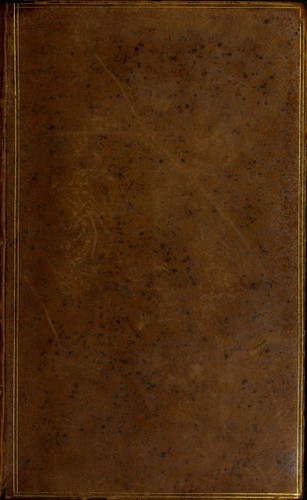
The Prince (2017) Parents Guide: Is the book OK for kids?
Age Rating, Sex, Violence & Language
The Prince (Italian: Il Principe [il ˈprintʃipe]; Latin: De Principatibus) is a 16th-century political treatise written by Italian diplomat and political theorist Niccolò Machiavelli as an instruction guide for new princes and royals. The general theme of The Prince is of accepting that the aims of princes – such as glory and survival – can justify the use of immoral means to achieve those ends. From Machiavelli's correspondence, a version appears to have been distributed in 1513, using a Latin title, De Principatibus (Of… Sign up for the full guide
Adult • 2017 • 156 pages • Grade 11-College
The Prince is a foundational 16th-century political treatise that advises rulers on how to maintain power through pragmatism, often at the expense of traditional morality. The text is intellectually dense and earns its recommended age due to clinical descriptions of historical violence, political ruthlessness, and the complex ethical arguments regarding the use of force. It is best suited for older teenagers and students of history or… Sign up for the full guide
Is The Prince appropriate for kids?
The Prince is a foundational 16th-century political treatise that advises rulers on how to maintain power through pragmatism, often at the expense of traditional morality. The text is intellectually dense and earns its recommended age due to clinical descriptions of historical… Read more — free account
Content severity in The Prince
What happens in The Prince, moment by moment
- p. 7 🔥 Mature Themes 2/10
- p. 12 🔥 Mature Themes 5/10
- p. 18 ⚔ Violence & Gore 3/10
Sex and nudity in The Prince
This category is not present in the text. As a formal political treatise, Machiavelli focuses entirely on statecraft, military strategy, and diplomacy rather than personal relationships or carnal matters. There are no romantic plotlines or sexual encounters depicted. The reading level is academic and dense, suited for students who are analyzing the functional structure of 16th-century governance. Any mention of biological lineages or family is strictly within the context of dynastic succession and political…
Read more — free accountViolence and gore in The Prince
Violence is discussed with a clinical and detached tone, primarily through historical case studies. In Chapter 7, Machiavelli details how Cesare Borgia had a minister executed and his body displayed in two pieces in a public square to manage public opinion. Chapter 8 recounts the massacre of the Senate of Syracuse by Agathocles, who killed the elite to seize absolute power. Later chapters mention the various assassinations of Roman emperors like Commodus and Caracalla as warnings against being hated by one's…
Read more — free accountLanguage in The Prince
The language is formal, intellectual, and reflects the standards of 16th-century Italian prose in translation. There is no modern profanity or vulgarity used for shock value. The text uses terms like 'beastly,' 'wretched,' and 'vicious' to categorize behaviors and political failures rather than as personal insults. Some translations may use historical epithets or strong adjectives like 'bastard' to describe illegitimate rulers, but these are rare. The overall tone is that of a serious academic lecture or a…
Read more — free accountDrugs, alcohol, and smoking in The Prince
This category is entirely absent from the work. There are no scenes involving characters consuming alcohol, tobacco, or other substances for recreational purposes. Machiavelli does not describe social gatherings or banquets where such items would be present. The focus remains steadfastly on the intellectual and strategic concerns of a ruler. The lack of narrative scenes means there is no opportunity for the depiction of substance use or intoxication.
Mature themes in The Prince
The treatise explores heavy philosophical and ethical themes regarding the survival of the state. It famously argues that the ends justify the means, suggesting that a prince must be willing to act against religion, charity, and humanity to maintain his position. In Chapter 17, Machiavelli examines the utilitarian benefits of being feared over being loved, concluding that fear is a more stable foundation for power. Chapter 25 introduces the controversial personification of Fortune as a woman who must be dominated…
Read more — free accountFrequently Asked Questions
Is The Prince appropriate for kids?
Bontent's parent guide suggests The Prince is best for ages 14+. The Prince is a foundational 16th-century political treatise that advises rulers on how to maintain power through pragmatism, often at the expense of traditional morality. The text is intellectually dense and earns its…
What age rating does The Prince have?
Books don't carry official age ratings. The Prince is shelved by its publisher as Adult, but that's a marketing category, not a content rating — Bontent's own review of what's actually on the page puts it at ages 14+.
What reading level is The Prince?
The Prince is 156 pages and its reading level is Grade 11-College. Bontent recommends it for ages 14+.
What is The Prince about?
The Prince is a foundational 16th-century political treatise that advises rulers on how to maintain power through pragmatism, often at the expense of traditional morality. The text is intellectually dense and earns its recommended age due to clinical descriptions of historical violence, political ruthlessness, and the…
Is there sex or nudity in The Prince?
This category is not present in the text. As a formal political treatise, Machiavelli focuses entirely on statecraft, military strategy, and diplomacy rather than personal relationships or carnal matters. There are no romantic plotlines or sexual encounters…
How violent is The Prince?
Violence is discussed with a clinical and detached tone, primarily through historical case studies. In Chapter 7, Machiavelli details how Cesare Borgia had a minister executed and his body displayed in two pieces in a public square to manage public opinion…
Is the language in The Prince appropriate for kids?
The language is formal, intellectual, and reflects the standards of 16th-century Italian prose in translation. There is no modern profanity or vulgarity used for shock value. The text uses terms like 'beastly,' 'wretched,' and 'vicious' to categorize…
Are drugs, alcohol, or smoking depicted in The Prince?
This category is entirely absent from the work. There are no scenes involving characters consuming alcohol, tobacco, or other substances for recreational purposes. Machiavelli does not describe social gatherings or banquets where such items would be present…
What mature themes appear in The Prince?
The treatise explores heavy philosophical and ethical themes regarding the survival of the state. It famously argues that the ends justify the means, suggesting that a prince must be willing to act against religion, charity, and humanity to maintain his…
Where can I read the full The Prince parent guide?
Create a free Bontent account to unlock page-level notes, filter by your kids' ages, and save titles to your watchlist.
Less intense books for families
Sign up to filter








More biography books with parent guides
- ¡Hola Papi!: How to Come Out in a Walmart Parking Lot and Other Life Lessons parent guide
- ATOMIC HABITS parent guide
- Atomic Habits parent guide
- The 48 Laws of Power parent guide
- It Ends With Us parent guide
- Homo Deus: A Brief History of Tomorrow parent guide
- Think and Grow Rich parent guide
- The Tattooist of Auschwitz (The Tattooist of Auschwitz, #1) parent guide
- Control Your Mind and Master Your Feelings parent guide
- Four Thousand Weeks: Time Management for Mortals parent guide
- Persepolis: The Story of a Childhood (Persepolis #1) parent guide
- Persepolis: The Story of a Childhood parent guide
Philosophy books parents are checking
- THE SUBTLE ART OF NOT GIVING A F*CK parent guide
- Biggest Ideas in the Universe 2 parent guide
- Animal Farm parent guide
- Dune parent guide
- The Obstacle Is the Way: The Timeless Art of Turning Adversity to Advantage parent guide
- Careless People: A Cautionary Tale of Power, Greed, and Lost Idealism parent guide
- Being Mortal: Medicine and What Matters in the End parent guide
- Books Do Not Have Wings parent guide
- How to do nothing: Resisting the Attention Economy parent guide
More books with Bontent parent guides
- The Dictionary of Lost Words parent guide
- Nine Lives parent guide
- Crow parent guide
- Operation Bounce House parent guide
- Tall Oaks parent guide
- Charged parent guide
- ¡Hola Papi!: How to Come Out in a Walmart Parking Lot and Other Life Lessons parent guide
- The Total Package parent guide
- The Midnight Girls parent guide
- Charlie the Choo-Choo parent guide
- The Lightning Thief (Percy Jackson and the Olympians #1) parent guide
- The Return of the Young Prince parent guide
- Fourth Wing (The Empyrean, #1) parent guide
- Clash of star-kings parent guide
- This House Will Feed parent guide
- Blake Crouch's Dark Matter parent guide