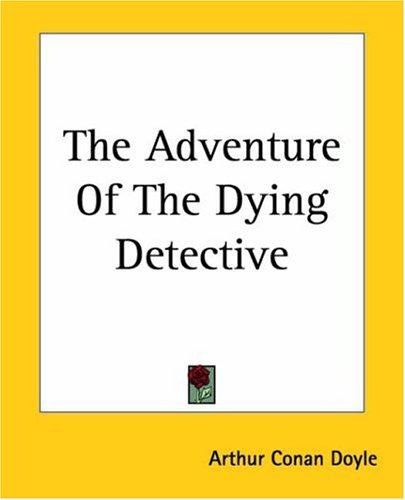
The Adventure of the Dying Detective (2019) Parents Guide: Is the book OK for kids?
Age Rating, Sex, Violence & Language
In "The Adventure of the Dying Detective," Sherlock Holmes is feigning a fatal illness to trick a nefarious client. Dr. Watson is initially convinced of Holmes's deteriorating condition, which creates a tense and suspenseful atmosphere as the detective manipulates the situation for his investigation.
Middle Grade • 2019 • 62 pages • Grade 7-9
This short Sherlock Holmes story is a classic mystery centered on psychological deception and medical suspense. Because the plot hinges on Holmes’s feigned illness and a murderous antagonist, it is best suited for older children and young teens who can navigate the dark tone. Parents should note the presence of discussions regarding murder and terminal illness, though the content is classic detective fiction rather than explicit or… Sign up for the full guide
Is The Adventure of the Dying Detective appropriate for kids?
This short Sherlock Holmes story is a classic mystery centered on psychological deception and medical suspense. Because the plot hinges on Holmes’s feigned illness and a murderous antagonist, it is best suited for older children and young teens who can navigate the dark tone… Read more — free account
Content severity in The Adventure of the Dying Detective
What happens in The Adventure of the Dying Detective, moment by moment
- p. 5 🔥 Mature Themes 2/10
- p. 8 🔥 Mature Themes 2/10
- p. 12 🔥 Mature Themes 3/10
Sex and nudity in The Adventure of the Dying Detective
There is no sexual content in this story. The narrative focuses entirely on a professional investigation and a tense interaction between Sherlock Holmes and a suspect. There are no romances, innuendos, or physical intimacy depicted at any point in the text. The only female character is Mrs. Hudson, who acts in a strictly caretaking capacity for her tenant. The atmosphere remains clinical and intellectual rather than interpersonal or romantic.
Violence and gore in The Adventure of the Dying Detective
The violence is centered on the threat of murder rather than graphic on-page depiction. Culverton Smith is revealed to have committed a murder using a contagious, deadly disease delivered via a spring-loaded trap. The tension is derived from Holmes's supposed physical agony and the lethal intent of the antagonist, but no gore or blood is described. The psychological cruelty of Smith taunting a dying man is the most intense element. The story concludes with a bloodless arrest by Inspector Morton.
Language in The Adventure of the Dying Detective
The language is consistent with early 20th-century literature and remains very mild throughout the text. There are no profanities, slurs, or vulgarities used by any of the characters. The tone is formal, polite, and sophisticated, reflecting the Victorian and Edwardian era writing style. Even the antagonist, Culverton Smith, speaks with a high degree of decorum despite his murderous intentions. The vocabulary is challenging and suited for advanced middle-grade readers.
Drugs, alcohol, and smoking in The Adventure of the Dying Detective
The story involves the manipulation of medical symptoms and potential poisoning, but it does not feature drug abuse in a recreational or modern sense. Holmes uses various props, such as beeswax and rouge, to simulate the physical effects of illness. The plot revolves around a lethal biological agent rather than narcotics. There are no scenes of social drinking or tobacco consumption in this specific short story. The focus remains entirely on the faux-medical crisis and the recovery process.
Mature themes in The Adventure of the Dying Detective
Central themes include deception, justice, terminal illness, and the loyalty between Holmes and Watson. The story explores the morality of entrapment and the lengths a detective will go to solve a crime, including gaslighting his closest friend. It addresses the fear of death and the cold-blooded nature of a villain willing to use disease as a weapon. Readers see the weight of professional responsibility as Watson struggles with his inability to help his friend.
Frequently Asked Questions
Is The Adventure of the Dying Detective appropriate for kids?
Bontent's parent guide suggests The Adventure of the Dying Detective is best for ages 10+. This short Sherlock Holmes story is a classic mystery centered on psychological deception and medical suspense. Because the plot hinges on Holmes’s feigned illness and a murderous antagonist, it is best suited for older…
What age rating does The Adventure of the Dying Detective have?
Books don't carry official age ratings. The Adventure of the Dying Detective is published for a Middle Grade audience, and Bontent's independent parent guide recommends it for ages 10+.
What reading level is The Adventure of the Dying Detective?
The Adventure of the Dying Detective is 62 pages and its reading level is Grade 7-9. Bontent recommends it for ages 10+.
What is The Adventure of the Dying Detective about?
This short Sherlock Holmes story is a classic mystery centered on psychological deception and medical suspense. Because the plot hinges on Holmes’s feigned illness and a murderous antagonist, it is best suited for older children and young teens who can navigate the dark tone. Parents should note the presence of…
Is there sex or nudity in The Adventure of the Dying Detective?
There is no sexual content in this story. The narrative focuses entirely on a professional investigation and a tense interaction between Sherlock Holmes and a suspect. There are no romances, innuendos, or physical intimacy depicted at any point in the text…
How violent is The Adventure of the Dying Detective?
The violence is centered on the threat of murder rather than graphic on-page depiction. Culverton Smith is revealed to have committed a murder using a contagious, deadly disease delivered via a spring-loaded trap. The tension is derived from Holmes's supposed…
Is the language in The Adventure of the Dying Detective appropriate for kids?
The language is consistent with early 20th-century literature and remains very mild throughout the text. There are no profanities, slurs, or vulgarities used by any of the characters. The tone is formal, polite, and sophisticated, reflecting the Victorian and…
Are drugs, alcohol, or smoking depicted in The Adventure of the Dying Detective?
The story involves the manipulation of medical symptoms and potential poisoning, but it does not feature drug abuse in a recreational or modern sense. Holmes uses various props, such as beeswax and rouge, to simulate the physical effects of illness. The plot…
What mature themes appear in The Adventure of the Dying Detective?
Central themes include deception, justice, terminal illness, and the loyalty between Holmes and Watson. The story explores the morality of entrapment and the lengths a detective will go to solve a crime, including gaslighting his closest friend. It addresses…
Where can I read the full The Adventure of the Dying Detective parent guide?
Create a free Bontent account to unlock page-level notes, filter by your kids' ages, and save titles to your watchlist.
Less intense books for families
Sign up to filter







More fiction books with parent guides
- The Dictionary of Lost Words parent guide
- Nine Lives parent guide
- Hana Khan Carries On parent guide
- Charlie the Choo-Choo parent guide
- The Return of the Young Prince parent guide
- The Name of the Wind / The Wise Man's Fear / The Slow Regard of Silent Things (The Kingkiller Chronicle #1-2.5) parent guide
- Clash of star-kings parent guide
- This House Will Feed parent guide
- The Bookshop on Rosemary Lane parent guide
- Told in letters parent guide
- Babel: Or the Necessity of Violence: An Arcane History of the Oxford Translators' Revolution parent guide
- The Titan’s Curse (Percy Jackson and the Olympians, #3) parent guide
Detective Fiction books parents are checking
- Deadly Scandal parent guide
- The Bands of Mourning (Mistborn, #6) parent guide
- No mind of man parent guide
- The Christmas Stories [8 stories] parent guide
- The Assassin's Blade (Throne of Glass, #0.1-0.5) parent guide
- The Wind-Up Bird Chronicle parent guide
- Great detective stories from Voltaire to Poe parent guide
- The Maid: A Novel (Molly the Maid, #1) parent guide
- The Name of the Rose parent guide
- The Thursday Murder Club #2 parent guide
- 2 L O parent guide
More books by Arthur Conan Doyle
- The Annotated Sherlock Holmes [2/2] parent guide
- Sherlock Holmes parent guide
- The Adventures of Sherlock Holmes [12 stories] parent guide
- Works (Adventures of Sherlock Holmes / Memoirs of Sherlock Holmes [12 stories] / Sign of Four / Study in Scarlet) parent guide
- Some Adventures of Sherlock Holmes (Adventure of the Blue Carbuncle / Adventure of the Engineer's Thumb / Adventure of the Speckled Band / Case of Identity / Five Orange Pips / Man with the Twisted Lip / Red-headed League / Scandal in Bohemia) parent guide
- A Study in Scarlet parent guide
- The Sign of Four parent guide
- The Hound of the Baskervilles parent guide
- Hound of the Baskervilles parent guide
- The Complete Sherlock Holmes [4 novels, 56 stories] parent guide
More books with Bontent parent guides
- The Dictionary of Lost Words parent guide
- The Midnight Girls parent guide
- The Martian Contingency parent guide
- Clash of star-kings parent guide
- The Bookshop on Rosemary Lane parent guide
- Atomic Habits: An Easy & Proven Way to Build Good Habits & Break Bad Ones parent guide
- Babel: Or the Necessity of Violence: An Arcane History of the Oxford Translators' Revolution parent guide
- The Battle of the Labyrinth (Percy Jackson and the Olympians, #4) parent guide
- Before They Are Hanged (The First Law, #2) parent guide
- The man from up there parent guide
- Blood of Elves (The Witcher, #1) parent guide
- The Dark Tower II: The Drawing of the Three (The Dark Tower, #2) parent guide
- Onyx Storm (The Empyrean, #3) parent guide
- A century of the English novel parent guide
- Harry Potter and the Sorcerer's Stone (Harry Potter, #1) parent guide
- Arena 13 parent guide