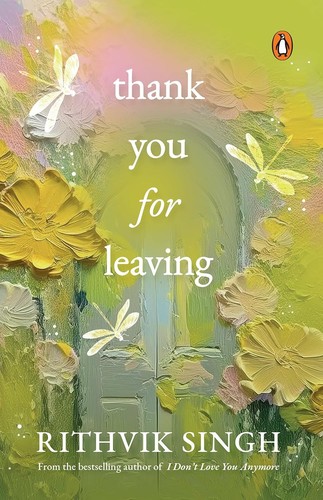
Thank You for Leaving (2025) Parents Guide: Is the book OK for kids?
Age Rating, Sex, Violence & Language
*The more I give you,* *the emptier I feel.* *I think I'll be okay again* *when I ask you to leave.* Dear reader, I wrote this book for the ones who feel everything too deeply. The rare souls who still listen to their hearts and believe in love. The ones who don't hurt others just because they're in pain. The ones who wear their hearts on their sleeves and carry kindness within. The ones who overthink, over-invest in people and over-love, always. This book is an ocean full of feelings, so if at any point, you feel like… Sign up for the full guide
YA • 2025 • 200 pages • Grade 9+
This collection of modern poetry and prose explores themes of heartbreak, healing, and self-worth following the end of a relationship. It is recommended for older teens and adults due to its raw emotional processing of abandonment, grief, and moving on from toxic dynamics. Parents should note a few instances of mild language and references to the physical aspects of past intimacy, though the focus remains squarely on emotional recovery… Sign up for the full guide
Is Thank You for Leaving appropriate for kids?
This collection of modern poetry and prose explores themes of heartbreak, healing, and self-worth following the end of a relationship. It is recommended for older teens and adults due to its raw emotional processing of abandonment, grief, and moving on from toxic dynamics… Read more — free account
Content severity in Thank You for Leaving
What happens in Thank You for Leaving, moment by moment
- p. 12 🔥 Mature Themes 3/10
- p. 19 🔥 Mature Themes 2/10
- p. 28 💬 Language 3/10
Sex and nudity in Thank You for Leaving
The book contains no explicit sex scenes, but several poems reference the longing for a former partner's touch, the intimacy of shared physical space, and the 'ghost' of a lover in one's bed. Singh uses evocative language to describe the void left by a physical presence, such as mentions of the scent of a person on a pillow or the tactile memory of a hand on a waist. These moments focus on the absence of intimacy rather than the act itself, making it appropriate for a YA audience. The text occasionally alludes to…
Read more — free accountViolence and gore in Thank You for Leaving
There is no physical violence. The 'violence' depicted is strictly emotional, focusing on the pain of being blindsided by a breakup and the metaphorical 'shattering' of a person's spirit. Singh uses visceral imagery to describe heartbreak, comparing the end of a relationship to a physical collision or a slow breaking of bones. These descriptions are entirely figurative, aimed at helping the reader visualize the intensity of psychological trauma. There are no depictions of self-harm, though the narrator does…
Read more — free accountLanguage in Thank You for Leaving
Language is very sparse and used only for emotional emphasis. There are a handful of uses of 'hell,' 'damn,' and 'shit' to convey frustration or anger during the grieving process. These words appear during moments of peak emotional intensity, such as when the narrator realizes they were lied to or when they are struggling with the unfairness of the situation. There is no usage of severe slurs or excessive vulgarity throughout the collection. The vocabulary is generally sophisticated yet accessible, focusing on…
Read more — free accountDrugs, alcohol, and smoking in Thank You for Leaving
Very minor references to using distractions to cope are present in the text. One or two poems mention drinking wine or coffee while being alone and ruminating on the past, using these beverages as markers of time or solitude. There is a mention of using alcohol to briefly quiet the mind, but it is not portrayed as a solution or a recurring habit. Most references to substances are domestic, such as drinking tea while watching the rain or using a cup of coffee to start a day alone. The book does not glamorize…
Read more — free accountMature themes in Thank You for Leaving
The primary themes are abandonment, self-love, the necessity of closure, and the difficulty of letting go. It deals heavily with the cycle of grief: denial, anger, and eventual acceptance throughout its two hundred pages. The narrator grapples with the 'why' of a breakup, often addressing a silent 'you' who has departed. Themes of betrayal and self-worth are central as the prose moves from the devastation of the first half to the self-actualization of the final section. Readers will encounter discussions on the…
Read more — free accountFrequently Asked Questions
Is Thank You for Leaving appropriate for kids?
Bontent's parent guide suggests Thank You for Leaving is best for ages 14+. This collection of modern poetry and prose explores themes of heartbreak, healing, and self-worth following the end of a relationship. It is recommended for older teens and adults due to its raw emotional processing of…
What age rating does Thank You for Leaving have?
Books don't carry official age ratings. Thank You for Leaving is published for a YA audience, and Bontent's independent parent guide recommends it for ages 14+.
What reading level is Thank You for Leaving?
Thank You for Leaving is 200 pages and its reading level is Grade 9+. Bontent recommends it for ages 14+.
What is Thank You for Leaving about?
This collection of modern poetry and prose explores themes of heartbreak, healing, and self-worth following the end of a relationship. It is recommended for older teens and adults due to its raw emotional processing of abandonment, grief, and moving on from toxic dynamics. Parents should note a few instances of mild…
Is there sex or nudity in Thank You for Leaving?
The book contains no explicit sex scenes, but several poems reference the longing for a former partner's touch, the intimacy of shared physical space, and the 'ghost' of a lover in one's bed. Singh uses evocative language to describe the void left by a…
How violent is Thank You for Leaving?
There is no physical violence. The 'violence' depicted is strictly emotional, focusing on the pain of being blindsided by a breakup and the metaphorical 'shattering' of a person's spirit. Singh uses visceral imagery to describe heartbreak, comparing the end…
Is the language in Thank You for Leaving appropriate for kids?
Language is very sparse and used only for emotional emphasis. There are a handful of uses of 'hell,' 'damn,' and 'shit' to convey frustration or anger during the grieving process. These words appear during moments of peak emotional intensity, such as when the…
Are drugs, alcohol, or smoking depicted in Thank You for Leaving?
Very minor references to using distractions to cope are present in the text. One or two poems mention drinking wine or coffee while being alone and ruminating on the past, using these beverages as markers of time or solitude. There is a mention of using…
What mature themes appear in Thank You for Leaving?
The primary themes are abandonment, self-love, the necessity of closure, and the difficulty of letting go. It deals heavily with the cycle of grief: denial, anger, and eventual acceptance throughout its two hundred pages. The narrator grapples with the 'why'…
Where can I read the full Thank You for Leaving parent guide?
Create a free Bontent account to unlock page-level notes, filter by your kids' ages, and save titles to your watchlist.
Less intense books for families
Sign up to filter








More poetry books with parent guides
- The complete works of the Gawain-poet parent guide
- The Divine Comedy: Inferno - Purgatorio - Paradiso parent guide
- I Don't Love You Anymore parent guide
- Green Eggs and Ham parent guide
- Milk and Honey parent guide
- The Cat in the Hat parent guide
- The Giving Tree parent guide
- Where the Sidewalk Ends parent guide
- The Book of Disquiet parent guide
- The Bell Jar parent guide
- The Raven parent guide
- Oh the Places You'll Go! parent guide
Verse Novel books parents are checking
- Black Cake parent guide
- Just For The Cameras parent guide
- Tall Oaks parent guide
- The Total Package parent guide
- American Gods: Tenth Anniversary (American Gods, #1) parent guide
- This House Will Feed parent guide
- Told in letters parent guide
- Recursion (TV series) parent guide
- The Princess Bride Deluxe Limited Edition: S. Morgenstern's Classic Tale of True Love and High Adventure parent guide
- Heartstopper (Heartstopper #1) parent guide
- The Shadow of the Wind (The Cemetery of Forgotten Books, #1) parent guide
- Onyx Storm (The Empyrean, #3) parent guide
More books with Bontent parent guides
- Tall Oaks parent guide
- Charged parent guide
- The Midnight Girls parent guide
- Charlie the Choo-Choo parent guide
- The Name of the Wind / The Wise Man's Fear / The Slow Regard of Silent Things (The Kingkiller Chronicle #1-2.5) parent guide
- The Martian Contingency parent guide
- Clash of star-kings parent guide
- The Bookshop on Rosemary Lane parent guide
- Atomic Habits: An Easy & Proven Way to Build Good Habits & Break Bad Ones parent guide
- The ballad of the hundred days parent guide
- The motion picture chums' outdoor exhibition, or, The film that solved a mystery parent guide
- Blood of Elves (The Witcher, #1) parent guide
- The Christmas Stories [8 stories] parent guide
- A century of the English novel parent guide
- The complete works of the Gawain-poet parent guide
- Harry Potter parent guide