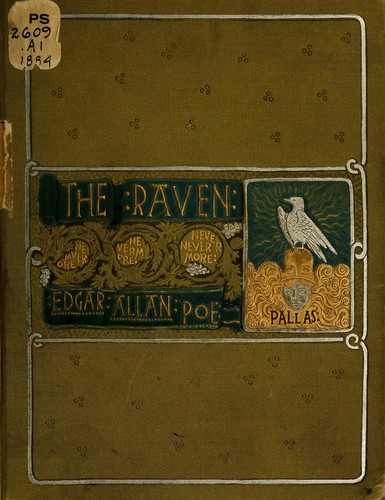
The Raven (1845) Parents Guide: Is the book OK for kids?
Age Rating, Sex, Violence & Language
"The Raven" is a narrative poem by American writer Edgar Allan Poe. First published in January 1845, the poem is often noted for its musicality, stylized language, and supernatural atmosphere. It tells of a talking raven's mysterious visit to a distraught lover, tracing the man's slow descent into madness. The poem makes use of folk, mythological, religious, and classical references. "The Raven" was first attributed to Poe in print in the New York Evening Mirror on January 29, 1845.
YA • 1845 • 42 pages • Lexile 1100L (roughly grades 8–9 reading difficulty)
This classic narrative poem explores the dark psychological descent of a man grieving for his lost love, Lenore. While primarily a work of gothic atmosphere and verbal rhythm, the text features intense themes of despair, madness, and the finality of death. Parents should note the heavy emphasis on mental anguish and the protagonist's increasing hostility toward the raven he believes is a supernatural tormentor. This is an ideal entry… Sign up for the full guide
Is The Raven appropriate for kids?
This classic narrative poem explores the dark psychological descent of a man grieving for his lost love, Lenore. While primarily a work of gothic atmosphere and verbal rhythm, the text features intense themes of despair, madness, and the finality of death. Parents should note… Read more — free account
Content severity in The Raven
What happens in The Raven, moment by moment
- p. 1 🔥 Mature Themes 2/10
- p. 5 🔥 Mature Themes 1/10
- p. 12 🔥 Mature Themes 3/10
Sex and nudity in The Raven
The poem is entirely devoid of sexual content or physical intimacy between characters. The narrator reflects on his 'lost Lenore,' but this is presented as a chaste, idealized, and spiritual longing for a deceased partner. There are no descriptions of romantic gestures or sexual anatomy. The focus remains strictly on the intellectual and emotional void left by her passing. This makes the text appropriate for all audiences regarding this category.
Violence and gore in The Raven
Physical violence is absent from the narrative, which relies instead on gothic tension and metaphorical imagery. The narrator experiences intense psychological distress, shouting at the bird and ordering it to leave his chamber. He uses violent language when he tells the bird to take its 'beak from out my heart,' but this is a poetic representation of emotional agony rather than a literal injury. No blood or physical harm occurs to the man or the animal throughout the stanzas. The 'violence' is purely the…
Read more — free accountLanguage in The Raven
The language is elevated, archaic, and very mild by modern standards. The narrator uses descriptors like 'wretch' and 'devil' to address both himself and the raven as his frustration peaks. Other words like 'fiend' and 'evil' are used in a dramatic, literary sense rather than as vulgarities or profanity. There are no instances of modern four-letter words or racial slurs. The vocabulary is consistent with mid-19th-century American poetry, aimed at creating a dark and formal atmosphere.
Drugs, alcohol, and smoking in The Raven
There is no actual consumption of drugs or alcohol portrayed in the text. The narrator mentions 'nepenthe,' which is a mythological potion from Greek lore meant to induce forgetfulness of grief, but he speaks of it as something he wishes for rather than something he has. References to incense and 'perfumed' air are atmospheric details suggesting a spiritual or supernatural presence. No modern substances or tobacco products appear in the narrative. The 'drowsy' feeling mentioned early on is attributed to natural…
Read more — free accountMature themes in The Raven
The poem is heavily saturated with themes of grief, depression, and the finality of death. It chronicles a man's descent into madness as he realizes his sorrow for Lenore will never be cured. The recurring refrain 'Nevermore' serves as a rhythmic reminder of permanence and hopelessness. Readers will encounter concepts of the afterlife, Purgatory, and the 'Plutonian shore.' The psychological weight of the narrative is significant, exploring how isolation and mourning can fracture a person's sanity.
Frequently Asked Questions
Is The Raven appropriate for kids?
Bontent's parent guide suggests The Raven is best for ages 12+. This classic narrative poem explores the dark psychological descent of a man grieving for his lost love, Lenore. While primarily a work of gothic atmosphere and verbal rhythm, the text features intense themes of…
What age rating does The Raven have?
Books don't carry official age ratings. The Raven is shelved by its publisher as YA, but that's a marketing category, not a content rating — Bontent's own review of what's actually on the page puts it at ages 12+.
What reading level is The Raven?
The Raven is 42 pages and its reading level is Lexile 1100L (roughly grades 8–9 reading difficulty). Bontent recommends it for ages 12+.
What is The Raven about?
This classic narrative poem explores the dark psychological descent of a man grieving for his lost love, Lenore. While primarily a work of gothic atmosphere and verbal rhythm, the text features intense themes of despair, madness, and the finality of death. Parents should note the heavy emphasis on mental anguish and…
Is there sex or nudity in The Raven?
The poem is entirely devoid of sexual content or physical intimacy between characters. The narrator reflects on his 'lost Lenore,' but this is presented as a chaste, idealized, and spiritual longing for a deceased partner. There are no descriptions of…
How violent is The Raven?
Physical violence is absent from the narrative, which relies instead on gothic tension and metaphorical imagery. The narrator experiences intense psychological distress, shouting at the bird and ordering it to leave his chamber. He uses violent language when…
Is the language in The Raven appropriate for kids?
The language is elevated, archaic, and very mild by modern standards. The narrator uses descriptors like 'wretch' and 'devil' to address both himself and the raven as his frustration peaks. Other words like 'fiend' and 'evil' are used in a dramatic, literary…
Are drugs, alcohol, or smoking depicted in The Raven?
There is no actual consumption of drugs or alcohol portrayed in the text. The narrator mentions 'nepenthe,' which is a mythological potion from Greek lore meant to induce forgetfulness of grief, but he speaks of it as something he wishes for rather than…
What mature themes appear in The Raven?
The poem is heavily saturated with themes of grief, depression, and the finality of death. It chronicles a man's descent into madness as he realizes his sorrow for Lenore will never be cured. The recurring refrain 'Nevermore' serves as a rhythmic reminder of…
Where can I read the full The Raven parent guide?
Create a free Bontent account to unlock page-level notes, filter by your kids' ages, and save titles to your watchlist.
Less intense books for families
Sign up to filter




More horror books with parent guides
- Sunrise on the Reaping parent guide
- Kingdom of Shadow and Light parent guide
- You Did Nothing Wrong parent guide
- The Midnight Girls parent guide
- THE ESCAPE GAME parent guide
- Moon Witch, Spider King parent guide
- Eragon (The Inheritance Cycle, #1) parent guide
- Leopardstar's Honor parent guide
- The House in the Cerulean Sea (Cerulean Chronicles, #1) parent guide
- City of Bones (The Mortal Instruments, #1) parent guide
- A Court of Frost and Starlight (A Court of Thorns and Roses, #4) parent guide
- The Bands of Mourning (Mistborn, #6) parent guide
Gothic books parents are checking
- Nine Lives parent guide
- Last One To Die parent guide
- Unrivaled parent guide
- This House Will Feed parent guide
- Wuthering Heights, Agnes Grey, and Poems parent guide
- Works (Poems / Wuthering Heights) parent guide
- A Hole in the Sky parent guide
- Scottish lliterature parent guide
- Death's End (Remembrance of Earth's Past, #3) parent guide
- The Shadow of the Wind (The Cemetery of Forgotten Books, #1) parent guide
- Scythe (Arc of a Scythe, #1) parent guide
More books by Edgar Allan Poe
- The Complete Poetry of Edgar Allan Poe [48 poems] parent guide
- The Tell-Tale Heart parent guide
- The Works of Edgar Allan Poe [68 stories, 31 poems] parent guide
- The Complete Tales & Poems of Edgar Allan Poe [73 stories, 48 poems] parent guide
- Complete Stories and Poems of Edgar Allan Poe parent guide
- The Murders in the Rue Morgue parent guide
- The Cask of Amontillado parent guide
- The Black Cat parent guide
- The Masque of the Red Death parent guide
- The Fall of the House of Usher parent guide
More books with Bontent parent guides
- Just For The Cameras parent guide
- Crow parent guide
- Operation Bounce House parent guide
- Tall Oaks parent guide
- ¡Hola Papi!: How to Come Out in a Walmart Parking Lot and Other Life Lessons parent guide
- You Did Nothing Wrong parent guide
- The Midnight Girls parent guide
- The Hobbit, or There and Back Again parent guide
- Last One To Die parent guide
- Moon Witch, Spider King parent guide
- Charlie the Choo-Choo parent guide
- Ghosted: An American Story parent guide
- The Lightning Thief (Percy Jackson and the Olympians #1) parent guide
- The Return of the Young Prince parent guide
- The Name of the Wind / The Wise Man's Fear / The Slow Regard of Silent Things (The Kingkiller Chronicle #1-2.5) parent guide
- Fourth Wing (The Empyrean, #1) parent guide