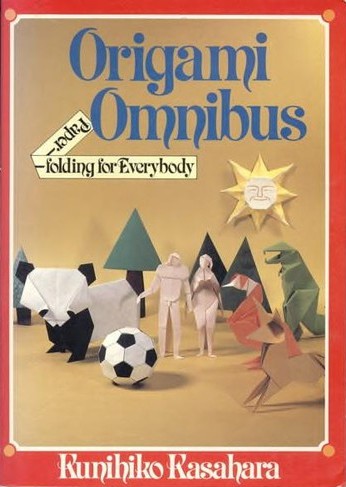
Origami Omnibus (1988) Parents Guide: Is the book OK for kids?
Age Rating, Sex, Violence & Language
With more than 250 projects of many different types and levels of difficulty, this bestselling, encyclopedic work contains traditional and modern paper-folding methods, and includes folds for the beginner and works calculated to challenge the experts.
Middle Grade • 1988 • 384 pages • Grade 3-8
This is an encyclopedic reference book for origami enthusiasts, containing instructions for over 250 paper-folding projects. There is no narrative content, and the book is entirely focused on mathematical precision, motor skills, and creative design through paper art. It is appropriate for all ages, though the complexity of some folds may require adult assistance for younger children.
Is Origami Omnibus appropriate for kids?
This is an encyclopedic reference book for origami enthusiasts, containing instructions for over 250 paper-folding projects. There is no narrative content, and the book is entirely focused on mathematical precision, motor skills, and creative design through paper art. It is… Read more — free account
Content severity in Origami Omnibus
What happens in Origami Omnibus, moment by moment
- p. 1 🔥 Mature Themes 1/10
- p. 12 🔥 Mature Themes 1/10
- p. 28 🔥 Mature Themes 1/10
Sex and nudity in Origami Omnibus
This category is entirely absent as the book is a technical manual for paper folding. The content consists of black-and-white instructional diagrams, mathematical notations, and photographs of finished paper models. There are no depictions of human figures or biological discussions. The text remains focused on the physical properties of paper and geometric ratios. It is a sterile educational environment suitable for all readers.
Violence and gore in Origami Omnibus
There is no narrative or depicted violence within this comprehensive reference guide. The only potential physical concern is the implicit risk of paper cuts or the safe handling of scissors for certain cutting steps. Diagrams show hands manipulating paper, but no harm is depicted or suggested. Even animal models like the dragon or eagle are presented as static art pieces rather than aggressive figures. The tone is peaceful, encouraging focus and meditation through manual craft.
Language in Origami Omnibus
No profanity, slang, or inappropriate language is present in this instructional work. The vocabulary is technical and sophisticated, utilizing terms such as 'equilateral', 'intersection', and 'perpendicular'. Kunihiko Kasahara uses a formal and encouraging tone to guide the reader through complex steps. Historical sections provide context on Japanese culture using academic and respectful terminology. The book is an excellent resource for developing precise, instructional reading skills.
Drugs, alcohol, and smoking in Origami Omnibus
There are no references to alcohol, tobacco, or illicit drugs within this instructional manual. The book focuses exclusively on technical paper-folding techniques and geometric design. As a functional reference guide for crafters, it remains entirely free of any substance-related content or imagery. The focus remains on the utility of materials like washi paper and the physics of folding. No social scenarios involving substances are described in the historical or modern sections.
Mature themes in Origami Omnibus
The book focuses on patience, precision, geometry, and the artistic heritage of Japanese paper folding. Readers are encouraged to develop spatial reasoning and fine motor skills through repetitive practice. The text emphasizes the satisfaction of creating complex 3D objects from simple 2D squares, fostering a sense of accomplishment. Cultural themes highlight the transition of origami from a ceremonial practice to a global hobby. Mathematical themes dominate the latter half, exploring the intersection of art and…
Read more — free accountFrequently Asked Questions
Is Origami Omnibus appropriate for kids?
Bontent's parent guide suggests Origami Omnibus is best for ages 8+. This is an encyclopedic reference book for origami enthusiasts, containing instructions for over 250 paper-folding projects. There is no narrative content, and the book is entirely focused on mathematical precision…
What age rating does Origami Omnibus have?
Books don't carry official age ratings. Origami Omnibus is published for a Middle Grade audience, and Bontent's independent parent guide recommends it for ages 8+.
What reading level is Origami Omnibus?
Origami Omnibus is 384 pages and its reading level is Grade 3-8. Bontent recommends it for ages 8+.
What is Origami Omnibus about?
This is an encyclopedic reference book for origami enthusiasts, containing instructions for over 250 paper-folding projects. There is no narrative content, and the book is entirely focused on mathematical precision, motor skills, and creative design through paper art. It is appropriate for all ages, though the…
Is there sex or nudity in Origami Omnibus?
This category is entirely absent as the book is a technical manual for paper folding. The content consists of black-and-white instructional diagrams, mathematical notations, and photographs of finished paper models. There are no depictions of human figures or…
How violent is Origami Omnibus?
There is no narrative or depicted violence within this comprehensive reference guide. The only potential physical concern is the implicit risk of paper cuts or the safe handling of scissors for certain cutting steps. Diagrams show hands manipulating paper…
Is the language in Origami Omnibus appropriate for kids?
No profanity, slang, or inappropriate language is present in this instructional work. The vocabulary is technical and sophisticated, utilizing terms such as 'equilateral', 'intersection', and 'perpendicular'. Kunihiko Kasahara uses a formal and encouraging…
Are drugs, alcohol, or smoking depicted in Origami Omnibus?
There are no references to alcohol, tobacco, or illicit drugs within this instructional manual. The book focuses exclusively on technical paper-folding techniques and geometric design. As a functional reference guide for crafters, it remains entirely free of…
What mature themes appear in Origami Omnibus?
The book focuses on patience, precision, geometry, and the artistic heritage of Japanese paper folding. Readers are encouraged to develop spatial reasoning and fine motor skills through repetitive practice. The text emphasizes the satisfaction of creating…
Where can I read the full Origami Omnibus parent guide?
Create a free Bontent account to unlock page-level notes, filter by your kids' ages, and save titles to your watchlist.
Parents also checked these books for 8-year-olds
Sign up to filter




![Star Over Bethlehem and other stories [6 stories and poems]](https://covers.openlibrary.org/b/id/3217970-L.jpg)


Books like Origami Omnibus with similar intensity
Sign up to filter


Reference books parents are checking
- Steal Like an Artist: 10 Things Nobody Told You About Being Creative parent guide
- A list of English & American sequel stories parent guide
- The Kind Worth Killing (Ingrid Bergman #1) parent guide
- THE CREATIVE ACT parent guide
- Redwall (Redwall, #1) parent guide
- Hogwarts: An Incomplete and Unreliable Guide (Pottermore Presents, #3) parent guide
- Objective NCERT at your FINGERTIPS for NEET-AIIMS - Biology parent guide
- The Secret Language of Birthdays parent guide
- Fantastic Beasts and Where to Find Them parent guide
- A Story of Yesterday parent guide
- The C Programming Language parent guide
- Steal like an artist parent guide
More books with Bontent parent guides
- The Dictionary of Lost Words parent guide
- Tall Oaks parent guide
- The Midnight Girls parent guide
- The Bookshop on Rosemary Lane parent guide
- Babel: Or the Necessity of Violence: An Arcane History of the Oxford Translators' Revolution parent guide
- The ballad of the hundred days parent guide
- The motion picture chums' outdoor exhibition, or, The film that solved a mystery parent guide
- The man from up there parent guide
- The contemporary Negro novel parent guide
- Blood of Elves (The Witcher, #1) parent guide
- The Christmas Stories [8 stories] parent guide
- The Dark Tower II: The Drawing of the Three (The Dark Tower, #2) parent guide
- A century of the English novel parent guide
- The complete works of the Gawain-poet parent guide
- Harry Potter and the Sorcerer's Stone (Harry Potter, #1) parent guide
- 6 great short novels of science fiction parent guide