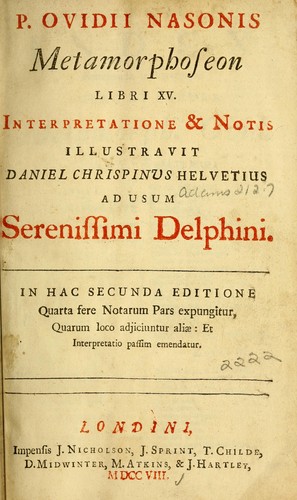
Metamorphoses (1479) Parents Guide: Is the book OK for kids?
Age Rating, Sex, Violence & Language
The Metamorphoses is a narrative poem penned by the Roman poet Ovid. Widely considered to be his ultimate work, comprising fifteen books and over 250 myths. The poem portrays a history of the world from creation up to the deification of Julius Caesar. Metamorphoses is viewed as one of the most influential works in Western culture, inspiring authors such as Dante, Shakespeare, Chaucer, and Boccaccio. It has also inspired countless works of art from various artists throughout the centuries.
Adult • 1479 • 498 pages • College / Advanced High School
Ovid's classical epic is a cornerstone of Western literature, weaving together over 250 myths centered on the theme of transformation. While it is a foundational academic text, parents should be aware that it contains frequent depictions of sexual violence (non-graphic but pervasive), brutal mythological combat, and intense psychological suffering. It is best suited for older teens and students who can process ancient cultural contexts… Continue to this guide
Is Metamorphoses appropriate for kids?
Ovid's classical epic is a cornerstone of Western literature, weaving together over 250 myths centered on the theme of transformation. While it is a foundational academic text, parents should be aware that it contains frequent depictions of sexual violence (non-graphic but… Continue with an account
Content severity in Metamorphoses
What happens in Metamorphoses, moment by moment
- p. 5 🔥 Mature Themes 3/10
- p. 9 ⚔ Violence & Gore 4/10
- p. 18 ♥ Sex & Nudity 6/10
Sex and nudity in Metamorphoses
The text contains frequent references to 'loves' that start with abduction or non-consensual pursuit by gods. While the language is poetic rather than anatomical, the implications of sexual assault (such as the stories of Daphne, Io, and Philomela) are central to many plotlines. Many myths center on unwanted advances from deities like Jove and Apollo toward mortal women. The narrative often treats these encounters as inevitable consequences of divine desire rather than crimes, though the victims' suffering is…
Continue with an accountViolence and gore in Metamorphoses
Violence is often graphic and visceral, describing the physical details of transformation and combat. Scenes include the brutal mutilation of Philomela, the flaying of Marsyas, and various bloody deaths during the battle at Perseus' wedding. Ovid does not shy away from the biological mechanics of death, describing eyes being gouged, limbs severed, and internal organs spilling out. The transformation sequences themselves are often painful, with bones cracking and skin changing texture in agonizing detail. Even…
Continue with an accountLanguage in Metamorphoses
Modern translations usually rely on elevated, formal language. There is very little profanity in the modern sense, though insults and verbal degradations occur during mythological disputes. Characters frequently use sophisticated rhetoric to insult one another's lineage or courage, particularly in the debate between Ajax and Ulysses. Curses and incantations are common in the sections involving Medea and Circe, though they function as plot devices rather than vulgarity. The tone remains academic and epic…
Continue with an accountDrugs, alcohol, and smoking in Metamorphoses
Wine is frequently mentioned in the context of banquets (such as the wedding of Pirithous) and religious rites to Bacchus. While not promoting modern drug use, intoxication often leads to chaotic or violent behavior in the myths. Bacchus, the god of wine, represents a form of divine intoxication that borders on madness, leading his followers to perform gruesome acts. Ritual drinking is a standard part of the social fabric described in the epic, used for both celebration and mourning. In the story of the Centaurs…
Continue with an accountMature themes in Metamorphoses
Major themes include the volatility of the gods, the permanence of change, divine retribution, and the loss of human identity. It explores heavy concepts like grief, hubris, and the unfairness of fate through the lens of Roman mythology. Readers encounter parents grieving for lost children, such as Niobe, and characters grappling with the cruelty of the divine order. The concept of 'metamorphosis' serves as a metaphor for the psychological shifts caused by extreme trauma. Ovid also touches on philosophical ideas…
Continue with an accountFrequently Asked Questions
Is Metamorphoses appropriate for kids?
Bontent's parent guide suggests Metamorphoses is best for ages 16+. Ovid's classical epic is a cornerstone of Western literature, weaving together over 250 myths centered on the theme of transformation. While it is a foundational academic text, parents should be aware that it contains…
What age rating does Metamorphoses have?
Books don't carry official age ratings. Metamorphoses is shelved by its publisher as Adult, but that's a marketing category, not a content rating — Bontent's own review of what's actually on the page puts it at ages 16+.
What reading level is Metamorphoses?
Metamorphoses is 498 pages and its reading level is College / Advanced High School. Bontent recommends it for ages 16+.
What is Metamorphoses about?
Ovid's classical epic is a cornerstone of Western literature, weaving together over 250 myths centered on the theme of transformation. While it is a foundational academic text, parents should be aware that it contains frequent depictions of sexual violence (non-graphic but pervasive), brutal mythological combat, and…
Is there sex or nudity in Metamorphoses?
The text contains frequent references to 'loves' that start with abduction or non-consensual pursuit by gods. While the language is poetic rather than anatomical, the implications of sexual assault (such as the stories of Daphne, Io, and Philomela) are…
How violent is Metamorphoses?
Violence is often graphic and visceral, describing the physical details of transformation and combat. Scenes include the brutal mutilation of Philomela, the flaying of Marsyas, and various bloody deaths during the battle at Perseus' wedding. Ovid does not shy…
Is the language in Metamorphoses appropriate for kids?
Modern translations usually rely on elevated, formal language. There is very little profanity in the modern sense, though insults and verbal degradations occur during mythological disputes. Characters frequently use sophisticated rhetoric to insult one…
Are drugs, alcohol, or smoking depicted in Metamorphoses?
Wine is frequently mentioned in the context of banquets (such as the wedding of Pirithous) and religious rites to Bacchus. While not promoting modern drug use, intoxication often leads to chaotic or violent behavior in the myths. Bacchus, the god of wine…
What mature themes appear in Metamorphoses?
Major themes include the volatility of the gods, the permanence of change, divine retribution, and the loss of human identity. It explores heavy concepts like grief, hubris, and the unfairness of fate through the lens of Roman mythology. Readers encounter…
Where can I read the full Metamorphoses parent guide?
Create a free Bontent account to save titles and find family picks. Full page-level details use guide credits or Bontent Parent membership.
Less intense books for families
Sign up to filter


More poetry books with parent guides
- Essays in romantic literature parent guide
- The complete works of the Gawain-poet parent guide
- The Divine Comedy: Inferno - Purgatorio - Paradiso parent guide
- I Don't Love You Anymore parent guide
- Green Eggs and Ham parent guide
- Milk and Honey parent guide
- The Cat in the Hat parent guide
- The Giving Tree parent guide
- Where the Sidewalk Ends parent guide
- The Book of Disquiet parent guide
- The Bell Jar parent guide
- The Raven parent guide
Mythic Fantasy books parents are checking
- Moon Witch, Spider King parent guide
- American Gods: Tenth Anniversary (American Gods, #1) parent guide
- Clash of star-kings parent guide
- The Titan’s Curse (Percy Jackson and the Olympians, #3) parent guide
- The Battle of the Labyrinth (Percy Jackson and the Olympians, #4) parent guide
- The English story in prose parent guide
- No mind of man parent guide
- 6 great short novels of science fiction parent guide
- With This Ring? parent guide
- Great detective stories from Costello to Stevenson parent guide
- Great detective stories from Voltaire to Poe parent guide
More books with Bontent parent guides
- The Three Graces of Pearl Street parent guide
- The Hobbit, or There and Back Again parent guide
- Queen of Lombard Street parent guide
- Essays in romantic literature parent guide
- The Battle of the Labyrinth (Percy Jackson and the Olympians, #4) parent guide
- The ballad of the hundred days parent guide
- The black Homer of Jimtown parent guide
- Mother in modern story parent guide
- The modern novel parent guide
- Plot Twist: Life, Craft, and the Messy First Draft parent guide
- The Bad Beginning (A Series of Unfortunate Events #1) parent guide
- The Chronicles of Narnia Set parent guide
- Tar and feathers parent guide
- The Complete Maus parent guide
- Murder of a mystery writer parent guide
- Moby-Dick or, The Whale parent guide