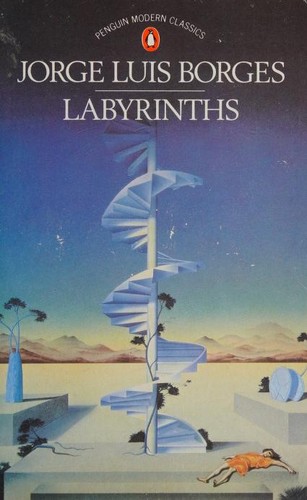
Labyrinths (1987) Parents Guide: Is the book OK for kids?
Age Rating, Sex, Violence & Language
Labyrinths is a collection of short stories and essays by the writer Jorge Luis Borges. It was translated into English, published soon after Borges won the International Publishers' Prize with Samuel Beckett. It includes, among other stories, "Tlön, Uqbar, Orbis Tertius", "The Garden of Forking Paths", and "The Library of Babel", three of Borges' most famous stories. Stories [Tlön, Uqbar, Orbis Tertius](https://openlibrary.org/works/OL444914W) The Garden of Forking Paths The Lottery in Babylon Pierre Menard, Author of the… Sign up for the full guide
Adult • 1987 • 260 pages • Grade 11-College
Labyrinths is a sophisticated collection of philosophical short stories, essays, and parables that requires a high level of intellectual maturity to appreciate. While not sexually explicit, the book features moments of intense, stylized violence including assassinations, executions, and suicides, alongside complex metaphysical themes like the nature of identity and reality. It is best suited for older teenagers and adults who enjoy… Sign up for the full guide
Is Labyrinths appropriate for kids?
Labyrinths is a sophisticated collection of philosophical short stories, essays, and parables that requires a high level of intellectual maturity to appreciate. While not sexually explicit, the book features moments of intense, stylized violence including assassinations… Read more — free account
Content severity in Labyrinths
What happens in Labyrinths, moment by moment
- p. 3 🔥 Mature Themes 2/10
- p. 12 🍷 Substances 2/10
- p. 28 ⚔ Violence & Gore 5/10
Sex and nudity in Labyrinths
Virtually non-existent, though there are brief, clinical mentions of procreation and mirrors being 'abominable because they multiply the number of men'. In 'Emma Zunz,' a woman undergoes a brief, transactional sexual encounter to facilitate a revenge plot, but the act is described with detached coldness rather than eroticism. The narrative treats physical intimacy as a biological function or a strategic necessity rather than a source of pleasure or romance. Older readers will find the tone cerebral and distant…
Read more — free accountViolence and gore in Labyrinths
Violence is often sudden, ritualistic, or cerebral. Examples include a man being shot in a garden during a spy mission, a labyrinthine murder mystery involving stabbings, and a character preparing for his own execution by firing squad. The descriptions focus more on the psychological and philosophical weight of the acts than on gore. In 'The Shape of the Sword,' the narrator recounts a betrayal resulting in a permanent facial disfigurement. The deaths of characters like Asterion are presented as metaphysical…
Read more — free accountLanguage in Labyrinths
Very mild and infrequent. Borges relies on a vast, archaic, and academic vocabulary rather than profanity. When strong language appears, it is usually within the context of translating or reflecting a character's grit in a specific historical setting. The prose is dominated by philosophical discourse, bibliographical references, and formal address. While a few 'damn' or 'hell' translations may occur in dialogue between hardened men, the overall tone remains scholarly. There are no instances of graphic racial slurs…
Read more — free accountDrugs, alcohol, and smoking in Labyrinths
Alcohol and tobacco appear occasionally as atmospheric details in bars or studies, such as characters drinking rum or smoking while discussing philosophy. There are no depictions of recreational drug abuse or intoxication as a primary plot point. In 'The Circular Ruins,' a character utilizes unspecified herbs to induce a supernatural slumber, which functions as a literary device rather than a realistic portrayal of drug use. Soldiers and detectives are occasionally depicted having a stiff drink to steady their…
Read more — free accountMature themes in Labyrinths
Deeply complex explorations of infinity, the fallibility of memory, circular time, and the blurring of life and literature. The book frequently touches on religious heresy, the burden of immortality, and the unsettling idea that human life might be the dream of another being. Characters often grapple with the existential dread of being lost in infinite libraries or eternal labyrinths. Readers will encounter dark philosophical inquiries into the nature of Judas and the divinity of Christ. The intellectual weight of…
Read more — free accountFrequently Asked Questions
Is Labyrinths appropriate for kids?
Bontent's parent guide suggests Labyrinths is best for ages 16+. Labyrinths is a sophisticated collection of philosophical short stories, essays, and parables that requires a high level of intellectual maturity to appreciate. While not sexually explicit, the book features moments of…
What age rating does Labyrinths have?
Books don't carry official age ratings. Labyrinths is shelved by its publisher as Adult, but that's a marketing category, not a content rating — Bontent's own review of what's actually on the page puts it at ages 16+.
What reading level is Labyrinths?
Labyrinths is 260 pages and its reading level is Grade 11-College. Bontent recommends it for ages 16+.
What is Labyrinths about?
Labyrinths is a sophisticated collection of philosophical short stories, essays, and parables that requires a high level of intellectual maturity to appreciate. While not sexually explicit, the book features moments of intense, stylized violence including assassinations, executions, and suicides, alongside complex…
Is there sex or nudity in Labyrinths?
Virtually non-existent, though there are brief, clinical mentions of procreation and mirrors being 'abominable because they multiply the number of men'. In 'Emma Zunz,' a woman undergoes a brief, transactional sexual encounter to facilitate a revenge plot…
How violent is Labyrinths?
Violence is often sudden, ritualistic, or cerebral. Examples include a man being shot in a garden during a spy mission, a labyrinthine murder mystery involving stabbings, and a character preparing for his own execution by firing squad. The descriptions focus…
Is the language in Labyrinths appropriate for kids?
Very mild and infrequent. Borges relies on a vast, archaic, and academic vocabulary rather than profanity. When strong language appears, it is usually within the context of translating or reflecting a character's grit in a specific historical setting. The…
Are drugs, alcohol, or smoking depicted in Labyrinths?
Alcohol and tobacco appear occasionally as atmospheric details in bars or studies, such as characters drinking rum or smoking while discussing philosophy. There are no depictions of recreational drug abuse or intoxication as a primary plot point. In 'The…
What mature themes appear in Labyrinths?
Deeply complex explorations of infinity, the fallibility of memory, circular time, and the blurring of life and literature. The book frequently touches on religious heresy, the burden of immortality, and the unsettling idea that human life might be the dream…
Where can I read the full Labyrinths parent guide?
Create a free Bontent account to unlock page-level notes, filter by your kids' ages, and save titles to your watchlist.
Less intense books for families
Sign up to filter








More sci-fi books with parent guides
- Sunrise on the Reaping parent guide
- Operation Bounce House parent guide
- The Martian Contingency parent guide
- A Boy and His Dog parent guide
- The House in the Cerulean Sea (Cerulean Chronicles, #1) parent guide
- A Hole in the Sky parent guide
- Before They Are Hanged (The First Law, #2) parent guide
- No mind of man parent guide
- The man from up there parent guide
- 6 great short novels of science fiction parent guide
- Saga, Vol. 1 parent guide
- The Time of Contempt (The Witcher, #2) parent guide
Short Stories books parents are checking
- Black Cake parent guide
- The Dictionary of Lost Words parent guide
- Moon Witch, Spider King parent guide
- Charlie the Choo-Choo parent guide
- The Return of the Young Prince parent guide
- American Gods: Tenth Anniversary (American Gods, #1) parent guide
- Wuthering Heights, Agnes Grey, and Poems parent guide
- Works (Poems / Wuthering Heights) parent guide
- Babel: Or the Necessity of Violence: An Arcane History of the Oxford Translators' Revolution parent guide
- The Count of Monte Cristo parent guide
More books by Jorge Luis Borges
More books with Bontent parent guides
- Black Cake parent guide
- The Dictionary of Lost Words parent guide
- Just For The Cameras parent guide
- Nine Lives parent guide
- Crow parent guide
- Operation Bounce House parent guide
- Hana Khan Carries On parent guide
- Tall Oaks parent guide
- Kingdom of Shadow and Light parent guide
- Charged parent guide
- You Did Nothing Wrong parent guide
- The Total Package parent guide
- The Hobbit, or There and Back Again parent guide
- Last One To Die parent guide
- Charlie the Choo-Choo parent guide
- The Return of the Young Prince parent guide