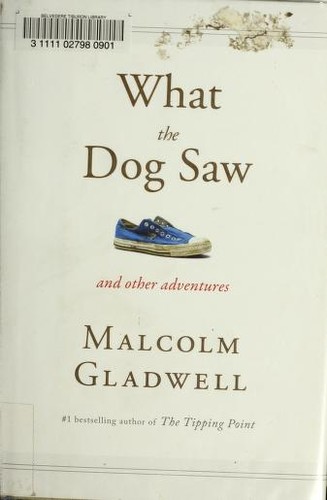
What the Dog Saw: And Other Adventures (2009) Parents Guide: Is the book OK for kids?
Age Rating, Sex, Violence & Language
What the Dog Saw: And Other Adventures is best for ages 18+ according to Bontent's parent guide. The strongest content in this book is violence at 4/10 (moderate) and substances at 4/10 (moderate). Below you'll find severity scores out of 10 for every category plus the moments parents ask about most.
Adult • 2009 • 410 pages • Lexile 1250L (high school or more advanced reading difficulty)
A collection of Malcolm Gladwell's New Yorker essays on topics from the Dog Whisperer and ketchup to Enron, pit bulls, homelessness and criminal profiling. There is no sexual content, and profanity is rare, but a few essays deal with mature topics such as serial-killer profiling, fatal dog attacks, chronic alcoholism and disasters. Written for adults; curious teens could read it, especially with a parent willing to talk through the… Continue to this guide
Is What the Dog Saw: And Other Adventures appropriate for kids?
A collection of Malcolm Gladwell's New Yorker essays on topics from the Dog Whisperer and ketchup to Enron, pit bulls, homelessness and criminal profiling. There is no sexual content, and profanity is rare, but a few essays deal with mature topics such as serial-killer… Continue with an account
Content severity in What the Dog Saw: And Other Adventures
What happens in What the Dog Saw: And Other Adventures, moment by moment
- p. 15 🔥 Mature Themes 1/10
- p. 58 💬 Language 2/10
- p. 82 🔥 Mature Themes 2/10
Sex and nudity in What the Dog Saw: And Other Adventures
There is no sexual content or romantic imagery presented in this collection of essays. In the chapter 'John Rock's Error,' Gladwell explores the historical development of the birth control pill, which involves clinical discussions of menstruation, ovulation, and reproductive biology. The tone remains strictly academic and sociological throughout, focusing on Catholic doctrine and medical history rather than sexual activity. Younger readers may find the technical descriptions of hormone cycles dense, but there is…
Continue with an accountViolence and gore in What the Dog Saw: And Other Adventures
Violence is discussed analytically through the lens of social science and criminal justice rather than depicted for shock value. 'Dangerous Minds' examines the history of FBI profiling by referencing the crimes of serial killers like Ted Bundy and the BTK killer, though descriptions are kept brief. 'Troublemakers' discusses the physical mechanics of dog bites and mentions a tragic fatal mauling to illustrate the debate over pit bull bans. Additionally, the essay 'Blowup' analyzes the technical failures behind the…
Continue with an accountLanguage in What the Dog Saw: And Other Adventures
The language is largely professional and sophisticated, fitting for a collection of essays originally published in The New Yorker. Occasional profanity appears, primarily when Gladwell is quoting a subject or reading from a transcript, such as the use of 'shit' or 'damn' in high-stress professional environments. In the chapter 'The Talent Myth,' corporate culture at Enron involves some aggressive vernacular, and 'Million-Dollar Murray' includes blunt dialogue from the streets. There are no instances of gratuitous…
Continue with an accountDrugs, alcohol, and smoking in What the Dog Saw: And Other Adventures
Substance use is addressed as a sociological factor in homelessness and public health rather than a lifestyle choice. 'Million-Dollar Murray' centers on a chronically homeless man struggling with severe alcoholism, describing his cycles of detox and intoxication in a sobering, non-judgmental way. The essay 'True Colors' examines the chemistry and marketing of hair dye, while 'John Rock's Error' looks at the medical regulation of synthetic hormones. There are also brief mentions of social drinking and the…
Continue with an accountMature themes in What the Dog Saw: And Other Adventures
The collection explores complex themes of expertise, human fallibility, and how we interpret information. Gladwell examines the psychology of panic, the mechanics of corporate fraud at Enron, and the moral dilemmas surrounding homelessness and police work. Several essays deal with tragedy and grief, such as the analysis of plane crashes and intelligence failures leading up to the Yom Kippur War. The book challenges readers to rethink how they judge others, from job candidates to 'dangerous' dog breeds. These…
Continue with an accountFrequently Asked Questions
Is What the Dog Saw: And Other Adventures appropriate for kids?
Bontent's parent guide suggests What the Dog Saw: And Other Adventures is best for ages 18+. A collection of Malcolm Gladwell's New Yorker essays on topics from the Dog Whisperer and ketchup to Enron, pit bulls, homelessness and criminal profiling. There is no sexual content, and profanity is rare, but a few…
What age rating does What the Dog Saw: And Other Adventures have?
Books don't carry official age ratings. What the Dog Saw: And Other Adventures is published for a Adult audience, and Bontent's independent parent guide recommends it for ages 18+.
What reading level is What the Dog Saw: And Other Adventures?
What the Dog Saw: And Other Adventures is 410 pages and its reading level is Lexile 1250L (high school or more advanced reading difficulty). Bontent recommends it for ages 18+.
What is What the Dog Saw: And Other Adventures about?
A collection of Malcolm Gladwell's New Yorker essays on topics from the Dog Whisperer and ketchup to Enron, pit bulls, homelessness and criminal profiling. There is no sexual content, and profanity is rare, but a few essays deal with mature topics such as serial-killer profiling, fatal dog attacks, chronic alcoholism…
Is there sex or nudity in What the Dog Saw: And Other Adventures?
There is no sexual content or romantic imagery presented in this collection of essays. In the chapter 'John Rock's Error,' Gladwell explores the historical development of the birth control pill, which involves clinical discussions of menstruation, ovulation…
How violent is What the Dog Saw: And Other Adventures?
Violence is discussed analytically through the lens of social science and criminal justice rather than depicted for shock value. 'Dangerous Minds' examines the history of FBI profiling by referencing the crimes of serial killers like Ted Bundy and the BTK…
Is the language in What the Dog Saw: And Other Adventures appropriate for kids?
The language is largely professional and sophisticated, fitting for a collection of essays originally published in The New Yorker. Occasional profanity appears, primarily when Gladwell is quoting a subject or reading from a transcript, such as the use of…
Are drugs, alcohol, or smoking depicted in What the Dog Saw: And Other Adventures?
Substance use is addressed as a sociological factor in homelessness and public health rather than a lifestyle choice. 'Million-Dollar Murray' centers on a chronically homeless man struggling with severe alcoholism, describing his cycles of detox and…
What mature themes appear in What the Dog Saw: And Other Adventures?
The collection explores complex themes of expertise, human fallibility, and how we interpret information. Gladwell examines the psychology of panic, the mechanics of corporate fraud at Enron, and the moral dilemmas surrounding homelessness and police work…
Where can I read the full What the Dog Saw: And Other Adventures parent guide?
Create a free Bontent account to save titles and find family picks. Full page-level details use guide credits or Bontent Parent membership.
More books by Malcolm Gladwell
- David and Goliath: Underdogs, Misfits, and the Art of Battling Giants parent guide
- The Bomber Mafia: A Dream, a Temptation, and the Longest Night of the Second World War parent guide
- OUTLIERS parent guide
- Outliers: The Story of Success parent guide
- The Tipping Point: How Little Things Can Make a Big Difference parent guide
- The Tipping Point parent guide
- Blink: The Power of Thinking Without Thinking parent guide
- Talking to Strangers parent guide
- Talking to Strangers: What We Should Know About the People We Don't Know parent guide
- David and Goliath parent guide
More books with Bontent parent guides
- The Three Graces of Pearl Street parent guide
- The Hobbit, or There and Back Again parent guide
- Napoleon Boswell parent guide
- Eragon (The Inheritance Cycle, #1) parent guide
- Works (Poems / Wuthering Heights) parent guide
- The Battle of the Labyrinth (Percy Jackson and the Olympians, #4) parent guide
- The ballad of the hundred days parent guide
- The Cruel Prince (The Folk of the Air, #1) parent guide
- The Comrade in white parent guide
- In the toils of slavery parent guide
- The black Homer of Jimtown parent guide
- 2001: A Space Odyssey parent guide
- The biography of Sir Gawain in medieval French literature parent guide
- The modern novel parent guide
- The Christmas Stories [8 stories] parent guide
- Plot Twist: Life, Craft, and the Messy First Draft parent guide