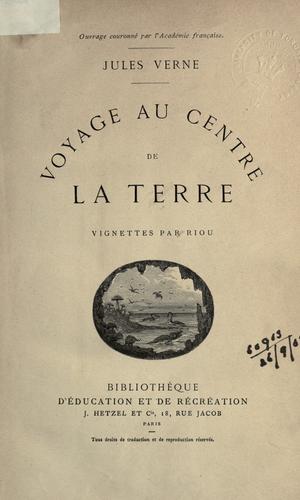
Voyage au Centre de la Terre (2014) Parents Guide: Is the book OK for kids?
Age Rating, Sex, Violence & Language
Three explorers descend to the center of the earth, where they encounter tumultuous storms, wild prehistoric animals, and fierce cavemen.
Middle Grade • 2014 • 244 pages • Lexile 1000L (roughly grades 6–7 reading difficulty)
This classic 19th-century adventure follows an eccentric professor and his reluctant nephew on a perilous journey into an Icelandic volcano. The book earns its age rating primarily for dense Victorian scientific prose and scenes of intense survival peril, including dehydration, isolation, and close encounters with prehistoric beasts. While there are no sexual situations or strong profanity, the atmospheric tension and depictions of a… Sign up for the full guide
Is Voyage au Centre de la Terre appropriate for kids?
This classic 19th-century adventure follows an eccentric professor and his reluctant nephew on a perilous journey into an Icelandic volcano. The book earns its age rating primarily for dense Victorian scientific prose and scenes of intense survival peril, including dehydration… Read more — free account
Content severity in Voyage au Centre de la Terre
What happens in Voyage au Centre de la Terre, moment by moment
- p. 12 🔥 Mature Themes 2/10
- p. 28 💬 Language 1/10
- p. 45 🍷 Substances 1/10
Sex and nudity in Voyage au Centre de la Terre
This category is not present in the narrative. The story follows Professor Lidenbrock, his nephew Axel, and their guide Hans through a purely scientific and survivalist journey. While Axel is motivated by his love for Gräuben back in Hamburg, their relationship is depicted with strict Victorian-era propriety. The book concludes with their happy marriage, but during the actual subterranean adventure, there is no physical contact or romantic dialogue. The text remains entirely focused on geology, paleontology, and…
Read more — free accountViolence and gore in Voyage au Centre de la Terre
Moderate survival peril is a constant element throughout the journey. Characters face life-threatening dehydration in the early tunnels, and Axel suffers significant psychological trauma when he is separated from the group in total darkness. The men witness a violent, bloody battle between prehistoric sea monsters and are nearly incinerated by ball lightning during an electrical storm. Later, the discovery of a mummified human body and a sighting of a giant humanoid add an eerie, threatening tone. The climax…
Read more — free accountLanguage in Voyage au Centre de la Terre
No modern profanity or vulgarity is present in this classic work. The dialogue is characterized by formal 19th-century sentence structures and antiquated intellectual phrasing. Occasional exclamations of distress or scientific excitement occur, but they never veer into crude territory. Professor Lidenbrock is often irritable and speaks sharply to Axel, but his insults are intellectual rather than profane. The reading level is sophisticated, requiring a grasp of complex scientific terminology rather than decoding…
Read more — free accountDrugs, alcohol, and smoking in Voyage au Centre de la Terre
Substance use is very light and historically context-appropriate for 19th-century explorers. The party carries spirits, specifically gin and wine, as part of their essential rations for medicinal purposes and warmth. During moments of extreme exhaustion or cold, Lidenbrock provides a small ration of alcohol to revive his nephew's spirits. A final celebratory glass of wine is shared upon their successful return to the surface in Italy. There is no mention of intoxication, recreational drug use, or tobacco…
Read more — free accountMature themes in Voyage au Centre de la Terre
The central themes revolve around the conflict between scientific obsession and human self-preservation. Professor Lidenbrock's monomania often puts the group in mortal danger, raising questions about the ethics of exploration. Bravery and stoicism are exemplified by the guide Hans, whose calm demeanor balances Axel's frequent bouts of anxiety and despair. The novel also explores the wonder of the natural world and the vastness of geologic time, contrasting the insignificance of man against the ancient history of…
Read more — free accountFrequently Asked Questions
Is Voyage au Centre de la Terre appropriate for kids?
Bontent's parent guide suggests Voyage au Centre de la Terre is best for ages 10+. This classic 19th-century adventure follows an eccentric professor and his reluctant nephew on a perilous journey into an Icelandic volcano. The book earns its age rating primarily for dense Victorian scientific prose…
What age rating does Voyage au Centre de la Terre have?
Books don't carry official age ratings. Voyage au Centre de la Terre is published for a Middle Grade audience, and Bontent's independent parent guide recommends it for ages 10+.
What reading level is Voyage au Centre de la Terre?
Voyage au Centre de la Terre is 244 pages and its reading level is Lexile 1000L (roughly grades 6–7 reading difficulty). Bontent recommends it for ages 10+.
What is Voyage au Centre de la Terre about?
This classic 19th-century adventure follows an eccentric professor and his reluctant nephew on a perilous journey into an Icelandic volcano. The book earns its age rating primarily for dense Victorian scientific prose and scenes of intense survival peril, including dehydration, isolation, and close encounters with…
Is there sex or nudity in Voyage au Centre de la Terre?
This category is not present in the narrative. The story follows Professor Lidenbrock, his nephew Axel, and their guide Hans through a purely scientific and survivalist journey. While Axel is motivated by his love for Gräuben back in Hamburg, their…
How violent is Voyage au Centre de la Terre?
Moderate survival peril is a constant element throughout the journey. Characters face life-threatening dehydration in the early tunnels, and Axel suffers significant psychological trauma when he is separated from the group in total darkness. The men witness a…
Is the language in Voyage au Centre de la Terre appropriate for kids?
No modern profanity or vulgarity is present in this classic work. The dialogue is characterized by formal 19th-century sentence structures and antiquated intellectual phrasing. Occasional exclamations of distress or scientific excitement occur, but they never…
Are drugs, alcohol, or smoking depicted in Voyage au Centre de la Terre?
Substance use is very light and historically context-appropriate for 19th-century explorers. The party carries spirits, specifically gin and wine, as part of their essential rations for medicinal purposes and warmth. During moments of extreme exhaustion or…
What mature themes appear in Voyage au Centre de la Terre?
The central themes revolve around the conflict between scientific obsession and human self-preservation. Professor Lidenbrock's monomania often puts the group in mortal danger, raising questions about the ethics of exploration. Bravery and stoicism are…
Where can I read the full Voyage au Centre de la Terre parent guide?
Create a free Bontent account to unlock page-level notes, filter by your kids' ages, and save titles to your watchlist.
Less intense books for families
Sign up to filter







More thriller books with parent guides
- Sunrise on the Reaping parent guide
- Operation Bounce House parent guide
- Tall Oaks parent guide
- Kingdom of Shadow and Light parent guide
- You Did Nothing Wrong parent guide
- The Midnight Girls parent guide
- THE ESCAPE GAME parent guide
- Moon Witch, Spider King parent guide
- The Martian Contingency parent guide
- Blake Crouch's Dark Matter parent guide
- Eragon (The Inheritance Cycle, #1) parent guide
- Leopardstar's Honor parent guide
Soft SF books parents are checking
- The Hobbit, or There and Back Again parent guide
- The Return of the Young Prince parent guide
- American Gods: Tenth Anniversary (American Gods, #1) parent guide
- The Titan’s Curse (Percy Jackson and the Olympians, #3) parent guide
- The Battle of the Labyrinth (Percy Jackson and the Olympians, #4) parent guide
- The ballad of the hundred days parent guide
- The Ballad of Songbirds and Snakes (The Hunger Games, #0) parent guide
- The Bands of Mourning (Mistborn, #6) parent guide
- The Count of Monte Cristo parent guide
More books by Jules Verne
More books with Bontent parent guides
- Tall Oaks parent guide
- Charlie the Choo-Choo parent guide
- The Martian Contingency parent guide
- The Bookshop on Rosemary Lane parent guide
- Babel: Or the Necessity of Violence: An Arcane History of the Oxford Translators' Revolution parent guide
- The ballad of the hundred days parent guide
- The motion picture chums' outdoor exhibition, or, The film that solved a mystery parent guide
- Before They Are Hanged (The First Law, #2) parent guide
- 2001: A Space Odyssey parent guide
- The man from up there parent guide
- The contemporary Negro novel parent guide
- The Dark Tower II: The Drawing of the Three (The Dark Tower, #2) parent guide
- Harry Potter parent guide
- 6 great short novels of science fiction parent guide
- Arena 13 parent guide
- The Maid: A Novel (Molly the Maid, #1) parent guide