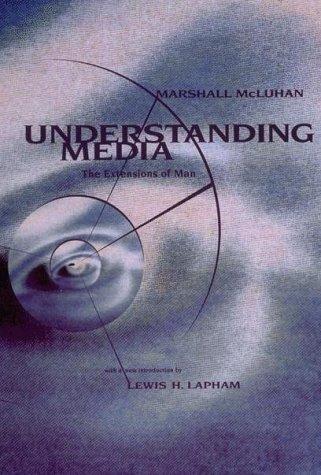
Understanding Media (1994) Parents Guide: Is the book OK for kids?
Age Rating, Sex, Violence & Language
The author examines all types of communication including photographs, ads, games, television, radio, telephone, comics, numbers, money, clothing, movies, recordings, housing, and weapons.
Adult • 1994 • 362 pages • 12th Grade/College
Understanding Media is a foundational academic text in media theory and sociology that explores how various forms of communication shape human society. Due to its dense, theoretical prose and focus on high-level sociological concepts, it is most appropriate for high school students, college students, or adults interested in intellectual history. Parents should be aware that the book contains occasional references to historical social… Sign up for the full guide
Is Understanding Media appropriate for kids?
Understanding Media is a foundational academic text in media theory and sociology that explores how various forms of communication shape human society. Due to its dense, theoretical prose and focus on high-level sociological concepts, it is most appropriate for high school… Read more — free account
Content severity in Understanding Media
What happens in Understanding Media, moment by moment
- p. 7 🔥 Mature Themes 1/10
- p. 12 🔥 Mature Themes 1/10
- p. 24 🔥 Mature Themes 1/10
Sex and nudity in Understanding Media
There is no sexual content in this book. It is a strictly analytical work focused on the evolution of communication technologies, media theory, and sociological observations. None of the topics discussed involve romantic relationships, physical intimacy, or sexual themes. Even when discussing mass media such as movies or the press, McLuhan maintains a clinical distance, ignoring the content of pop culture in favor of its mechanical form. The reading experience remains entirely academic and free of mature…
Read more — free accountViolence and gore in Understanding Media
The book contains mild, analytical discussions of violence in the context of weaponry, historical conflict, and the sociology of war. These mentions are detached and academic, serving to illustrate the impact of media on human aggression or social organization. For example, McLuhan discusses how the stirrup or the bow changed the speed of conflict, rather than describing the injury to the victim. The psychological 'violence' of sudden technological change is also discussed as a disruptive social force. No graphic…
Read more — free accountLanguage in Understanding Media
The language is academic, sophisticated, and occasionally archaic due to the book's mid-20th-century publication date. It does not contain profanity or vulgarity. Readers should be prepared for complex sentence structures and dense philosophical terminology characteristic of academic non-fiction. McLuhan often employs puns and allusions to high literature, such as James Joyce or Shakespeare, which may challenge younger readers. The tone is authoritative and somewhat detached, typical of a scholarly dissertation…
Read more — free accountDrugs, alcohol, and smoking in Understanding Media
There is no focus on substance use in this work. References to material consumption are limited to the economic sense, such as the use of money or goods as media. No mentions of drugs, alcohol, or illicit substances are featured in the text, except for perhaps brief, metaphorical mentions of intoxication by new media forms. McLuhan discusses the 'narcosis' or numbing effect of technology, but this is a psychological metaphor rather than a description of drug use. The work remains appropriate for a clean academic…
Read more — free accountMature themes in Understanding Media
The central themes revolve around communication technology, the 'global village,' and how the medium of a message often has more social impact than the content itself. The book addresses complex topics like dehumanization in the industrial age, the psychological shifts caused by television and radio, and the influence of print culture on modern identity. McLuhan argues that technological extensions of the body—like the wheel for feet or the computer for the nervous system—alter human consciousness. These…
Read more — free accountFrequently Asked Questions
Is Understanding Media appropriate for kids?
Bontent's parent guide suggests Understanding Media is best for ages 16+. Understanding Media is a foundational academic text in media theory and sociology that explores how various forms of communication shape human society. Due to its dense, theoretical prose and focus on high-level…
What age rating does Understanding Media have?
Books don't carry official age ratings. Understanding Media is shelved by its publisher as Adult, but that's a marketing category, not a content rating — Bontent's own review of what's actually on the page puts it at ages 16+.
What reading level is Understanding Media?
Understanding Media is 362 pages and its reading level is 12th Grade/College. Bontent recommends it for ages 16+.
What is Understanding Media about?
Understanding Media is a foundational academic text in media theory and sociology that explores how various forms of communication shape human society. Due to its dense, theoretical prose and focus on high-level sociological concepts, it is most appropriate for high school students, college students, or adults…
Is there sex or nudity in Understanding Media?
There is no sexual content in this book. It is a strictly analytical work focused on the evolution of communication technologies, media theory, and sociological observations. None of the topics discussed involve romantic relationships, physical intimacy, or…
How violent is Understanding Media?
The book contains mild, analytical discussions of violence in the context of weaponry, historical conflict, and the sociology of war. These mentions are detached and academic, serving to illustrate the impact of media on human aggression or social…
Is the language in Understanding Media appropriate for kids?
The language is academic, sophisticated, and occasionally archaic due to the book's mid-20th-century publication date. It does not contain profanity or vulgarity. Readers should be prepared for complex sentence structures and dense philosophical terminology…
Are drugs, alcohol, or smoking depicted in Understanding Media?
There is no focus on substance use in this work. References to material consumption are limited to the economic sense, such as the use of money or goods as media. No mentions of drugs, alcohol, or illicit substances are featured in the text, except for…
What mature themes appear in Understanding Media?
The central themes revolve around communication technology, the 'global village,' and how the medium of a message often has more social impact than the content itself. The book addresses complex topics like dehumanization in the industrial age, the…
Where can I read the full Understanding Media parent guide?
Create a free Bontent account to unlock page-level notes, filter by your kids' ages, and save titles to your watchlist.
More fiction books with parent guides
- The Dictionary of Lost Words parent guide
- Nine Lives parent guide
- Hana Khan Carries On parent guide
- Charlie the Choo-Choo parent guide
- The Return of the Young Prince parent guide
- The Name of the Wind / The Wise Man's Fear / The Slow Regard of Silent Things (The Kingkiller Chronicle #1-2.5) parent guide
- Clash of star-kings parent guide
- This House Will Feed parent guide
- The Bookshop on Rosemary Lane parent guide
- Told in letters parent guide
- Babel: Or the Necessity of Violence: An Arcane History of the Oxford Translators' Revolution parent guide
- The Titan’s Curse (Percy Jackson and the Olympians, #3) parent guide
Sociology books parents are checking
- The 48 Laws of Power parent guide
- Homo Deus: A Brief History of Tomorrow parent guide
- Biggest Ideas in the Universe 2 parent guide
- Four Thousand Weeks: Time Management for Mortals parent guide
- Factfulness: Ten Reasons We're Wrong About the World – and Why Things Are Better Than You Think parent guide
- Everything Is Tuberculosis: The History and Persistence of Our Deadliest Infection parent guide
- Cultish: The Language of Fanaticism parent guide
- The Obstacle Is the Way: The Timeless Art of Turning Adversity to Advantage parent guide
- The Kind Worth Killing (Ingrid Bergman #1) parent guide
- Being Mortal: Medicine and What Matters in the End parent guide
- Breath: The New Science of a Lost Art parent guide
- David and Goliath: Underdogs, Misfits, and the Art of Battling Giants parent guide
More books with Bontent parent guides
- The Dictionary of Lost Words parent guide
- Tall Oaks parent guide
- Charged parent guide
- The Midnight Girls parent guide
- The Martian Contingency parent guide
- Clash of star-kings parent guide
- Blake Crouch's Dark Matter parent guide
- The Bookshop on Rosemary Lane parent guide
- Atomic Habits: An Easy & Proven Way to Build Good Habits & Break Bad Ones parent guide
- The Battle of the Labyrinth (Percy Jackson and the Olympians, #4) parent guide
- The motion picture chums' outdoor exhibition, or, The film that solved a mystery parent guide
- Before They Are Hanged (The First Law, #2) parent guide
- Blood of Elves (The Witcher, #1) parent guide
- The Christmas Stories [8 stories] parent guide
- The Dark Tower II: The Drawing of the Three (The Dark Tower, #2) parent guide
- Onyx Storm (The Empyrean, #3) parent guide