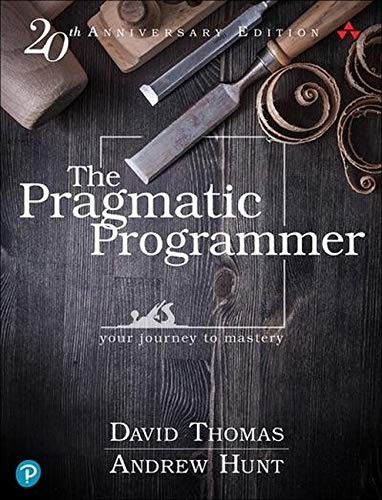
The Pragmatic Programmer (1999) Parents Guide: Is the book OK for kids?
Age Rating, Sex, Violence & Language
The Pragmatic Programmer is one of those rare tech audiobooks you’ll listen, re-listen, and listen to again over the years. Whether you’re new to the field or an experienced practitioner, you’ll come away with fresh insights each and every time. Dave Thomas and Andy Hunt wrote the first edition of this influential book in 1999 to help their clients create better software and rediscover the joy of coding. These lessons have helped a generation of programmers examine the very essence of software development, independent of any… Sign up for the full guide
Adult • 1999 • 352 pages • Professional/Technical
The Pragmatic Programmer is a non-fiction professional development guide for software engineers, focusing on best practices, problem-solving, and career longevity. It earns its recommended age due to the technical complexity of the content rather than any inappropriate material. The book is entirely safe for young readers interested in coding, containing no violence, sexual content, or significant profanity.
Is The Pragmatic Programmer appropriate for kids?
The Pragmatic Programmer is a non-fiction professional development guide for software engineers, focusing on best practices, problem-solving, and career longevity. It earns its recommended age due to the technical complexity of the content rather than any inappropriate material… Read more — free account
Content severity in The Pragmatic Programmer
What happens in The Pragmatic Programmer, moment by moment
- p. 1 🔥 Mature Themes 1/10
- p. 7 🔥 Mature Themes 1/10
- p. 15 💬 Language 2/10
Sex and nudity in The Pragmatic Programmer
This technical manual is entirely devoid of romantic, physical, or sexual content. The authors, Hunt and Thomas, focus exclusively on software engineering methodologies, team dynamics, and coding syntax. There are no scenes involving interpersonal relationships outside of professional collaboration. Illustrations and diagrams are strictly technical, representing data flows, class hierarchies, or architectural patterns. The book maintains a dry, educational tone suitable for any classroom or corporate setting.
Violence and gore in The Pragmatic Programmer
There is no actual physical violence depicted in this book. The authors utilize aggressive metaphors to describe software degradation, such as 'Software Entropy' or the 'Broken Window Theory,' which refers to urban decay as a parallel to messy code. Mention is made of 'Stone Soup' as a cautionary tale for project management, but no harm comes to any characters. The tone remains instructional and non-threatening throughout the 352 pages. Young readers will not encounter any descriptions of injury, combat, or…
Read more — free accountLanguage in The Pragmatic Programmer
The language used is professional and academic, with very few instances of mild colloquialisms. While the text is largely clean, the authors occasionally use mild expressions like 'hell' or 'damn' to emphasize professional frustration in anecdotal sidebars. Technical jargon such as 'garbage collection' or 'deadlock' is frequent but not profane. There are no slurs or vulgar sexual references within the text. The writing style reflects a standard business-casual approach to non-fiction technical writing.
Drugs, alcohol, and smoking in The Pragmatic Programmer
There is no mention of alcohol, tobacco, or illegal drug use throughout this text. The material focuses strictly on the professional habits and technical workflows of software development. As a business and educational resource, the narrative maintains a clean, work-oriented tone that avoids any references to substance consumption. The only 'dependencies' discussed are software libraries and module requirements. Readers looking for a professional guide will find it free of any recreational substance references or…
Read more — free accountMature themes in The Pragmatic Programmer
The book centers on the psychological and ethical themes of craftsmanship and personal agency. It highlights the 'Individualism' of the developer, encouraging readers to take ownership of their mistakes rather than offering excuses. The concept of 'Tragedy of the Commons' is explored in the context of shared codebases and team responsibility. A significant portion of the text is dedicated to lifelong learning and the ethics of delivering high-quality work to clients. These themes encourage maturity, discipline…
Read more — free accountFrequently Asked Questions
Is The Pragmatic Programmer appropriate for kids?
Bontent's parent guide suggests The Pragmatic Programmer is best for ages 12+. The Pragmatic Programmer is a non-fiction professional development guide for software engineers, focusing on best practices, problem-solving, and career longevity. It earns its recommended age due to the technical…
What age rating does The Pragmatic Programmer have?
Books don't carry official age ratings. The Pragmatic Programmer is shelved by its publisher as Adult, but that's a marketing category, not a content rating — Bontent's own review of what's actually on the page puts it at ages 12+.
What reading level is The Pragmatic Programmer?
The Pragmatic Programmer is 352 pages and its reading level is Professional/Technical. Bontent recommends it for ages 12+.
What is The Pragmatic Programmer about?
The Pragmatic Programmer is a non-fiction professional development guide for software engineers, focusing on best practices, problem-solving, and career longevity. It earns its recommended age due to the technical complexity of the content rather than any inappropriate material. The book is entirely safe for young…
Is there sex or nudity in The Pragmatic Programmer?
This technical manual is entirely devoid of romantic, physical, or sexual content. The authors, Hunt and Thomas, focus exclusively on software engineering methodologies, team dynamics, and coding syntax. There are no scenes involving interpersonal…
How violent is The Pragmatic Programmer?
There is no actual physical violence depicted in this book. The authors utilize aggressive metaphors to describe software degradation, such as 'Software Entropy' or the 'Broken Window Theory,' which refers to urban decay as a parallel to messy code. Mention…
Is the language in The Pragmatic Programmer appropriate for kids?
The language used is professional and academic, with very few instances of mild colloquialisms. While the text is largely clean, the authors occasionally use mild expressions like 'hell' or 'damn' to emphasize professional frustration in anecdotal sidebars…
Are drugs, alcohol, or smoking depicted in The Pragmatic Programmer?
There is no mention of alcohol, tobacco, or illegal drug use throughout this text. The material focuses strictly on the professional habits and technical workflows of software development. As a business and educational resource, the narrative maintains a…
What mature themes appear in The Pragmatic Programmer?
The book centers on the psychological and ethical themes of craftsmanship and personal agency. It highlights the 'Individualism' of the developer, encouraging readers to take ownership of their mistakes rather than offering excuses. The concept of 'Tragedy of…
Where can I read the full The Pragmatic Programmer parent guide?
Create a free Bontent account to unlock page-level notes, filter by your kids' ages, and save titles to your watchlist.
More business books with parent guides
- Atomic Habits parent guide
- The 48 Laws of Power parent guide
- Think and Grow Rich parent guide
- Control Your Mind and Master Your Feelings parent guide
- Four Thousand Weeks: Time Management for Mortals parent guide
- How To Win Friends and Influence People parent guide
- The Psychology of Money parent guide
- Lord of the Flies parent guide
- Range: Why Generalists Triumph in a Specialized World parent guide
- The Obstacle Is the Way: The Timeless Art of Turning Adversity to Advantage parent guide
- Fifty Shades of Grey parent guide
- Creativity, Inc.: Overcoming the Unseen Forces That Stand in the Way of True Inspiration parent guide
Programming books parents are checking
- Atomic Habits: An Easy & Proven Way to Build Good Habits & Break Bad Ones parent guide
- Essentialism: The Disciplined Pursuit of Less parent guide
- The 7 Habits of Highly Effective People parent guide
- Drive: The Surprising Truth About What Motivates Us parent guide
- The 7 Habits of Highly Effective People: Powerful Lessons in Personal Change parent guide
- Radical Candor: Be a Kickass Boss Without Losing Your Humanity parent guide
- Deep Work parent guide
- MAKE YOUR BED parent guide
- Thinking in Systems: A Primer parent guide
More books with Bontent parent guides
- The Dictionary of Lost Words parent guide
- Tall Oaks parent guide
- The Midnight Girls parent guide
- The Name of the Wind / The Wise Man's Fear / The Slow Regard of Silent Things (The Kingkiller Chronicle #1-2.5) parent guide
- The Martian Contingency parent guide
- Clash of star-kings parent guide
- The Bookshop on Rosemary Lane parent guide
- The Battle of the Labyrinth (Percy Jackson and the Olympians, #4) parent guide
- The ballad of the hundred days parent guide
- The motion picture chums' outdoor exhibition, or, The film that solved a mystery parent guide
- Before They Are Hanged (The First Law, #2) parent guide
- 2001: A Space Odyssey parent guide
- Blood of Elves (The Witcher, #1) parent guide
- Onyx Storm (The Empyrean, #3) parent guide
- A century of the English novel parent guide
- Harry Potter and the Sorcerer's Stone (Harry Potter, #1) parent guide