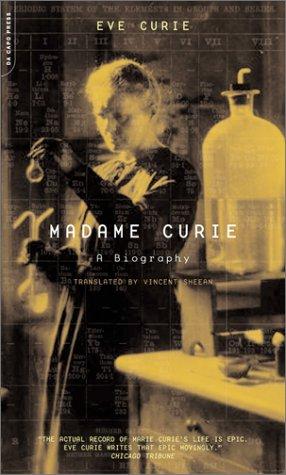
Madame Curie (1981) Parents Guide: Is the book OK for kids?
Age Rating, Sex, Violence & Language
This story was published serially under the title Marie Curie, my mother ; p. [1].
Young Adult • 1981 • 411 pages • Lexile 1120L (roughly grades 8–9 reading difficulty)
Marie Curie's younger daughter wrote this biography the year after her mother's death, and it is affectionate, novelistic and openly protective of its subject - which makes it a wonderful entry point for a science-minded teen and a source to read critically rather than as neutral history. The hard passages are real losses handled with restraint: childhood deaths in the family, years of near-starvation as a student, Pierre Curie's… Sign up for the full guide
Is Madame Curie appropriate for kids?
Marie Curie's younger daughter wrote this biography the year after her mother's death, and it is affectionate, novelistic and openly protective of its subject - which makes it a wonderful entry point for a science-minded teen and a source to read critically rather than as… Read more — free account
Content severity in Madame Curie
What happens in Madame Curie, moment by moment
- p. 30 🔥 Mature Themes 4/10
- p. 62 🔥 Mature Themes 3/10
- p. 108 🔥 Mature Themes 4/10
Sex and nudity in Madame Curie
This biography is essentially void of sexual content, adhering to the social mores of the early 20th century and the author's protective stance toward her mother's image. The courtship between Marie and Pierre Curie is described through shared scientific passion and respectful correspondence, eventually leading to a simple marriage. Eve Curie notably glosses over the 1911 Paul Langevin scandal, framing the public outcry as a xenophobic attack on a foreign woman rather than detailing the romantic nature of the…
Read more — free accountViolence and gore in Madame Curie
Direct violence is minimal, though the book contains several sober descriptions of illness and death. The most shocking moment occurs when Pierre Curie is killed in a street accident, where his skull is crushed by a horse-drawn wagon's wheel, an event described with visceral grief. In the early chapters, the Russian occupation of Poland is characterized by an atmosphere of fear, secret police, and the threat of execution for revolutionaries. During the WWI chapters, Marie witnesses the physical devastation of…
Read more — free accountLanguage in Madame Curie
The book contains no coarse language or profanity. The prose, originally written in French and widely available in the classic translation by Vincent Sheean, is elegant, formal, and academic. Even in moments of extreme frustration or political tension, the characters and the narrator maintain a high standard of decorum. The dialogue is reconstructed from letters and journals, reflecting the dignified speech of the European intelligentsia. It is an exceptionally clean text suitable for any reading level capable of…
Read more — free accountDrugs, alcohol, and smoking in Madame Curie
There is no recreational drug use or problematic drinking described in the biography. Wine is mentioned briefly in the context of traditional French dining or formal toasts, such as during the Curies' wedding journey or scientific banquets, but never to excess. The primary 'substance' of concern is radium itself, which functions as a slow-acting poison throughout the narrative. The authors describe the Curies carrying luminous tubes in their pockets and Marie's lifelong refusal to acknowledge the physical toll of…
Read more — free accountMature themes in Madame Curie
The narrative is deeply informed by themes of loss, starting with Manya’s childhood loss of her sister and mother to infectious diseases. The book also examines the psychological weight of living under political oppression in Poland, where the Skłodowski family must hide their culture from Russian inspectors. A central theme is the systemic barrier against women in academia; Marie frequently faces rejection and skepticism from the French Academy despite her unprecedented achievements. Finally, the book explores…
Read more — free accountFrequently Asked Questions
Is Madame Curie appropriate for kids?
Bontent's parent guide suggests Madame Curie is best for ages 12+. Marie Curie's younger daughter wrote this biography the year after her mother's death, and it is affectionate, novelistic and openly protective of its subject - which makes it a wonderful entry point for a…
What age rating does Madame Curie have?
Books don't carry official age ratings. Madame Curie is shelved by its publisher as Young Adult, but that's a marketing category, not a content rating — Bontent's own review of what's actually on the page puts it at ages 12+.
What reading level is Madame Curie?
Madame Curie is 411 pages and its reading level is Lexile 1120L (roughly grades 8–9 reading difficulty). Bontent recommends it for ages 12+.
What is Madame Curie about?
Marie Curie's younger daughter wrote this biography the year after her mother's death, and it is affectionate, novelistic and openly protective of its subject - which makes it a wonderful entry point for a science-minded teen and a source to read critically rather than as neutral history. The hard passages are real…
Is there sex or nudity in Madame Curie?
This biography is essentially void of sexual content, adhering to the social mores of the early 20th century and the author's protective stance toward her mother's image. The courtship between Marie and Pierre Curie is described through shared scientific…
How violent is Madame Curie?
Direct violence is minimal, though the book contains several sober descriptions of illness and death. The most shocking moment occurs when Pierre Curie is killed in a street accident, where his skull is crushed by a horse-drawn wagon's wheel, an event…
Is the language in Madame Curie appropriate for kids?
The book contains no coarse language or profanity. The prose, originally written in French and widely available in the classic translation by Vincent Sheean, is elegant, formal, and academic. Even in moments of extreme frustration or political tension, the…
Are drugs, alcohol, or smoking depicted in Madame Curie?
There is no recreational drug use or problematic drinking described in the biography. Wine is mentioned briefly in the context of traditional French dining or formal toasts, such as during the Curies' wedding journey or scientific banquets, but never to…
What mature themes appear in Madame Curie?
The narrative is deeply informed by themes of loss, starting with Manya’s childhood loss of her sister and mother to infectious diseases. The book also examines the psychological weight of living under political oppression in Poland, where the Skłodowski…
Where can I read the full Madame Curie parent guide?
Create a free Bontent account to unlock page-level notes, filter by your kids' ages, and save titles to your watchlist.
Less intense books for families
Sign up to filter




More biography books with parent guides
- ¡Hola Papi!: How to Come Out in a Walmart Parking Lot and Other Life Lessons parent guide
- Told in letters parent guide
- The 48 Laws of Power parent guide
- The contemporary Negro novel parent guide
- A century of the English novel parent guide
- Jonathan Strange & Mr Norrell parent guide
- Homo Deus: A Brief History of Tomorrow parent guide
- Biggest Ideas in the Universe 2 parent guide
- Killers of the Flower Moon: The Osage Murders and the Birth of the FBI parent guide
- The Wager: A Tale of Shipwreck, Mutiny and Murder parent guide
- The Tattooist of Auschwitz (The Tattooist of Auschwitz, #1) parent guide
- The three musketeers parent guide
Biography books parents are checking
- The Complete Maus parent guide
- Maus I & II parent guide
- My Brilliant Friend parent guide
- An Absolutely Remarkable Thing (The Carls, #1) parent guide
- Everything Is Tuberculosis: The History and Persistence of Our Deadliest Infection parent guide
- Say Nothing: A True Story of Murder and Memory in Northern Ireland parent guide
- While the World Is Still Asleep parent guide
- Empire of Pain: The Secret History of the Sackler Dynasty parent guide
- Breath: The New Science of a Lost Art parent guide
- The Lost City of Z: A Tale of Deadly Obsession in the Amazon parent guide
More books with Bontent parent guides
- Black Cake parent guide
- The Dictionary of Lost Words parent guide
- Nine Lives parent guide
- Hana Khan Carries On parent guide
- Tall Oaks parent guide
- Charged parent guide
- ¡Hola Papi!: How to Come Out in a Walmart Parking Lot and Other Life Lessons parent guide
- You Did Nothing Wrong parent guide
- The Hobbit, or There and Back Again parent guide
- Last One To Die parent guide
- Moon Witch, Spider King parent guide
- Ghosted: An American Story parent guide
- Unrivaled parent guide
- The Return of the Young Prince parent guide
- Clash of star-kings parent guide
- This House Will Feed parent guide