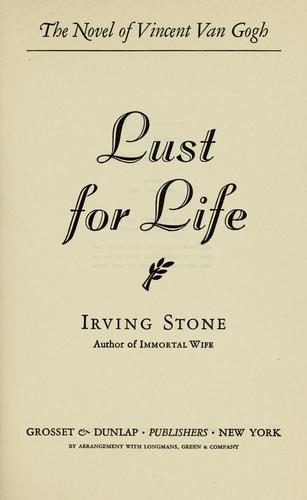
Lust for Life (1934) Parents Guide: Is the book OK for kids?
Age Rating, Sex, Violence & Language
About the life of the painter Vincent Van Gogh
Adult • 1934 • 444 pages • Grade 10+
Lust for Life is a biographical novel detailing the turbulent and tragic life of Vincent van Gogh, recommended for mature teens and adults due to its heavy focus on mental illness, poverty, and self-harm. The book depicts Vincent’s frequent bouts of depression, his desperate financial struggles, and his intense, often failed romantic pursuits. Most notably, the book includes a descriptive account of his descent into madness and the… Sign up for the full guide
Is Lust for Life appropriate for kids?
Lust for Life is a biographical novel detailing the turbulent and tragic life of Vincent van Gogh, recommended for mature teens and adults due to its heavy focus on mental illness, poverty, and self-harm. The book depicts Vincent’s frequent bouts of depression, his desperate… Read more — free account
Content severity in Lust for Life
What happens in Lust for Life, moment by moment
- p. 12 🔥 Mature Themes 2/10
- p. 28 ♥ Sex & Nudity 2/10
- p. 45 🔥 Mature Themes 3/10
Sex and nudity in Lust for Life
The book contains several instances of unrequited love and complicated relationships, including Vincent's pursuit of his cousin Kay and his time living with Sien, a pregnant prostitute. While sexual activity is implied and the social stigma of these relationships is discussed, the descriptions are clinical or emotional rather than graphic. The narrative explores the physical and social consequences of these liaisons, such as the poverty and illness surrounding Sien's profession. Vincent’s interactions with various…
Read more — free accountViolence and gore in Lust for Life
Violence is largely self-inflicted or a result of social unrest. The narrative describes Vincent burning his hand over a flame to prove his love, the graphic removal of his ear during a psychotic break, and his final, fatal self-inflicted gunshot wound. Beyond these major incidents, there are descriptions of the harsh physical toll of mining work and the brutal conditions of 19th-century hospitals. Vincent’s mental breakdowns are described with a sense of internal violence and psychological fracturing. The…
Read more — free accountLanguage in Lust for Life
Language is relatively mild by modern standards, reflecting the 1930s publication date. Expect occasional period-typical insults and terms describing poverty or mental instability. Words like 'idiot,' 'madman,' or 'tramp' are used to categorize Vincent and those in his social circle. There are moments of verbal aggression between Vincent and other artists, particularly Gauguin, though profanity is largely absent. The dialogue is formal and dramatic, characteristic of historical fiction from the early 20th century…
Read more — free accountDrugs, alcohol, and smoking in Lust for Life
The use of absinthe and wine is depicted, particularly as Vincent's mental health deteriorates and he spends time in French cafes. Tobacco use (pipe smoking) is frequent and serves as a constant companion for Vincent throughout his life. The narrative suggests that alcohol is used as a coping mechanism for his anxiety and social failures, especially during his time in Paris and Arles. There are mentions of the medicinal uses of certain substances, reflecting the limited medical knowledge of the time. The role of…
Read more — free accountMature themes in Lust for Life
Major themes include the 'tortured artist' trope, the crushing weight of poverty, religious disillusionment, chronic loneliness, and the clinical progression of mental illness/schizophrenia. Vincent’s time in the Borinage coal mines highlights the suffering of the working class and his own spiritual crisis. The narrative follows his constant financial dependence on his brother Theo, which creates a cycle of guilt and anxiety. His isolation in Arles and Saint-Rémy showcases the terrifying nature of losing one's…
Read more — free accountFrequently Asked Questions
Is Lust for Life appropriate for kids?
Bontent's parent guide suggests Lust for Life is best for ages 16+. Lust for Life is a biographical novel detailing the turbulent and tragic life of Vincent van Gogh, recommended for mature teens and adults due to its heavy focus on mental illness, poverty, and self-harm. The book…
What age rating does Lust for Life have?
Books don't carry official age ratings. Lust for Life is shelved by its publisher as Adult, but that's a marketing category, not a content rating — Bontent's own review of what's actually on the page puts it at ages 16+.
What reading level is Lust for Life?
Lust for Life is 444 pages and its reading level is Grade 10+. Bontent recommends it for ages 16+.
What is Lust for Life about?
Lust for Life is a biographical novel detailing the turbulent and tragic life of Vincent van Gogh, recommended for mature teens and adults due to its heavy focus on mental illness, poverty, and self-harm. The book depicts Vincent’s frequent bouts of depression, his desperate financial struggles, and his intense, often…
Is there sex or nudity in Lust for Life?
The book contains several instances of unrequited love and complicated relationships, including Vincent's pursuit of his cousin Kay and his time living with Sien, a pregnant prostitute. While sexual activity is implied and the social stigma of these…
How violent is Lust for Life?
Violence is largely self-inflicted or a result of social unrest. The narrative describes Vincent burning his hand over a flame to prove his love, the graphic removal of his ear during a psychotic break, and his final, fatal self-inflicted gunshot wound…
Is the language in Lust for Life appropriate for kids?
Language is relatively mild by modern standards, reflecting the 1930s publication date. Expect occasional period-typical insults and terms describing poverty or mental instability. Words like 'idiot,' 'madman,' or 'tramp' are used to categorize Vincent and…
Are drugs, alcohol, or smoking depicted in Lust for Life?
The use of absinthe and wine is depicted, particularly as Vincent's mental health deteriorates and he spends time in French cafes. Tobacco use (pipe smoking) is frequent and serves as a constant companion for Vincent throughout his life. The narrative…
What mature themes appear in Lust for Life?
Major themes include the 'tortured artist' trope, the crushing weight of poverty, religious disillusionment, chronic loneliness, and the clinical progression of mental illness/schizophrenia. Vincent’s time in the Borinage coal mines highlights the suffering…
Where can I read the full Lust for Life parent guide?
Create a free Bontent account to unlock page-level notes, filter by your kids' ages, and save titles to your watchlist.
Less intense books for families
Sign up to filter








More biography books with parent guides
- The Dictionary of Lost Words parent guide
- Nine Lives parent guide
- Hana Khan Carries On parent guide
- ¡Hola Papi!: How to Come Out in a Walmart Parking Lot and Other Life Lessons parent guide
- Charlie the Choo-Choo parent guide
- The Return of the Young Prince parent guide
- The Name of the Wind / The Wise Man's Fear / The Slow Regard of Silent Things (The Kingkiller Chronicle #1-2.5) parent guide
- Clash of star-kings parent guide
- This House Will Feed parent guide
- The Bookshop on Rosemary Lane parent guide
- Told in letters parent guide
- Babel: Or the Necessity of Violence: An Arcane History of the Oxford Translators' Revolution parent guide
Literary Fiction books parents are checking
- Black Cake parent guide
- Moon Witch, Spider King parent guide
- A Boy and His Dog parent guide
- Wuthering Heights, Agnes Grey, and Poems parent guide
- Works (Poems / Wuthering Heights) parent guide
- The Count of Monte Cristo parent guide
- Scottish lliterature parent guide
- An imperfect mother parent guide
- Sayaka Murata parent guide
More books with Bontent parent guides
- Black Cake parent guide
- Just For The Cameras parent guide
- Crow parent guide
- Operation Bounce House parent guide
- Hana Khan Carries On parent guide
- Tall Oaks parent guide
- Kingdom of Shadow and Light parent guide
- ¡Hola Papi!: How to Come Out in a Walmart Parking Lot and Other Life Lessons parent guide
- You Did Nothing Wrong parent guide
- The Hobbit, or There and Back Again parent guide
- Last One To Die parent guide
- Moon Witch, Spider King parent guide
- Charlie the Choo-Choo parent guide
- Ghosted: An American Story parent guide
- Unrivaled parent guide
- The Return of the Young Prince parent guide