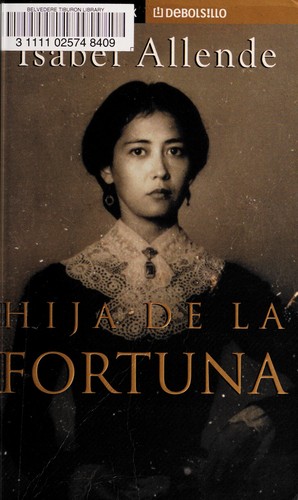
Hija de la fortuna (2001) Parents Guide: Is the book OK for kids?
Age Rating, Sex, Violence & Language
A Chilean woman searches for her lover in the goldfields of 1840s California. Arriving as a stowaway, Eliza finances her search with various jobs, including playing the piano in a brothel
Adult • 2001 • 432 pages • Grade 10-12
Set during the 1840s California Gold Rush, this novel follows Eliza Sommers as she travels from Chile to the American West in search of her lost lover. Parents should be aware of themes involving prostitution, historical violence, and the harsh realities of frontier life. It is recommended for mature readers due to its depictions of trauma, social inequality, and adult relationships. The narrative offers a rich, historical perspective… Sign up for the full guide
Is Hija de la fortuna appropriate for kids?
Set during the 1840s California Gold Rush, this novel follows Eliza Sommers as she travels from Chile to the American West in search of her lost lover. Parents should be aware of themes involving prostitution, historical violence, and the harsh realities of frontier life. It is… Read more — free account
Content severity in Hija de la fortuna
What happens in Hija de la fortuna, moment by moment
- p. 12 🔥 Mature Themes 2/10
- p. 28 💬 Language 1/10
- p. 45 💬 Language 2/10
Sex and nudity in Hija de la fortuna
The book contains mature content regarding sexual labor and brothel life during the 19th-century gold rush. Eliza Sommers works as a pianist in a brothel, witnessing various sexual interactions and the exploitation of women first-hand. While not pornographic in description, the proximity to sex work and the transactional nature of relationships are central to several subplots involving Tao Chi'en and his background. Eliza also experiences a sexual awakening with Joaquín Andieta, which involves secret meetings and…
Read more — free accountViolence and gore in Hija de la fortuna
Violence is depicted realistically, reflecting the lawlessness of the California Gold Rush era. This includes physical altercations in mining camps, racial violence against non-white immigrants, and the hazards of sea travel. There are descriptions of death, injury, and the systemic cruelty faced by marginalized groups, such as the brutal treatment of Chinese immigrants and the harsh discipline on ships. Characters like Joaquín Murieta are associated with banditry and violent raids that lead to bloody…
Read more — free accountLanguage in Hija de la fortuna
The language is consistent with historical literary fiction and is generally appropriate for a teen or adult audience. While there are no modern gratuitous profanities, the text does not shy away from using harsh, period-appropriate language to describe social conditions and interpersonal conflicts. Occasional coarse terms are used to convey the intensity of the setting or a character's frustration, and insults regarding race or class reflect the era's prejudices. The dialogue between the Sommers family is…
Read more — free accountDrugs, alcohol, and smoking in Hija de la fortuna
Substance use is portrayed as a common element of the historical setting. Characters in mining camps and urban settings are frequently shown consuming alcohol, including beer and spirits, often to cope with the hardships of their environment. Mention is made of opium use in the Chinese quarters of San Francisco, highlighting the cultural and medicinal uses as well as the addictive pitfalls of the drug during that era. There are no scenes of glorifying hard drug use, but the prevalence of drinking is a regular…
Read more — free accountMature themes in Hija de la fortuna
The novel explores heavy themes such as colonial identity, gender roles, and the pursuit of autonomy. Eliza's journey is deeply tied to her search for self-discovery and the rejection of societal expectations for women in the 19th century. The book also covers themes of racial discrimination, the struggle for wealth, and the pain of displacement as thousands flock to California. These mature topics are handled with a focus on historical accuracy and character evolution, particularly through Eliza’s transformation…
Read more — free accountFrequently Asked Questions
Is Hija de la fortuna appropriate for kids?
Bontent's parent guide suggests Hija de la fortuna is best for ages 16+. Set during the 1840s California Gold Rush, this novel follows Eliza Sommers as she travels from Chile to the American West in search of her lost lover. Parents should be aware of themes involving prostitution…
What age rating does Hija de la fortuna have?
Books don't carry official age ratings. Hija de la fortuna is shelved by its publisher as Adult, but that's a marketing category, not a content rating — Bontent's own review of what's actually on the page puts it at ages 16+.
What reading level is Hija de la fortuna?
Hija de la fortuna is 432 pages and its reading level is Grade 10-12. Bontent recommends it for ages 16+.
What is Hija de la fortuna about?
Set during the 1840s California Gold Rush, this novel follows Eliza Sommers as she travels from Chile to the American West in search of her lost lover. Parents should be aware of themes involving prostitution, historical violence, and the harsh realities of frontier life. It is recommended for mature readers due to…
Is there sex or nudity in Hija de la fortuna?
The book contains mature content regarding sexual labor and brothel life during the 19th-century gold rush. Eliza Sommers works as a pianist in a brothel, witnessing various sexual interactions and the exploitation of women first-hand. While not pornographic…
How violent is Hija de la fortuna?
Violence is depicted realistically, reflecting the lawlessness of the California Gold Rush era. This includes physical altercations in mining camps, racial violence against non-white immigrants, and the hazards of sea travel. There are descriptions of death…
Is the language in Hija de la fortuna appropriate for kids?
The language is consistent with historical literary fiction and is generally appropriate for a teen or adult audience. While there are no modern gratuitous profanities, the text does not shy away from using harsh, period-appropriate language to describe…
Are drugs, alcohol, or smoking depicted in Hija de la fortuna?
Substance use is portrayed as a common element of the historical setting. Characters in mining camps and urban settings are frequently shown consuming alcohol, including beer and spirits, often to cope with the hardships of their environment. Mention is made…
What mature themes appear in Hija de la fortuna?
The novel explores heavy themes such as colonial identity, gender roles, and the pursuit of autonomy. Eliza's journey is deeply tied to her search for self-discovery and the rejection of societal expectations for women in the 19th century. The book also…
Where can I read the full Hija de la fortuna parent guide?
Create a free Bontent account to unlock page-level notes, filter by your kids' ages, and save titles to your watchlist.
Less intense books for families
Sign up to filter










More romance books with parent guides
- Black Cake parent guide
- Just For The Cameras parent guide
- Crow parent guide
- Kingdom of Shadow and Light parent guide
- Charged parent guide
- You Did Nothing Wrong parent guide
- The Total Package parent guide
- The Midnight Girls parent guide
- Moon Witch, Spider King parent guide
- Deadly Scandal parent guide
- Told in letters parent guide
- Wuthering Heights, Agnes Grey, and Poems parent guide
Family Saga books parents are checking
- The Hobbit, or There and Back Again parent guide
- Charlie the Choo-Choo parent guide
- Ghosted: An American Story parent guide
- The Return of the Young Prince parent guide
- American Gods: Tenth Anniversary (American Gods, #1) parent guide
- The House in the Cerulean Sea (Cerulean Chronicles, #1) parent guide
- Works (Poems / Wuthering Heights) parent guide
- The Titan’s Curse (Percy Jackson and the Olympians, #3) parent guide
- The Battle of the Labyrinth (Percy Jackson and the Olympians, #4) parent guide
- The Bands of Mourning (Mistborn, #6) parent guide
More books by Isabel Allende
More books with Bontent parent guides
- The Dictionary of Lost Words parent guide
- Charged parent guide
- The Midnight Girls parent guide
- Blake Crouch's Dark Matter parent guide
- Babel: Or the Necessity of Violence: An Arcane History of the Oxford Translators' Revolution parent guide
- The ballad of the hundred days parent guide
- The motion picture chums' outdoor exhibition, or, The film that solved a mystery parent guide
- Atomic Habits parent guide
- The contemporary Negro novel parent guide
- The Christmas Stories [8 stories] parent guide
- The Dark Tower II: The Drawing of the Three (The Dark Tower, #2) parent guide
- Harry Potter and the Sorcerer's Stone (Harry Potter, #1) parent guide
- 6 great short novels of science fiction parent guide
- Arena 13 parent guide
- The Subtle Art of Not Giving a F*ck parent guide
- The City of Brass (The Daevabad Trilogy, #1) parent guide