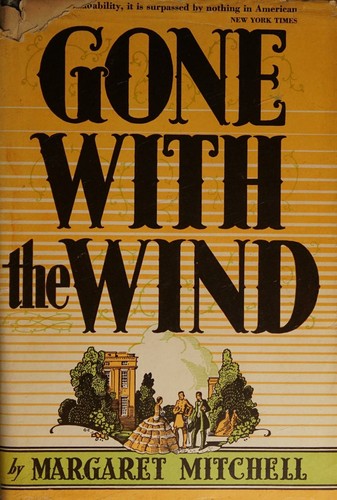
Gone With the Wind (1976) Parents Guide: Is the book OK for kids?
Age Rating, Sex, Violence & Language
Gone with the Wind is a novel by American writer Margaret Mitchell, first published in 1936. The story is set in Clayton County and Atlanta, both in Georgia, during the American Civil War and Reconstruction Era. It depicts the struggles of young Scarlett O'Hara, the spoiled oldest daughter of a well-to-do plantation owner, who must use every means at her disposal to claw her way out of poverty following Sherman's destructive "March to the Sea". This historical novel features a coming-of-age story, with the title taken from the poem… Sign up for the full guide
Adult • 1976 • 947 pages • 9.0
This Pulitzer Prize-winning historical epic follows Scarlett O'Hara's struggle for survival during the American Civil War and Reconstruction. The novel earns its mature rating due to pervasive racial slurs, depictions of the KKK as a 'heroic' necessity, and graphic descriptions of war casualties and medical amputations. Parents should be aware of the highly problematic romanticization of slavery and the frequent use of the n-word… Sign up for the full guide
Is Gone With the Wind appropriate for kids?
This Pulitzer Prize-winning historical epic follows Scarlett O'Hara's struggle for survival during the American Civil War and Reconstruction. The novel earns its mature rating due to pervasive racial slurs, depictions of the KKK as a 'heroic' necessity, and graphic descriptions… Read more — free account
Content severity in Gone With the Wind
What happens in Gone With the Wind, moment by moment
- p. 8 🔥 Mature Themes 6/10
- p. 95 💬 Language 1/10
- p. 112 🍷 Substances 3/10
Sex and nudity in Gone With the Wind
The novel portrays sexual themes through the lens of 19th-century social mores and intense romantic tension. Scarlett O’Hara’s multiple marriages are mostly pragmatic, but her obsession with Ashley Wilkes drives the plot. There are several scenes of intense kissing and pining, particularly between Scarlett and Rhett Butler. The most significant moment occurs in Chapter 54, when a drunken Rhett forcibly carries Scarlett to the bedroom against her protests. While the narrative suggests Scarlett is pleased the…
Read more — free accountViolence and gore in Gone With the Wind
Violence is pervasive and ranges from individual acts to the carnage of the Civil War. Graphic descriptions include surgeons amputating limbs without anesthesia in Atlanta, where piles of feet and arms are mentioned. Scarlett herself commits a lethal act of violence when she shoots a Union deserter in the face at point-blank range on page 440 to protect Tara. The later chapters detail a KKK raid as a retaliatory action after Scarlett is accosted in a shantytown, resulting in the death of Frank Kennedy. General…
Read more — free accountLanguage in Gone With the Wind
The text contains frequent and casual use of racial epithets that are highly offensive by modern standards. The n-word and 'darky' are used hundreds of times by white and Black characters alike, reflecting the author’s 1930s perspective on 1860s speech. Standard profanity such as 'damn' and 'hell' is used frequently, notably in Rhett Butler's famous closing line. Characters also use 'God' and 'Lord' in exclamation, which was considered irreverent in the book's period setting. The sophisticated prose style requires…
Read more — free accountDrugs, alcohol, and smoking in Gone With the Wind
Substance use is socially ingrained within the planter class depicted in the novel. Characters are often seen consuming wine, brandy, and mint juleps at social gatherings like the Wilkes' barbecue. As the war progresses and the South falls into ruin, alcohol becomes a coping mechanism for many characters. Rhett Butler is frequently described as drinking to the point of heavy intoxication, particularly when he is emotionally distressed or cynical. Scarlett also uses brandy as a medicinal and emotional stimulant…
Read more — free accountMature themes in Gone With the Wind
The novel is a cornerstone of 'Lost Cause' mythology, heavily romanticizing the antebellum South and the institution of slavery. It explores themes of survival and resilience through Scarlett's 'tomorrow is another day' philosophy, but does so by dehumanizing the enslaved characters through white paternalism. The narrative portrays the Reconstruction era and the rise of the Ku Klux Klan as a necessary defense of white womanhood and Southern honor. Grief is a constant theme, as Scarlett loses parents, husbands, and…
Read more — free accountFrequently Asked Questions
Is Gone With the Wind appropriate for kids?
Bontent's parent guide suggests Gone With the Wind is best for ages 16+. This Pulitzer Prize-winning historical epic follows Scarlett O'Hara's struggle for survival during the American Civil War and Reconstruction. The novel earns its mature rating due to pervasive racial slurs, depictions…
What age rating does Gone With the Wind have?
Books don't carry official age ratings. Gone With the Wind is shelved by its publisher as Adult, but that's a marketing category, not a content rating — Bontent's own review of what's actually on the page puts it at ages 16+.
What reading level is Gone With the Wind?
Gone With the Wind is 947 pages and its reading level is 9.0. Bontent recommends it for ages 16+.
What is Gone With the Wind about?
This Pulitzer Prize-winning historical epic follows Scarlett O'Hara's struggle for survival during the American Civil War and Reconstruction. The novel earns its mature rating due to pervasive racial slurs, depictions of the KKK as a 'heroic' necessity, and graphic descriptions of war casualties and medical…
Is there sex or nudity in Gone With the Wind?
The novel portrays sexual themes through the lens of 19th-century social mores and intense romantic tension. Scarlett O’Hara’s multiple marriages are mostly pragmatic, but her obsession with Ashley Wilkes drives the plot. There are several scenes of intense…
How violent is Gone With the Wind?
Violence is pervasive and ranges from individual acts to the carnage of the Civil War. Graphic descriptions include surgeons amputating limbs without anesthesia in Atlanta, where piles of feet and arms are mentioned. Scarlett herself commits a lethal act of…
Is the language in Gone With the Wind appropriate for kids?
The text contains frequent and casual use of racial epithets that are highly offensive by modern standards. The n-word and 'darky' are used hundreds of times by white and Black characters alike, reflecting the author’s 1930s perspective on 1860s speech…
Are drugs, alcohol, or smoking depicted in Gone With the Wind?
Substance use is socially ingrained within the planter class depicted in the novel. Characters are often seen consuming wine, brandy, and mint juleps at social gatherings like the Wilkes' barbecue. As the war progresses and the South falls into ruin, alcohol…
What mature themes appear in Gone With the Wind?
The novel is a cornerstone of 'Lost Cause' mythology, heavily romanticizing the antebellum South and the institution of slavery. It explores themes of survival and resilience through Scarlett's 'tomorrow is another day' philosophy, but does so by dehumanizing…
Where can I read the full Gone With the Wind parent guide?
Create a free Bontent account to unlock page-level notes, filter by your kids' ages, and save titles to your watchlist.
Less intense books for families
Sign up to filter








More historical books with parent guides
- Black Cake parent guide
- Moon Witch, Spider King parent guide
- Deadly Scandal parent guide
- Wuthering Heights, Agnes Grey, and Poems parent guide
- Told in letters parent guide
- Works (Poems / Wuthering Heights) parent guide
- Before They Are Hanged (The First Law, #2) parent guide
- The 48 Laws of Power parent guide
- The contemporary Negro novel parent guide
- A century of the English novel parent guide
- Jonathan Strange & Mr Norrell parent guide
- With This Ring? parent guide
Historical Romance books parents are checking
- The Dictionary of Lost Words parent guide
- Ghosted: An American Story parent guide
- The Return of the Young Prince parent guide
- Heartstopper (Heartstopper #1) parent guide
- Heartstopper (Vol. 1) parent guide
- The Shadow of the Wind (The Cemetery of Forgotten Books, #1) parent guide
- Harry Potter and the Philosopher's Stone parent guide
- Harry Potter parent guide
More books with Bontent parent guides
- The Dictionary of Lost Words parent guide
- Tall Oaks parent guide
- The Midnight Girls parent guide
- Moon Witch, Spider King parent guide
- Charlie the Choo-Choo parent guide
- The Name of the Wind / The Wise Man's Fear / The Slow Regard of Silent Things (The Kingkiller Chronicle #1-2.5) parent guide
- The Bookshop on Rosemary Lane parent guide
- Babel: Or the Necessity of Violence: An Arcane History of the Oxford Translators' Revolution parent guide
- The Battle of the Labyrinth (Percy Jackson and the Olympians, #4) parent guide
- The motion picture chums' outdoor exhibition, or, The film that solved a mystery parent guide
- 2001: A Space Odyssey parent guide
- The man from up there parent guide
- The contemporary Negro novel parent guide
- The Dark Tower II: The Drawing of the Three (The Dark Tower, #2) parent guide
- Onyx Storm (The Empyrean, #3) parent guide
- Harry Potter and the Sorcerer's Stone (Harry Potter, #1) parent guide