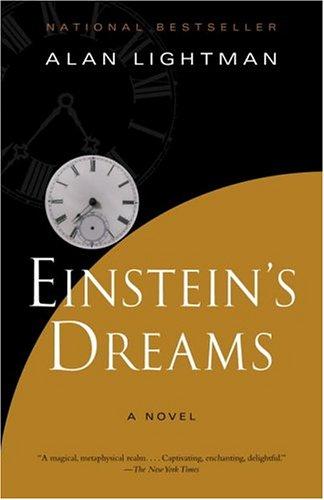
Einstein's dreams (2004) Parents Guide: Is the book OK for kids?
Age Rating, Sex, Violence & Language
A fictional work in which a twenty-six-year-old Albert Einstein, working in a patent office in Switzerland, imagines possible worlds in which time works differently as he formulates his theory of relativity.
Adult • 2004 • 179 pages • Grade 9-12
Einstein's Dreams is a meditative, philosophical work of fiction that explores different concepts of time through the dreams of a young Albert Einstein. The book is recommended for thoughtful teenagers (14+) due to its abstract nature, occasional depictions of human mortality, and brief, poetic mentions of sexual intimacy. It is an intellectually stimulating read with very little traditional action, focused instead on existential… Continue to this guide
Is Einstein's dreams appropriate for kids?
Einstein's Dreams is a meditative, philosophical work of fiction that explores different concepts of time through the dreams of a young Albert Einstein. The book is recommended for thoughtful teenagers (14+) due to its abstract nature, occasional depictions of human mortality… Continue with an account
Content severity in Einstein's dreams
What happens in Einstein's dreams, moment by moment
- p. 8 🔥 Mature Themes 1/10
- p. 23 🔥 Mature Themes 3/10
- p. 35 ♥ Sex & Nudity 4/10
Sex and nudity in Einstein's dreams
The book contains brief, evocative descriptions of romantic and sexual encounters used to illustrate how humans spend their time. These are generally poetic and non-graphic, focusing on the atmosphere of lovers and desire. For instance, in the chapter dated 15 May 1905, Lightman describes a man and woman in an alleyway driven by the heat of physical attraction. Other passages mention the urgency of lovers in a world where time is fleeting or the stillness of physical contact in a world where time stops. The prose…
Continue with an accountViolence and gore in Einstein's dreams
Traditional physical violence and gore are entirely absent from this meditative narrative. Instead, the book explores the metaphorical violence of time, including the physical decay of buildings and the inevitable aging of the human body. In the 20 June 1905 chapter, the text describes the rapid crumbling of a city as time accelerates, which serves as a memento mori. Characters face the 'violence' of losing loved ones to the steady march of time or being trapped in repetitive cycles of past mistakes. The tone is…
Continue with an accountLanguage in Einstein's dreams
The language is sophisticated and literary, fitting for a novel centered on the thoughts of a physicist in 1905 Switzerland. There is virtually no profanity or vulgarity within the text, as the focus remains on philosophical inquiry and poetic imagery. The vocabulary is challenging, making it a good fit for students developing their reading comprehension at a high school level. Dialogue is sparse and generally focused on intellectual or domestic exchanges between Einstein and his friend Besso. The absence of…
Continue with an accountDrugs, alcohol, and smoking in Einstein's dreams
There are occasional references to characters drinking wine, absinthe, or coffee in European cafes, which is consistent with the 1905 Swiss setting. In the 3 June 1905 chapter, individuals are depicted in a cafe setting as a backdrop for their contemplations on the past. The use of alcohol is portrayed as a social norm of the era and is never shown to lead to intoxication or reckless behavior. Einstein himself is frequently depicted in the patent office or at his desk, fueled by intellectual curiosity rather than…
Continue with an accountMature themes in Einstein's dreams
Heavy focus on existentialism, the nature of time, mortality, and the trade-offs of different ways of living. Some chapters deal with the loneliness of immortality or the despair of a world that ends too quickly. The book explores how humans cope with the knowledge of their own end and the importance of memory versus the present moment. Einstein’s own isolation and his obsession with his work serve as a framing device for these grand questions. The themes are intellectually demanding, inviting the reader to…
Continue with an accountFrequently Asked Questions
Is Einstein's dreams appropriate for kids?
Bontent's parent guide suggests Einstein's dreams is best for ages 14+. Einstein's Dreams is a meditative, philosophical work of fiction that explores different concepts of time through the dreams of a young Albert Einstein. The book is recommended for thoughtful teenagers (14+) due to its…
What age rating does Einstein's dreams have?
Books don't carry official age ratings. Einstein's dreams is shelved by its publisher as Adult, but that's a marketing category, not a content rating — Bontent's own review of what's actually on the page puts it at ages 14+.
What reading level is Einstein's dreams?
Einstein's dreams is 179 pages and its reading level is Grade 9-12. Bontent recommends it for ages 14+.
What is Einstein's dreams about?
Einstein's Dreams is a meditative, philosophical work of fiction that explores different concepts of time through the dreams of a young Albert Einstein. The book is recommended for thoughtful teenagers (14+) due to its abstract nature, occasional depictions of human mortality, and brief, poetic mentions of sexual…
Is there sex or nudity in Einstein's dreams?
The book contains brief, evocative descriptions of romantic and sexual encounters used to illustrate how humans spend their time. These are generally poetic and non-graphic, focusing on the atmosphere of lovers and desire. For instance, in the chapter dated…
How violent is Einstein's dreams?
Traditional physical violence and gore are entirely absent from this meditative narrative. Instead, the book explores the metaphorical violence of time, including the physical decay of buildings and the inevitable aging of the human body. In the 20 June 1905…
Is the language in Einstein's dreams appropriate for kids?
The language is sophisticated and literary, fitting for a novel centered on the thoughts of a physicist in 1905 Switzerland. There is virtually no profanity or vulgarity within the text, as the focus remains on philosophical inquiry and poetic imagery. The…
Are drugs, alcohol, or smoking depicted in Einstein's dreams?
There are occasional references to characters drinking wine, absinthe, or coffee in European cafes, which is consistent with the 1905 Swiss setting. In the 3 June 1905 chapter, individuals are depicted in a cafe setting as a backdrop for their contemplations…
What mature themes appear in Einstein's dreams?
Heavy focus on existentialism, the nature of time, mortality, and the trade-offs of different ways of living. Some chapters deal with the loneliness of immortality or the despair of a world that ends too quickly. The book explores how humans cope with the…
Where can I read the full Einstein's dreams parent guide?
Create a free Bontent account to save titles and find family picks. Full page-level details use guide credits or Bontent Parent membership.
Less intense books for families
Sign up to filter








More sci-fi books with parent guides
- Sunrise on the Reaping parent guide
- Operation Bounce House parent guide
- ¡Hola Papi!: How to Come Out in a Walmart Parking Lot and Other Life Lessons parent guide
- The Martian Contingency parent guide
- A Boy and His Dog parent guide
- The House in the Cerulean Sea (Cerulean Chronicles, #1) parent guide
- A Hole in the Sky parent guide
- Before They Are Hanged (The First Law, #2) parent guide
- Through the visograph parent guide
- No mind of man parent guide
- The man from up there parent guide
- 6 great short novels of science fiction parent guide
Magical Realism books parents are checking
- Black Cake parent guide
- The Dictionary of Lost Words parent guide
- Sunlight Finds You parent guide
- The Three Graces of Pearl Street parent guide
- Napoleon Boswell parent guide
- Moon Witch, Spider King parent guide
- Charlie the Choo-Choo parent guide
- The Return of the Young Prince parent guide
- American Gods: Tenth Anniversary (American Gods, #1) parent guide
- The tragic comedians parent guide
- Wuthering Heights, Agnes Grey, and Poems parent guide
More books with Bontent parent guides
- Sunlight Finds You parent guide
- The Hobbit, or There and Back Again parent guide
- Queen of Lombard Street parent guide
- Essays in romantic literature parent guide
- Farm friends story book parent guide
- Stories from English history parent guide
- The Battle of the Labyrinth (Percy Jackson and the Olympians, #4) parent guide
- The ballad of the hundred days parent guide
- The Comrade in white parent guide
- The black Homer of Jimtown parent guide
- Mother in modern story parent guide
- The modern novel parent guide
- Onyx Storm (The Empyrean, #3) parent guide
- Jonathan Strange & Mr Norrell parent guide
- The Chronicles of Narnia Set parent guide
- Tar and feathers parent guide