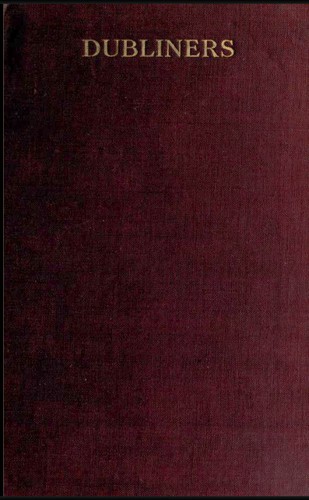
Dubliners (1914) Parents Guide: Is the book OK for kids?
Age Rating, Sex, Violence & Language
James Joyce's disillusion with the publication of Dubliners in 1914 was the result of ten years battling with publishers, resisting their demands to remove swear words, real place names and much else, including two entire stories. Although only 24 when he signed his first publishing contract for the book, Joyce already knew its worth: to alter it in any way would 'retard the course of civilisation in Ireland'. Joyce's aim was to tell the truth -- to create a work of art that would reflect life in Ireland at the turn of the last… Sign up for the full guide
Adult • 1914 • 240 pages • Grade 11-12+
James Joyce’s classic short story collection is a foundational work of literary realism, depicting the psychological 'paralysis' of early 20th-century Dublin. Parents should be aware of several mature themes, including ubiquitous alcoholism, domestic violence, and scenes involving predatory adult behavior and child neglect. While not graphic by modern standards, the book's depiction of religious disillusionment, marital infidelity, and… Sign up for the full guide
Is Dubliners appropriate for kids?
James Joyce’s classic short story collection is a foundational work of literary realism, depicting the psychological 'paralysis' of early 20th-century Dublin. Parents should be aware of several mature themes, including ubiquitous alcoholism, domestic violence, and scenes… Read more — free account
Content severity in Dubliners
What happens in Dubliners, moment by moment
- p. 7 🔥 Mature Themes 3/10
- p. 12 💬 Language 2/10
- p. 22 ♥ Sex & Nudity 6/10
Sex and nudity in Dubliners
While Dubliners contains no graphic sexual descriptions, it is permeated by a repressed and often transactional sexuality reflective of early 20th-century social constraints. In 'Two Gallants,' Corley uses his physical presence to manipulate a maid into theft, suggesting a predatory dynamic, while 'The Boarding House' details the calculated social trapping of Mr. Doran after a 'sinful' encounter with Polly. 'An Encounter' features an elderly man whose repetitive talk of 'whipping' boys serves as a chilling…
Read more — free accountViolence and gore in Dubliners
The violence depicted is largely psychological or domestic, capturing the 'paralysis' and frustration of the Dublin citizenry. The most jarring physical moment occurs in 'Counterparts,' where Farrington takes out his professional and social humiliations by viciously caning his young son, Tom, who begs for mercy. Other stories, such as 'Eveline,' convey the constant threat of violence, as the protagonist fears her father's temper and recalls his physical intimidation. The collection also touches on self-inflicted…
Read more — free accountLanguage in Dubliners
The dialogue throughout the collection uses period-typical language and Hiberno-English vernacular that includes mild profanity like 'damn,' 'hell,' and 'bloody.' The narrative also reflects the prevalent prejudices of 1904 Dublin, featuring derogatory terms for Jewish and Black individuals that appear in the context of casual conversation or political debate. In 'Ivy Day in the Committee Room,' the dialogue is particularly heavy with localized slang and political slurs as the men argue about Irish nationalism and…
Read more — free accountDrugs, alcohol, and smoking in Dubliners
Alcoholism is the central vice of the collection, serving as both a symptom and a cause of the characters' paralysis. In 'Grace,' the story begins with a man literally falling down the stairs of a pub in a drunken stupor, while 'Counterparts' details the desperate cycle of pawning personal belongings to fund a night of binge drinking. Celebratory drinking is also depicted, such as the heavy consumption of wine and spirits during the dinner party in 'The Dead' or the champagne in 'After the Race.' Many characters…
Read more — free accountMature themes in Dubliners
The primary theme is 'paralysis,' the inability of the Dublin citizens to change their circumstances despite their awareness of their own misery. Religious disillusionment is prominent, beginning with the opening story 'The Sisters,' where a young boy grapples with the death and potential disgrace of a priest. 'Araby' explores the painful loss of childhood innocence when a young boy realizes his romantic fantasies are shallow and unattainable. The collection concludes with 'The Dead,' a haunting exploration of…
Read more — free accountFrequently Asked Questions
Is Dubliners appropriate for kids?
Bontent's parent guide suggests Dubliners is best for ages 16+. James Joyce’s classic short story collection is a foundational work of literary realism, depicting the psychological 'paralysis' of early 20th-century Dublin. Parents should be aware of several mature themes, including…
What age rating does Dubliners have?
Books don't carry official age ratings. Dubliners is shelved by its publisher as Adult, but that's a marketing category, not a content rating — Bontent's own review of what's actually on the page puts it at ages 16+.
What reading level is Dubliners?
Dubliners is 240 pages and its reading level is Grade 11-12+. Bontent recommends it for ages 16+.
What is Dubliners about?
James Joyce’s classic short story collection is a foundational work of literary realism, depicting the psychological 'paralysis' of early 20th-century Dublin. Parents should be aware of several mature themes, including ubiquitous alcoholism, domestic violence, and scenes involving predatory adult behavior and child…
Is there sex or nudity in Dubliners?
While Dubliners contains no graphic sexual descriptions, it is permeated by a repressed and often transactional sexuality reflective of early 20th-century social constraints. In 'Two Gallants,' Corley uses his physical presence to manipulate a maid into…
How violent is Dubliners?
The violence depicted is largely psychological or domestic, capturing the 'paralysis' and frustration of the Dublin citizenry. The most jarring physical moment occurs in 'Counterparts,' where Farrington takes out his professional and social humiliations by…
Is the language in Dubliners appropriate for kids?
The dialogue throughout the collection uses period-typical language and Hiberno-English vernacular that includes mild profanity like 'damn,' 'hell,' and 'bloody.' The narrative also reflects the prevalent prejudices of 1904 Dublin, featuring derogatory terms…
Are drugs, alcohol, or smoking depicted in Dubliners?
Alcoholism is the central vice of the collection, serving as both a symptom and a cause of the characters' paralysis. In 'Grace,' the story begins with a man literally falling down the stairs of a pub in a drunken stupor, while 'Counterparts' details the…
What mature themes appear in Dubliners?
The primary theme is 'paralysis,' the inability of the Dublin citizens to change their circumstances despite their awareness of their own misery. Religious disillusionment is prominent, beginning with the opening story 'The Sisters,' where a young boy…
Where can I read the full Dubliners parent guide?
Create a free Bontent account to unlock page-level notes, filter by your kids' ages, and save titles to your watchlist.
Less intense books for families
Sign up to filter






More classics books with parent guides
- The Dictionary of Lost Words parent guide
- Nine Lives parent guide
- Hana Khan Carries On parent guide
- Charlie the Choo-Choo parent guide
- The Return of the Young Prince parent guide
- The Name of the Wind / The Wise Man's Fear / The Slow Regard of Silent Things (The Kingkiller Chronicle #1-2.5) parent guide
- Clash of star-kings parent guide
- This House Will Feed parent guide
- The Bookshop on Rosemary Lane parent guide
- Told in letters parent guide
- Babel: Or the Necessity of Violence: An Arcane History of the Oxford Translators' Revolution parent guide
- The Titan’s Curse (Percy Jackson and the Olympians, #3) parent guide
Literary Fiction books parents are checking
- Black Cake parent guide
- Moon Witch, Spider King parent guide
- Wuthering Heights, Agnes Grey, and Poems parent guide
- Works (Poems / Wuthering Heights) parent guide
- The Count of Monte Cristo parent guide
- No mind of man parent guide
- An imperfect mother parent guide
- Sayaka Murata parent guide
- The Christmas Stories [8 stories] parent guide
More books by James Joyce
More books with Bontent parent guides
- The Dictionary of Lost Words parent guide
- Tall Oaks parent guide
- The Midnight Girls parent guide
- Moon Witch, Spider King parent guide
- The Name of the Wind / The Wise Man's Fear / The Slow Regard of Silent Things (The Kingkiller Chronicle #1-2.5) parent guide
- Clash of star-kings parent guide
- The Bookshop on Rosemary Lane parent guide
- Atomic Habits: An Easy & Proven Way to Build Good Habits & Break Bad Ones parent guide
- The Battle of the Labyrinth (Percy Jackson and the Olympians, #4) parent guide
- Before They Are Hanged (The First Law, #2) parent guide
- 2001: A Space Odyssey parent guide
- The man from up there parent guide
- The contemporary Negro novel parent guide
- Blood of Elves (The Witcher, #1) parent guide
- The Dark Tower II: The Drawing of the Three (The Dark Tower, #2) parent guide
- A century of the English novel parent guide