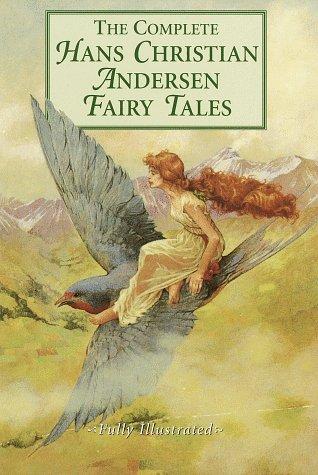
Andersen's Fairy Tales (1846) Parents Guide: Is the book OK for kids?
Age Rating, Sex, Violence & Language
Sixteen tales including "Little Claus and Big Claus," "Father's Always Right," and "The Goblin and the Grocer."
Children • 1846 • 350 pages • Lexile 1000L (roughly grades 6–7 reading difficulty)
A classic collection of Hans Christian Andersen's fairy tales, including The Little Mermaid, The Ugly Duckling, The Snow Queen, The Emperor's New Clothes, Thumbelina, and The Steadfast Tin Soldier. Unlike many modern retellings, several of Andersen's original stories carry bittersweet or outright tragic endings, along with old-fashioned moral and religious undertones typical of 19th-century literature.
Is Andersen's Fairy Tales appropriate for kids?
A classic collection of Hans Christian Andersen's fairy tales, including The Little Mermaid, The Ugly Duckling, The Snow Queen, The Emperor's New Clothes, Thumbelina, and The Steadfast Tin Soldier. Unlike many modern retellings, several of Andersen's original stories carry… Read more — free account
Content severity in Andersen's Fairy Tales
What happens in Andersen's Fairy Tales, moment by moment
- p. 5 ⚔ Violence & Gore 3/10
- p. 22 🔥 Mature Themes 2/10
- p. 40 🔥 Mature Themes 2/10
Sex and nudity in Andersen's Fairy Tales
There is no sexual content in this classic collection of fairy tales. Relationships are depicted through the lens of 19th-century romance, focusing on longing, devotion, and purity rather than physical intimacy. Characters like the Little Mermaid or the Steadfast Tin Soldier express their love through silent observation and ultimate self-sacrifice. The Emperor's New Clothes involves a man walking through the streets in his underwear, though this is presented as a comedic satire on vanity and social conformity. The…
Read more — free accountViolence and gore in Andersen's Fairy Tales
Violence in these stories is typically presented as a consequence of fate or a necessary trial for the protagonists. In 'The Tinderbox,' a soldier uses a sword to kill a witch, and 'The Little Mermaid' describes a painful transformation where every step feels like treading on sharp knives. Characters often face perilous situations, such as Gerda braving the freezing elements or the Tin Soldier being swallowed by a fish. While there are descriptions of characters perishing or suffering physical hardship, these…
Read more — free accountLanguage in Andersen's Fairy Tales
This volume contains no notable strong language or profanity. The prose reflects the formal and descriptive style of 19th-century Denmark, utilizing sophisticated vocabulary that may challenge younger readers but remains entirely clean. Words like 'stupid' or 'foolish' are used as insults during social conflicts, such as in 'The Emperor's New Clothes.' The absence of vulgarity makes the book a very safe choice for shared reading between parents and children. Any tension is conveyed through dramatic irony and…
Read more — free accountDrugs, alcohol, and smoking in Andersen's Fairy Tales
There is no significant substance use, drug content, or tobacco consumption featured in these stories. While traditional 19th-century settings might occasionally reference a celebratory toast or a festive gathering, these are not central to the plots and carry no negative or promotional context. In 'The Snow Queen,' the lack of warmth and nourishment is a bigger focus than the consumption of any substances. The magical elements, such as potions or spells, are treated as supernatural phenomena rather than metaphors…
Read more — free accountMature themes in Andersen's Fairy Tales
The collection explores heavy themes including unrequited love, the inevitability of death, and the virtues of faith and patience. 'The Little Match Girl' provides a stark, tragic look at poverty and mortality that may be emotionally difficult for sensitive children. Transformation is a recurring motif, often involving a loss of self or a painful transition into a new state of being. Moral lessons are frequently tied to Christian values of the era, emphasizing that earthly suffering is often rewarded in the…
Read more — free accountFrequently Asked Questions
Is Andersen's Fairy Tales appropriate for kids?
Bontent's parent guide suggests Andersen's Fairy Tales is best for ages 8+. A classic collection of Hans Christian Andersen's fairy tales, including The Little Mermaid, The Ugly Duckling, The Snow Queen, The Emperor's New Clothes, Thumbelina, and The Steadfast Tin Soldier. Unlike many modern…
What age rating does Andersen's Fairy Tales have?
Books don't carry official age ratings. Andersen's Fairy Tales is published for a Children audience, and Bontent's independent parent guide recommends it for ages 8+.
What reading level is Andersen's Fairy Tales?
Andersen's Fairy Tales is 350 pages and its reading level is Lexile 1000L (roughly grades 6–7 reading difficulty). Bontent recommends it for ages 8+.
What is Andersen's Fairy Tales about?
A classic collection of Hans Christian Andersen's fairy tales, including The Little Mermaid, The Ugly Duckling, The Snow Queen, The Emperor's New Clothes, Thumbelina, and The Steadfast Tin Soldier. Unlike many modern retellings, several of Andersen's original stories carry bittersweet or outright tragic endings, along…
Is there sex or nudity in Andersen's Fairy Tales?
There is no sexual content in this classic collection of fairy tales. Relationships are depicted through the lens of 19th-century romance, focusing on longing, devotion, and purity rather than physical intimacy. Characters like the Little Mermaid or the…
How violent is Andersen's Fairy Tales?
Violence in these stories is typically presented as a consequence of fate or a necessary trial for the protagonists. In 'The Tinderbox,' a soldier uses a sword to kill a witch, and 'The Little Mermaid' describes a painful transformation where every step feels…
Is the language in Andersen's Fairy Tales appropriate for kids?
This volume contains no notable strong language or profanity. The prose reflects the formal and descriptive style of 19th-century Denmark, utilizing sophisticated vocabulary that may challenge younger readers but remains entirely clean. Words like 'stupid' or…
Are drugs, alcohol, or smoking depicted in Andersen's Fairy Tales?
There is no significant substance use, drug content, or tobacco consumption featured in these stories. While traditional 19th-century settings might occasionally reference a celebratory toast or a festive gathering, these are not central to the plots and…
What mature themes appear in Andersen's Fairy Tales?
The collection explores heavy themes including unrequited love, the inevitability of death, and the virtues of faith and patience. 'The Little Match Girl' provides a stark, tragic look at poverty and mortality that may be emotionally difficult for sensitive…
Where can I read the full Andersen's Fairy Tales parent guide?
Create a free Bontent account to unlock page-level notes, filter by your kids' ages, and save titles to your watchlist.
Parents also checked these books for 8-year-olds
Sign up to filter






Books like Andersen's Fairy Tales with similar intensity
Sign up to filter


Less intense books for families
Sign up to filter




More fiction books with parent guides
- The Dictionary of Lost Words parent guide
- Nine Lives parent guide
- Hana Khan Carries On parent guide
- Charlie the Choo-Choo parent guide
- The Return of the Young Prince parent guide
- The Name of the Wind / The Wise Man's Fear / The Slow Regard of Silent Things (The Kingkiller Chronicle #1-2.5) parent guide
- Clash of star-kings parent guide
- This House Will Feed parent guide
- The Bookshop on Rosemary Lane parent guide
- Told in letters parent guide
- Babel: Or the Necessity of Violence: An Arcane History of the Oxford Translators' Revolution parent guide
- The Titan’s Curse (Percy Jackson and the Olympians, #3) parent guide
Fairy-Tale Retelling books parents are checking
- The Hobbit, or There and Back Again parent guide
- Leopardstar's Honor parent guide
- No mind of man parent guide
- The Christmas Stories [8 stories] parent guide
- The complete works of the Gawain-poet parent guide
- The Bad Beginning (A Series of Unfortunate Events #1) parent guide
- Harry Potter and the Philosopher's Stone parent guide
- Harry Potter and the Sorcerer's Stone (Harry Potter, #1) parent guide
- The Assassin's Blade (Throne of Glass, #0.1-0.5) parent guide
- The Chronicles of Narnia Set parent guide
- Wicked: The Life and Times of the Wicked Witch of the West (The Wicked Years, #1) parent guide
More books by Hans Christian Andersen
- Hans Andersen's Fairy Tales parent guide
- Fairy Tales parent guide
- The Ugly Duckling parent guide
- Thumbelina parent guide
- Kate Greenaway's Original Drawings for The Snow Queen parent guide
- Lille pige med svovlstikkerne parent guide
- Fairy Tales and Stories parent guide
- La Petite Sirene (French Well Loved Tales) parent guide
- The Little Tin Soldier parent guide
More books with Bontent parent guides
- The Dictionary of Lost Words parent guide
- Charlie the Choo-Choo parent guide
- The Name of the Wind / The Wise Man's Fear / The Slow Regard of Silent Things (The Kingkiller Chronicle #1-2.5) parent guide
- The Martian Contingency parent guide
- Clash of star-kings parent guide
- Babel: Or the Necessity of Violence: An Arcane History of the Oxford Translators' Revolution parent guide
- The Battle of the Labyrinth (Percy Jackson and the Olympians, #4) parent guide
- The motion picture chums' outdoor exhibition, or, The film that solved a mystery parent guide
- The man from up there parent guide
- The contemporary Negro novel parent guide
- Blood of Elves (The Witcher, #1) parent guide
- The Christmas Stories [8 stories] parent guide
- The Dark Tower II: The Drawing of the Three (The Dark Tower, #2) parent guide
- A century of the English novel parent guide
- The complete works of the Gawain-poet parent guide
- Harry Potter parent guide