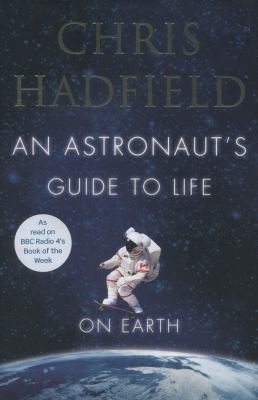
An Astronaut's Guide to Life on Earth (2013) Parents Guide: Is the book OK for kids?
Age Rating, Sex, Violence & Language
Hadfield takes readers into his years of training and space exploration to show how to make the impossible possible. He developed an unconventional philosophy at NASA: Prepare for the worst-- and enjoy every moment of it. By thinking like an astronaut, you can change the way you view life on Earth-- especially your own.
Adult • 2013 • 287 pages • Grade 8-10
This non-fiction memoir provides a fascinating look at the discipline, risks, and hard work required to become a commander of the International Space Station. While mostly technical and inspirational, parents should note occasional accounts of training accidents, descriptions of physical toll on the body, and very mild, infrequent coarse language used in the context of high-stress military or flight environments. It is an excellent… Sign up for the full guide
Is An Astronaut's Guide to Life on Earth appropriate for kids?
This non-fiction memoir provides a fascinating look at the discipline, risks, and hard work required to become a commander of the International Space Station. While mostly technical and inspirational, parents should note occasional accounts of training accidents, descriptions of… Read more — free account
Content severity in An Astronaut's Guide to Life on Earth
What happens in An Astronaut's Guide to Life on Earth, moment by moment
- p. 20 🔥 Mature Themes 2/10
- p. 32 💬 Language 2/10
- p. 44 💬 Language 3/10
Sex and nudity in An Astronaut's Guide to Life on Earth
The book contains no sexual content or romantic subplots. Chris Hadfield focuses his narrative entirely on his professional evolution from a young dreamer to a commander of the International Space Station, alongside his domestic life with his wife, Helene, and their children. Interactions between spouses are depicted through the lens of mutual support, logistical planning, and shared sacrifices. The tone is strictly professional and biographical, making it entirely safe for readers seeking a focus on STEM and…
Read more — free accountViolence and gore in An Astronaut's Guide to Life on Earth
Moderate risk and realistic descriptions of space-related hazards are central to the book. Hadfield provides sobering accounts of the Challenger and Columbia shuttle disasters, discussing the deaths of his friends and the technical failures involved. In Chapter 8, a terrifying spacewalk incident involves Hadfield being temporarily blinded by a chemical leak inside his helmet, causing significant tension. The physical toll of re-entry is described in Chapter 13 as a 'series of car crashes' followed by a heavy…
Read more — free accountLanguage in An Astronaut's Guide to Life on Earth
Coarse language is mild and infrequent, typically occurring in the context of high-stress aviation or military environments. Readers will encounter a handful of terms such as 'hell', 'damn', 'pissed off', and 'crap' used to describe mechanical failures or training frustrations. In Chapter 4, the author mentions the blunt communication styles necessary in the cockpit to ensure safety and clarity. There are no uses of severe profanity or derogatory slurs. The language reflects the authentic, rugged vernacular of…
Read more — free accountDrugs, alcohol, and smoking in An Astronaut's Guide to Life on Earth
Substance use is extremely limited and treated as a minor social or cultural element. In Chapter 11, Hadfield mentions the Russian tradition of sharing a celebratory toast with vodka after a successful mission or during training rituals at Star City. There are technical discussions regarding the difficulty of managing fluids in microgravity, but these are scientific in nature. No recreational drug use or alcohol abuse is mentioned, and the author emphasizes the strict physical fitness and sobriety required for…
Read more — free accountMature themes in An Astronaut's Guide to Life on Earth
The book explores mature themes of extreme discipline, humility, and the psychological impact of living in a high-stakes environment. Hadfield introduces the concept of 'negative thinking' as a survival strategy, which involves visualizing every possible way a situation could result in death. Significant time is dedicated to the strain placed on families; Hadfield reflects on missing his children's milestones and the burden his career placed on his wife. The narrative also grapples with the mortality of colleagues…
Read more — free accountFrequently Asked Questions
Is An Astronaut's Guide to Life on Earth appropriate for kids?
Bontent's parent guide suggests An Astronaut's Guide to Life on Earth is best for ages 12+. This non-fiction memoir provides a fascinating look at the discipline, risks, and hard work required to become a commander of the International Space Station. While mostly technical and inspirational, parents should…
What age rating does An Astronaut's Guide to Life on Earth have?
Books don't carry official age ratings. An Astronaut's Guide to Life on Earth is shelved by its publisher as Adult, but that's a marketing category, not a content rating — Bontent's own review of what's actually on the page puts it at ages 12+.
What reading level is An Astronaut's Guide to Life on Earth?
An Astronaut's Guide to Life on Earth is 287 pages and its reading level is Grade 8-10. Bontent recommends it for ages 12+.
What is An Astronaut's Guide to Life on Earth about?
This non-fiction memoir provides a fascinating look at the discipline, risks, and hard work required to become a commander of the International Space Station. While mostly technical and inspirational, parents should note occasional accounts of training accidents, descriptions of physical toll on the body, and very…
Is there sex or nudity in An Astronaut's Guide to Life on Earth?
The book contains no sexual content or romantic subplots. Chris Hadfield focuses his narrative entirely on his professional evolution from a young dreamer to a commander of the International Space Station, alongside his domestic life with his wife, Helene…
How violent is An Astronaut's Guide to Life on Earth?
Moderate risk and realistic descriptions of space-related hazards are central to the book. Hadfield provides sobering accounts of the Challenger and Columbia shuttle disasters, discussing the deaths of his friends and the technical failures involved. In…
Is the language in An Astronaut's Guide to Life on Earth appropriate for kids?
Coarse language is mild and infrequent, typically occurring in the context of high-stress aviation or military environments. Readers will encounter a handful of terms such as 'hell', 'damn', 'pissed off', and 'crap' used to describe mechanical failures or…
Are drugs, alcohol, or smoking depicted in An Astronaut's Guide to Life on Earth?
Substance use is extremely limited and treated as a minor social or cultural element. In Chapter 11, Hadfield mentions the Russian tradition of sharing a celebratory toast with vodka after a successful mission or during training rituals at Star City. There…
What mature themes appear in An Astronaut's Guide to Life on Earth?
The book explores mature themes of extreme discipline, humility, and the psychological impact of living in a high-stakes environment. Hadfield introduces the concept of 'negative thinking' as a survival strategy, which involves visualizing every possible way…
Where can I read the full An Astronaut's Guide to Life on Earth parent guide?
Create a free Bontent account to unlock page-level notes, filter by your kids' ages, and save titles to your watchlist.
Less intense books for families
Sign up to filter






More biography books with parent guides
- ¡Hola Papi!: How to Come Out in a Walmart Parking Lot and Other Life Lessons parent guide
- Told in letters parent guide
- The 48 Laws of Power parent guide
- The contemporary Negro novel parent guide
- A century of the English novel parent guide
- Jonathan Strange & Mr Norrell parent guide
- Homo Deus: A Brief History of Tomorrow parent guide
- Biggest Ideas in the Universe 2 parent guide
- Killers of the Flower Moon: The Osage Murders and the Birth of the FBI parent guide
- The Wager: A Tale of Shipwreck, Mutiny and Murder parent guide
- The Tattooist of Auschwitz (The Tattooist of Auschwitz, #1) parent guide
- The three musketeers parent guide
Memoir books parents are checking
- Ghosted: An American Story parent guide
- The Complete Maus parent guide
- Tuesdays with Morrie: An Old Man, a Young Man, and Life's Greatest Lesson parent guide
- Kitchen Confidential: Adventures in the Culinary Underbelly parent guide
- Into Thin Air: A Personal Account of the Mt. Everest Disaster parent guide
- Factfulness: Ten Reasons We're Wrong About the World – and Why Things Are Better Than You Think parent guide
- An Absolutely Remarkable Thing (The Carls, #1) parent guide
- Persepolis: The Story of a Childhood parent guide
More books with Bontent parent guides
- Sunrise on the Reaping parent guide
- The Dictionary of Lost Words parent guide
- Tall Oaks parent guide
- The Bookshop on Rosemary Lane parent guide
- The motion picture chums' outdoor exhibition, or, The film that solved a mystery parent guide
- Atomic Habits parent guide
- The man from up there parent guide
- The 48 Laws of Power parent guide
- The contemporary Negro novel parent guide
- Blood of Elves (The Witcher, #1) parent guide
- The Christmas Stories [8 stories] parent guide
- A century of the English novel parent guide
- Arena 13 parent guide
- The Maid: A Novel (Molly the Maid, #1) parent guide
- Biggest Ideas in the Universe 2 parent guide
- The Ashes & the Star-Cursed King (Crowns of Nyaxia, #2) parent guide