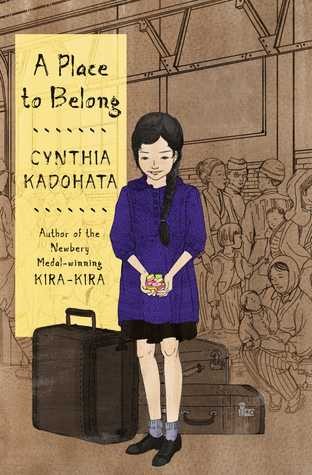
A Place to Belong (2019) Parents Guide: Is the book OK for kids?
Age Rating, Sex, Violence & Language
A Place to Belong is best for ages 11+ according to Bontent's parent guide. The strongest content in this book is violence at 4/10 (moderate) and themes at 4/10 (moderate). Below you'll find severity scores out of 10 for every category plus the moments parents ask about most.
Middle Grade • 2019 • 424 pages • 760L (est.) (roughly grades 4–5 reading difficulty)
A quiet, moving historical novel about a 12-year-old Japanese American girl whose family, after years in U.S. incarceration camps, renounces citizenship and moves to her grandparents' farm near a devastated postwar Hiroshima. There's no profanity, romance, or graphic violence, but hunger and descriptions of atomic-bomb survivors' injuries are sobering. Excellent for readers 11 and up and a natural opening for discussing WWII… Continue to this guide
Is A Place to Belong appropriate for kids?
A quiet, moving historical novel about a 12-year-old Japanese American girl whose family, after years in U.S. incarceration camps, renounces citizenship and moves to her grandparents' farm near a devastated postwar Hiroshima. There's no profanity, romance, or graphic violence… Continue with an account
Content severity in A Place to Belong
What happens in A Place to Belong, moment by moment
- p. 10 🔥 Mature Themes 4/10
- p. 22 💬 Language 1/10
- p. 30 ⚔ Violence & Gore 3/10
Sex and nudity in A Place to Belong
There is no sexual content or romantic subplots present in the story. Hanako is a twelve-year-old focused entirely on survival, family dynamics, and her transition from America to Japan. The narrative remains strictly G-rated and age-appropriate for middle-grade readers throughout. No scenes involve physical intimacy, flirting, or sexual humor. The book maintains a tone of somber historical reflection rather than adolescent romance.
Violence and gore in A Place to Belong
Hanako recalls a gun pointed at her and people being tear-gassed in the camps during her time in America. A survivor in Japan describes his back feeling like it was on fire and seeing people with blackened, bleeding skin after the atomic bomb fell on Hiroshima. Hanako observes the physical toll of starvation, including her brother Akira's lethargy and the skeletal appearance of people in the city. Ruined Hiroshima is seen from the train as a landscape of skeletal buildings and rubble. While the descriptions are…
Continue with an accountLanguage in A Place to Belong
The book contains virtually no profanity or offensive language. There are a couple of uses of the phrase "shut up" when tensions run high between Hanako and her younger brother, Akira. The characters generally speak with respect toward their elders, especially Jiichan and Baachan. No racial slurs are used, despite the depiction of the prejudice the family faces. The writing style is simple, direct, and suitable for the 11+ target age range.
Drugs, alcohol, and smoking in A Place to Belong
There is a brief mention of the black market where the family must trade luxury items like cigarettes and butter to obtain life-sustaining rice. These substances are treated strictly as currency in a desperate postwar economy rather than items for consumption. No characters are depicted smoking or consuming alcohol in the book. The focus remains on the extreme scarcity of basic food items like sweet potatoes and rice. The narrative emphasizes the desperation of the era rather than substance use or abuse.
Mature themes in A Place to Belong
Displacement, citizenship, and belonging are central: the family is incarcerated for about four years, gives up U.S. citizenship under pressure, and later fights to regain it. Hanako weighs the importance of school against the physical necessity of helping in the fields. She struggles with deep guilt over sharing scarce food with a bomb survivor while her own brother is hungry. The Japanese art of kintsukuroi, mending broken pottery with gold, frames themes of resilience and finding beauty in damage. The story…
Continue with an accountFrequently Asked Questions
Is A Place to Belong appropriate for kids?
Bontent's parent guide suggests A Place to Belong is best for ages 11+. A quiet, moving historical novel about a 12-year-old Japanese American girl whose family, after years in U.S. incarceration camps, renounces citizenship and moves to her grandparents' farm near a devastated postwar…
What age rating does A Place to Belong have?
Books don't carry official age ratings. A Place to Belong is published for a Middle Grade audience, and Bontent's independent parent guide recommends it for ages 11+.
What reading level is A Place to Belong?
A Place to Belong is 424 pages and its reading level is 760L (est.) (roughly grades 4–5 reading difficulty). Bontent recommends it for ages 11+.
What is A Place to Belong about?
A quiet, moving historical novel about a 12-year-old Japanese American girl whose family, after years in U.S. incarceration camps, renounces citizenship and moves to her grandparents' farm near a devastated postwar Hiroshima. There's no profanity, romance, or graphic violence, but hunger and descriptions of…
Is there sex or nudity in A Place to Belong?
There is no sexual content or romantic subplots present in the story. Hanako is a twelve-year-old focused entirely on survival, family dynamics, and her transition from America to Japan. The narrative remains strictly G-rated and age-appropriate for…
How violent is A Place to Belong?
Hanako recalls a gun pointed at her and people being tear-gassed in the camps during her time in America. A survivor in Japan describes his back feeling like it was on fire and seeing people with blackened, bleeding skin after the atomic bomb fell on…
Is the language in A Place to Belong appropriate for kids?
The book contains virtually no profanity or offensive language. There are a couple of uses of the phrase "shut up" when tensions run high between Hanako and her younger brother, Akira. The characters generally speak with respect toward their elders…
Are drugs, alcohol, or smoking depicted in A Place to Belong?
There is a brief mention of the black market where the family must trade luxury items like cigarettes and butter to obtain life-sustaining rice. These substances are treated strictly as currency in a desperate postwar economy rather than items for…
What mature themes appear in A Place to Belong?
Displacement, citizenship, and belonging are central: the family is incarcerated for about four years, gives up U.S. citizenship under pressure, and later fights to regain it. Hanako weighs the importance of school against the physical necessity of helping in…
Where can I read the full A Place to Belong parent guide?
Create a free Bontent account to save titles and find family picks. Full page-level details use guide credits or Bontent Parent membership.
Books like A Place to Belong with similar intensity
Sign up to filter





Less intense books for families
Sign up to filter


More books by Cynthia Kadohata
More books with Bontent parent guides
- Sunlight Finds You parent guide
- The Three Graces of Pearl Street parent guide
- Napoleon Boswell parent guide
- Queen of Lombard Street parent guide
- Essays in romantic literature parent guide
- Farm friends story book parent guide
- Eragon (The Inheritance Cycle, #1) parent guide
- Works (Poems / Wuthering Heights) parent guide
- Stories from English history parent guide
- The Battle of the Labyrinth (Percy Jackson and the Olympians, #4) parent guide
- The Cruel Prince (The Folk of the Air, #1) parent guide
- The Comrade in white parent guide
- The black Homer of Jimtown parent guide
- 2001: A Space Odyssey parent guide
- Mother in modern story parent guide
- The modern novel parent guide