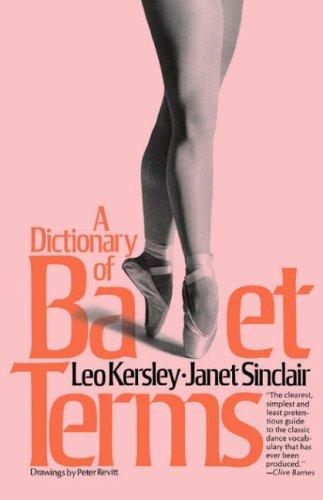
A dictionary of ballet terms (1977) Parents Guide: Is the book OK for kids?
Age Rating, Sex, Violence & Language
This dictionary provides definitions for a wide range of terms used in ballet, from basic positions and movements to more complex technical terms. The book aims to offer clear and concise explanations, serving as a reference for dancers, teachers, and enthusiasts.
Middle Grade • 1977 • 112 pages • Non-fiction Reference
This is a technical reference work providing definitions and descriptions of ballet terminology. As a scholarly dictionary rather than a narrative, it contains no plot, characters, or mature content. It is suitable for students of dance and interested readers of all ages.
Is A dictionary of ballet terms appropriate for kids?
This is a technical reference work providing definitions and descriptions of ballet terminology. As a scholarly dictionary rather than a narrative, it contains no plot, characters, or mature content. It is suitable for students of dance and interested readers of all ages. Read more — free account
Content severity in A dictionary of ballet terms
What happens in A dictionary of ballet terms, moment by moment
- p. 1 🔥 Mature Themes 1/10
- p. 12 🔥 Mature Themes 1/10
- p. 30 🔥 Mature Themes 1/10
Sex and nudity in A dictionary of ballet terms
This reference book contains absolutely no sexual content, romantic subplots, or provocative imagery. As a technical manual, it focuses entirely on the mechanics of the human body in motion through ballet positions. The text describes the placement of limbs and the torso in a clinical and instructional manner. There are no descriptions of nudity or intimacy, as the focus remains on the professional discipline of dance. Parents can be assured the material is strictly educational and appropriate for all readers.
Violence and gore in A dictionary of ballet terms
No physical violence, aggression, or threats occur within these pages. The dictionary describes physical movements that require strength and control, such as jumps and turns, but never in a context of harm. Terms like 'frappé' (struck) are used to describe a sharp foot movement, not an act of combat. There are no mentions of injuries or the physical toll of dancing, keeping the tone light and instructional. The book is entirely safe from any themes of conflict or bodily harm.
Language in A dictionary of ballet terms
The vocabulary is entirely composed of standard English and traditional French ballet terminology. No profanity, slurs, or derogatory language are present in the text at any point. Most of the entries are technical terms like 'en dehors,' 'plié,' or 'arabesque,' which are essential for dance students. The tone is formal and academic, reflecting its purpose as a scholarly reference guide. There is nothing in the lexicon that would be considered offensive or inappropriate for young children.
Drugs, alcohol, and smoking in A dictionary of ballet terms
There is no mention of alcohol, tobacco, illegal drugs, or the misuse of prescription medications. The book does not depict characters using substances, as it is a dictionary rather than a narrative work. The focus on physical health and athletic discipline inherent in ballet excludes any reference to harmful substances. The text remains purely focused on the art and science of classical dance technique. Readers will find only professional guidance on how to perform specific movements.
Mature themes in A dictionary of ballet terms
Educational themes dominate the book, specifically focusing on the rigorous physical discipline and history of ballet. The entries emphasize the importance of precision, form, and the mastery of the body through practice. Key concepts include the evolution of dance styles and the strict adherence to classical traditions established over centuries. The book encourages intellectual curiosity about the arts and a deep respect for the athletic requirements of the form. It serves as a comprehensive tool for developing…
Read more — free accountFrequently Asked Questions
Is A dictionary of ballet terms appropriate for kids?
Bontent's parent guide suggests A dictionary of ballet terms is best for ages 8+. This is a technical reference work providing definitions and descriptions of ballet terminology. As a scholarly dictionary rather than a narrative, it contains no plot, characters, or mature content. It is suitable for…
What age rating does A dictionary of ballet terms have?
Books don't carry official age ratings. A dictionary of ballet terms is published for a Middle Grade audience, and Bontent's independent parent guide recommends it for ages 8+.
What reading level is A dictionary of ballet terms?
A dictionary of ballet terms is 112 pages and its reading level is Non-fiction Reference. Bontent recommends it for ages 8+.
What is A dictionary of ballet terms about?
This is a technical reference work providing definitions and descriptions of ballet terminology. As a scholarly dictionary rather than a narrative, it contains no plot, characters, or mature content. It is suitable for students of dance and interested readers of all ages.
Is there sex or nudity in A dictionary of ballet terms?
This reference book contains absolutely no sexual content, romantic subplots, or provocative imagery. As a technical manual, it focuses entirely on the mechanics of the human body in motion through ballet positions. The text describes the placement of limbs…
How violent is A dictionary of ballet terms?
No physical violence, aggression, or threats occur within these pages. The dictionary describes physical movements that require strength and control, such as jumps and turns, but never in a context of harm. Terms like 'frappé' (struck) are used to describe a…
Is the language in A dictionary of ballet terms appropriate for kids?
The vocabulary is entirely composed of standard English and traditional French ballet terminology. No profanity, slurs, or derogatory language are present in the text at any point. Most of the entries are technical terms like 'en dehors,' 'plié,' or…
Are drugs, alcohol, or smoking depicted in A dictionary of ballet terms?
There is no mention of alcohol, tobacco, illegal drugs, or the misuse of prescription medications. The book does not depict characters using substances, as it is a dictionary rather than a narrative work. The focus on physical health and athletic discipline…
What mature themes appear in A dictionary of ballet terms?
Educational themes dominate the book, specifically focusing on the rigorous physical discipline and history of ballet. The entries emphasize the importance of precision, form, and the mastery of the body through practice. Key concepts include the evolution of…
Where can I read the full A dictionary of ballet terms parent guide?
Create a free Bontent account to unlock page-level notes, filter by your kids' ages, and save titles to your watchlist.
Parents also checked these books for 8-year-olds
Sign up to filter




Books like A dictionary of ballet terms with similar intensity
Sign up to filter![Star Over Bethlehem and other stories [6 stories and poems]](https://covers.openlibrary.org/b/id/3217970-L.jpg)


Reference books parents are checking
- A list of English & American sequel stories parent guide
- The Storyteller: Tales of Life and Music parent guide
- THE CREATIVE ACT parent guide
- Redwall (Redwall, #1) parent guide
- Hogwarts: An Incomplete and Unreliable Guide (Pottermore Presents, #3) parent guide
- Objective NCERT at your FINGERTIPS for NEET-AIIMS - Biology parent guide
- The Secret Language of Birthdays parent guide
- Fantastic Beasts and Where to Find Them parent guide
- A Story of Yesterday parent guide
- The C Programming Language parent guide
- Daisy Jones & The Six parent guide
- Chemistry parent guide
More books with Bontent parent guides
- Tall Oaks parent guide
- Charged parent guide
- The Bookshop on Rosemary Lane parent guide
- Babel: Or the Necessity of Violence: An Arcane History of the Oxford Translators' Revolution parent guide
- The motion picture chums' outdoor exhibition, or, The film that solved a mystery parent guide
- Before They Are Hanged (The First Law, #2) parent guide
- The man from up there parent guide
- The 48 Laws of Power parent guide
- The Christmas Stories [8 stories] parent guide
- The Dark Tower II: The Drawing of the Three (The Dark Tower, #2) parent guide
- A century of the English novel parent guide
- The complete works of the Gawain-poet parent guide
- Harry Potter parent guide
- Arena 13 parent guide
- The Maid: A Novel (Molly the Maid, #1) parent guide
- Biggest Ideas in the Universe 2 parent guide