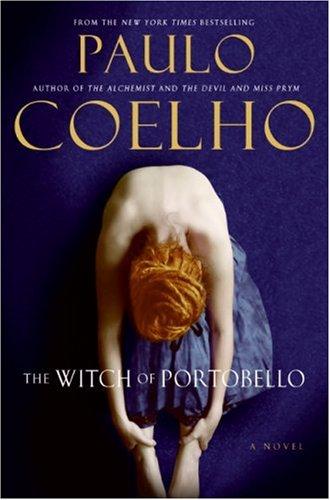
A bruxa de Portobello (2006) Parents Guide: Is the book OK for kids?
Age Rating, Sex, Violence & Language
이 책은 에로스와 아가페, 관능과 욕망, 모성과 인류애 등 이 세상에 존재하는 모든 형태의 사랑에 관한 이야기로, 작가는 주인공 아테나가 사랑했고 또 그녀를 사랑하는 모든 이들의 시선과 행적을 좇으며, 인류가 지닌 가장 큰 힘의 근원인 사랑을 말한다. '아테나'라는 이름의 한 비범한 여자를 통해 모성의 근원과 본질, 그리고 신의 여성성을 탐구하고 있는 것이다.
Adult • 2006 • 295 pages • Adult
Paulo Coelho's 'The Witch of Portobello' is a philosophical novel that explores identity, religion, and spirituality through the perspectives of those who knew the protagonist, Athena. Due to mature philosophical inquiries, occasional mentions of sexuality, and depictions of personal trauma, this book is best suited for older teen and adult readers. It challenges conventional societal norms and poses heavy existential questions that… Sign up for the full guide
Is A bruxa de Portobello appropriate for kids?
Paulo Coelho's 'The Witch of Portobello' is a philosophical novel that explores identity, religion, and spirituality through the perspectives of those who knew the protagonist, Athena. Due to mature philosophical inquiries, occasional mentions of sexuality, and depictions of… Read more — free account
Content severity in A bruxa de Portobello
What happens in A bruxa de Portobello, moment by moment
- p. 12 🔥 Mature Themes 2/10
- p. 22 🔥 Mature Themes 2/10
- p. 35 🍷 Substances 2/10
Sex and nudity in A bruxa de Portobello
The book explores sexuality as a form of spiritual expression, particularly through the character of Athena. There are references to pre-marital intimacy, experimental relationships, and the concept of sexual energy as a religious tool. While there is no explicit anatomical sexual content, the mature nature of these discussions and the non-traditional views on monogamy are prevalent throughout the narrative. Specific passages, such as the account by the priest or the descriptions of dancing as a form of ecstasy…
Read more — free accountViolence and gore in A bruxa de Portobello
Violence is largely emotional or psychological in nature rather than physical, reflecting the protagonist's struggle against societal judgment. There are brief, non-graphic mentions of childhood abandonment and the systemic discrimination Athena faces because of her background. The tone remains grounded and intellectual rather than action-oriented, with no descriptions of gore or graphic combat. Moments of tension arise during public rituals where Athena is met with shouting or threats, but these rarely escalate…
Read more — free accountLanguage in A bruxa de Portobello
The language is consistent with adult literary fiction, being sophisticated and philosophical rather than colloquial or vulgar. Profanity is nearly absent, with the focus placed on dense, introspective dialogue about life, death, and faith. The narrative voice is contemplative, rarely resorting to harsh expletives to emphasize the intensity of the characters' internal states. Readers will encounter complex theological terms and poetic phrasing that require a high level of literacy. The impact of the writing comes…
Read more — free accountDrugs, alcohol, and smoking in A bruxa de Portobello
There are occasional, low-level mentions of characters consuming wine in social settings or at gatherings. These scenes serve as backdrops for character interactions and philosophical debates rather than focus points for substance abuse. Alcohol is presented as a normal cultural accessory in the setting, with no depictions of intoxication or dependency. Some rituals involve dancing and music to achieve a trance-like state, but these are clearly defined as psychological and spiritual techniques rather than the…
Read more — free accountMature themes in A bruxa de Portobello
The central themes revolve around the search for personal identity, the validity of organized religion versus individual spirituality, and the consequences of deviating from cultural norms. Characters grapple with loneliness, social ostracization, and the definition of a 'witch' in a modern context. It is a deeply existential work that invites readers to question institutional authority and personal purpose. Through multiple perspectives, the book explores the burden of motherhood, the trauma of abandonment, and…
Read more — free accountFrequently Asked Questions
Is A bruxa de Portobello appropriate for kids?
Bontent's parent guide suggests A bruxa de Portobello is best for ages 16+. Paulo Coelho's 'The Witch of Portobello' is a philosophical novel that explores identity, religion, and spirituality through the perspectives of those who knew the protagonist, Athena. Due to mature philosophical…
What age rating does A bruxa de Portobello have?
Books don't carry official age ratings. A bruxa de Portobello is shelved by its publisher as Adult, but that's a marketing category, not a content rating — Bontent's own review of what's actually on the page puts it at ages 16+.
What reading level is A bruxa de Portobello?
A bruxa de Portobello is 295 pages and its reading level is Adult. Bontent recommends it for ages 16+.
What is A bruxa de Portobello about?
Paulo Coelho's 'The Witch of Portobello' is a philosophical novel that explores identity, religion, and spirituality through the perspectives of those who knew the protagonist, Athena. Due to mature philosophical inquiries, occasional mentions of sexuality, and depictions of personal trauma, this book is best suited…
Is there sex or nudity in A bruxa de Portobello?
The book explores sexuality as a form of spiritual expression, particularly through the character of Athena. There are references to pre-marital intimacy, experimental relationships, and the concept of sexual energy as a religious tool. While there is no…
How violent is A bruxa de Portobello?
Violence is largely emotional or psychological in nature rather than physical, reflecting the protagonist's struggle against societal judgment. There are brief, non-graphic mentions of childhood abandonment and the systemic discrimination Athena faces because…
Is the language in A bruxa de Portobello appropriate for kids?
The language is consistent with adult literary fiction, being sophisticated and philosophical rather than colloquial or vulgar. Profanity is nearly absent, with the focus placed on dense, introspective dialogue about life, death, and faith. The narrative…
Are drugs, alcohol, or smoking depicted in A bruxa de Portobello?
There are occasional, low-level mentions of characters consuming wine in social settings or at gatherings. These scenes serve as backdrops for character interactions and philosophical debates rather than focus points for substance abuse. Alcohol is presented…
What mature themes appear in A bruxa de Portobello?
The central themes revolve around the search for personal identity, the validity of organized religion versus individual spirituality, and the consequences of deviating from cultural norms. Characters grapple with loneliness, social ostracization, and the…
Where can I read the full A bruxa de Portobello parent guide?
Create a free Bontent account to unlock page-level notes, filter by your kids' ages, and save titles to your watchlist.
Less intense books for families
Sign up to filter








More romance books with parent guides
- Just For The Cameras parent guide
- Crow parent guide
- Kingdom of Shadow and Light parent guide
- Charged parent guide
- You Did Nothing Wrong parent guide
- The Total Package parent guide
- The Midnight Girls parent guide
- Wuthering Heights, Agnes Grey, and Poems parent guide
- Works (Poems / Wuthering Heights) parent guide
- Heartstopper (Vol. 1) parent guide
- Onyx Storm (The Empyrean, #3) parent guide
- With This Ring? parent guide
More books by Paulo Coelho
More books with Bontent parent guides
- The Dictionary of Lost Words parent guide
- Tall Oaks parent guide
- The Name of the Wind / The Wise Man's Fear / The Slow Regard of Silent Things (The Kingkiller Chronicle #1-2.5) parent guide
- The Martian Contingency parent guide
- Clash of star-kings parent guide
- The Bookshop on Rosemary Lane parent guide
- Atomic Habits: An Easy & Proven Way to Build Good Habits & Break Bad Ones parent guide
- The Battle of the Labyrinth (Percy Jackson and the Olympians, #4) parent guide
- The motion picture chums' outdoor exhibition, or, The film that solved a mystery parent guide
- 2001: A Space Odyssey parent guide
- The man from up there parent guide
- The contemporary Negro novel parent guide
- The Dark Tower II: The Drawing of the Three (The Dark Tower, #2) parent guide
- Onyx Storm (The Empyrean, #3) parent guide
- The complete works of the Gawain-poet parent guide
- Harry Potter parent guide